

 Rahmatullah Buriro
There are very few moments in the political history of Pakistan that are not merely a speech or a slogan, but decide the future of an entire nation. One such moment came after the martyrdom of Mohtarma Benazir Bhutto, when the whole country was drowned in grief, anger, despair and uncertainty.
Every home was in mourning, every city was in protest, and every heart carried the same question: What will happen now? Will the country survive? Will the federation hold? Will the Pakistan Peoples Party survive?
In that critical hour, sitting in Larkana, Asif Ali Khan Zardari raised a slogan that is still considered the strongest and most powerful slogan in Pakistan’s politics:
“Pakistan Khappe!”
Pakistan is needed! Pakistan must survive!
These were not merely three words. It was a decision. It was a pledge. It was a declaration that the revenge for Bhutto’s martyrdom would not be taken by breaking the country, but by building it. It was a message that the answer to grief would not be hatred, but the strengthening of the federation.
This slogan disturbed many political leaders. Many had hoped that chaos would now spread, that the federation would weaken, that the Peoples Party would turn towards divisive politics. But one slogan by Zardari turned the whole game upside down. He saved the country from breaking apart, he saved the federation, and he saved the democratic process.
Today, when we look back, we realise that “Pakistan Khappe” was not an emotional slogan. It was a political strategy, a statesman’s thinking, a national responsibility. If on that day Zardari had, in a moment of emotion, raised any other slogan, the map and the politics of Pakistan today would have looked completely different.
Politics of Reconciliation – Not Weakness, But Wisdom
To understand Asif Ali Zardari’s politics, one word must be understood:
Reconciliation.
Opponents have always called reconciliation Zardari’s weakness. They said he compromises with everyone, he takes everyone along, he gives space to everyone. But the truth is that reconciliation is the only way to run a federal country like Pakistan.
Pakistan has four provinces, many nations, many languages, many political ideologies. If everyone stands rigid on his own stubbornness, can Parliament function? Can government function? Can the federation function? Certainly not.
Zardari understood that the continuity of Parliament is the continuity of the democratic system. When Parliament functions, the Constitution functions. When the Constitution functions, the State functions. And when the State functions, the people are protected. That is why he always strengthened parliamentary power. Instead of breaking Parliament, he built Parliament. Instead of closing doors, he opened political paths to keep the government running.
That is why even those who criticise Zardari are today forced to admit that if there is any politician in Pakistan who can talk to all parties, who can remain in contact with all stakeholders, and who can find a political way out of any crisis, it is Asif Ali Zardari.
It is the result of his politics of reconciliation that the continuity of political and parliamentary government in the country has remained intact. Whenever a crisis came, whenever political tension increased, Zardari stepped in and found a way. He never closed doors. He never ended dialogue.
The Constitutional Role as President of Pakistan
Today, the role that Asif Ali Khan Zardari is playing as President of Pakistan and as leader of the Peoples Party is also a continuation of the same “Pakistan Khappe” thinking.
The office of the President is a constitutional office. The President has to work within the Constitution. Zardari understands this limit very well. He does not go outside the Constitution, he does not bypass Parliament, he does not weaken the federation. Whatever parliamentary, constitutional and democratic role he can play, he is playing it fully.
Look at his stance in the recent debate on new provinces and referendum. He did not deliver an emotional speech, he did not threaten anyone, he did not create a new controversy. He insisted on only one principle:
Whatever happens, will happen according to the Constitution, with the approval of Parliament.
This is the stance of a responsible President. This is the stance of a federal leader. This is the stance of a politician who wants to run the country not in controversies, but within the ambit of the Constitution.
Why is the Personality Targeted?
Now the question is: if Zardari’s role is so positive, why do his opponents target his personality?
The answer is simple: When arguments run out, the attack turns personal.
At the Sindh level as well as at the national level, Zardari’s opponents, instead of debating his policy, criticise his personality. Using social media platforms, fake videos, edited clips and personal attacks, they try to tarnish his image. Their aim is not political debate. Their aim is character assassination.
The anti-Peoples Party factors know that they cannot compete with Zardari on policy. They cannot compete with him in the politics of reconciliation. They cannot compete with him in parliamentary strength. Therefore, they attack his personality directly.
But this strategy is also failing. Why? Because the people have now begun to understand the difference between social media propaganda and reality. The people know that a man who spent 14 years in jail, who bore the grief of his martyred wife, who raised his children alone, and who still said “Pakistan Khappe”, cannot be erased by a few posts on social media.
Why is Zardari’s Role Important in Today’s Situation?
If we look at today’s national political, governmental, state, parliamentary and constitutional situation, controversy is visible on every side. On one side there is the debate on new provinces, on the other side the debate on referendum, on the third side there is economic pressure, and on the fourth side there is mistrust among political parties.
In such a situation, the country needs a person who can seat everyone at one table, who can listen to everyone, who can reduce a crisis instead of increasing it. And that quality even today lies with Asif Ali Zardari.
When he speaks as President, he speaks of the federation. When he speaks as leader of the Peoples Party, he speaks of the rights of Sindh. But even while speaking of Sindh’s rights, he never speaks of breaking Pakistan. He wants to see Sindh strong inside Pakistan, not outside Pakistan.
This is the difference between Zardari and other politicians. Many other leaders, for their own political benefit, inflame provincial or national sentiments, but Zardari always brings sentiments within the ambit of the Constitution.
Conclusion: Pakistan Khappe – Today, and Tomorrow
“Pakistan Khappe” was not merely a slogan of 2007. It is alive even today. It is even today the centre of the Peoples Party’s politics. It is even today visible in every decision of Asif Ali Zardari.
No matter how many attacks the opponents launch, no matter how many campaigns they run on social media, no matter how much they target his personality, history has already decided that on the day when attempts were being made to break the country, one man stood up and said “Pakistan Khappe”.
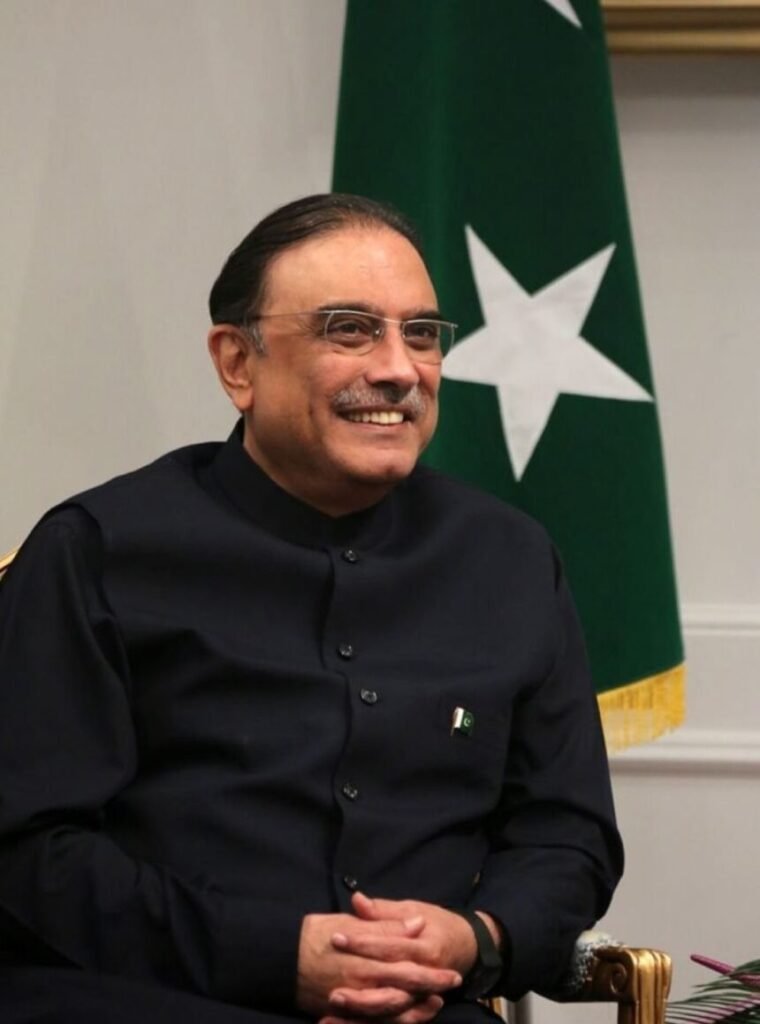
And that man was Asif Ali Khan Zardari.
Today the country needs that same thinking once again. The country does not need controversy, it needs reconciliation. The country does not need hatred, it needs federation. The country does not need attacks on personality, it needs debate on policy.
And all of it begins with a single sentence:Pakistan Khappe!