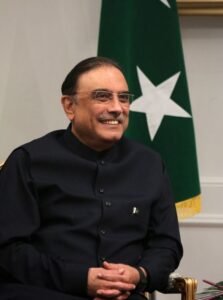
A meeting between Multan City Police Officer (CPO) Akhtar Farooq and office-bearers and members of the Multan Press Club was held yesterday, during which matters relating to effective coordination between the police and the journalistic community, highlighting public grievances, and ensuring citizens’ safety came under discussion. On the occasion, the CPO appreciated the media’s role in social improvement and public awareness, describing mutual cooperation between the police and journalists as essential for public service and the promotion of law and order. This initiative is certainly commendable.
The initiative taken by CPO Multan Akhtar Farooq to arrange a meeting with Press Club office-bearers is undoubtedly a positive development. However, it also raises an important question: Does the police consider the representation of journalism limited only to the elected office-bearers of the Press Club? Should not senior, educated and experienced journalists working in the city across various fields of journalism also be part of this process of engagement?
The Press Club is a representative institution of journalists, and meetings with its office-bearers certainly have their own significance. However, the scope of journalism is not confined to a single institution, position or organisation. Multan is home to numerous experienced journalists associated with print, electronic, digital and investigative journalism, as well as those covering specialised beats such as government departments, the judiciary, police, crime, education, health, industry, trade and other sectors. These professionals regularly highlight public grievances, administrative matters and government performance.
In this context, as a columnist, I would suggest that the head of Multan Police adopt a broader and more inclusive approach towards engagement with journalists in the days ahead. Educated, informed and professional journalists representing all major beats should also be invited to such meetings. This would ensure that interaction between the police and media does not remain a merely formal exercise but becomes an effective means of exchanging information, identifying public issues, improving policing and restoring citizens’ confidence.
The police must also understand that a journalist’s identity is not determined by the position or title he holds, but by his professional competence, research, observation, integrity and commitment to public interest. Therefore, the responsibility of a police chief is not merely to meet a select group of media representatives but also to keep the channels of communication open for the entire journalistic community of the city. If the media engagement policy of public institutions remains restricted to a few selected office-bearers, it may create a sense of exclusion among other journalists and prevent the comprehensive representation of public concerns.
We all know that journalism is no longer confined to traditional print media (newspapers and magazines) and electronic media (television and radio). Digital technology, the internet and social media have introduced numerous new branches and platforms of journalism, including Digital Journalism, Social Media Journalism, YouTube Journalism, Podcast Journalism, Mobile Journalism, Freelance Journalism, Investigative Journalism, Data Journalism, Citizen Journalism, Newsletter Journalism, Streaming Journalism, Open-Source Journalism, AI Journalism, Visual and Cartoon Journalism, Explainer Journalism and several others. All these are part of the evolving landscape of modern journalism.
Today’s journalist is not merely someone working as a newspaper reporter, television correspondent or Press Club office-bearer. Digital news editors, web journalists, investigative reporters, data journalists, podcast journalists, video reporters and independent media analysts are also important contributors to the modern media landscape.
CPOs and other police officers also have a responsibility to protect their institutions from the unnecessary influence of so-called, dummy and self-styled journalists. Across the province, certain individuals establish organisations under the guise of journalism and appoint themselves as chairpersons, presidents, central presidents and holders of other grand titles. They then use these positions to gain access to police offices, secure official protocol and pursue personal interests.
Establishing an organisation is a legal right of every citizen. However, such organisations must comply with the relevant laws, including registration requirements where applicable. Section 3 of the Voluntary Social Welfare Agencies (Registration and Control) Ordinance, 1961, prohibits organisations falling within the scope of this law from operating without registration.
Therefore, Police Public Relations Officers (PROs) and other police officials also have a responsibility to verify the registration and legal status of journalistic organisations before extending official protocol or special access to their office-bearers. Simply printing an impressive designation on a visiting card does not make someone an authentic journalist or transform an organisation into a legally recognised institution. Discouraging this unnecessary culture is essential to safeguarding the dignity of journalism and maintaining institutional discipline within the police department.
The fundamental question, therefore, is whether this practice represents genuine media coordination, a particular system of media management, or an unintended tendency to confine journalism to a select few circles.
We believe that the CPO Multan should initiate a regular series of meetings not only with Press Club office-bearers but also with competent, experienced and active journalists representing all fields of journalism in the city. After all, effective policing requires strong public engagement, and strong public engagement depends on independent, informed and diverse journalism.