Syed Faiz Naqshbandi
The Organisation of Islamic Cooperation (OIC) has consistently and firmly supported the inalienable right of the people of Jammu and Kashmir to self-determination. The OIC’s 52nd Session of the Council of Foreign Ministers, held in Baghdad, Iraq, on 17–18 October 2026, an important diplomatic platform for addressing the longstanding Kashmir dispute. Its continued engagement reflects the solidarity of the Muslim world with the Kashmiri people and the need for a just and peaceful settlement in accordance with relevant United Nations Security Council resolutions and international law.
Particular appreciation is due to the OIC Contact Group on Jammu and Kashmir for its sustained diplomatic engagement and consistent advocacy of the Kashmiri people’s right to self-determination. The Contact Group has repeatedly called for the implementation of relevant UN resolutions, expressed concern about human rights violations and opposed unilateral measures of India, affecting the disputed status of Jammu and Kashmir. Its joint communiqué of 22 September 2026 specifically raised concerns about demographic changes, the continued detention of Kashmiri political leaders, restrictions on religious gatherings and the issuance of domicile certificates by Indian government. It also called for the repeal of inhuman laws, the release of political prisoners and meaningful international efforts towards a peaceful settlement. These efforts deserve recognition and continued support.
Jammu and Kashmir remains an internationally recognised dispute addressed by the United Nations Security Council. India has occupied the territory against the wishes of its people and continues to consolidate its control through repression, political, constitutional and administrative measures. UN Security Council Resolutions form part of the international framework concerning the dispute. The people of Jammu and Kashmir must be afforded a meaningful opportunity to determine their political future in accordance with the applicable international framework and UN Resolutions.
India’s demographic changes and the erosion of Kashmiri identity constitute a particularly serious violation. Following the revocation of Jammu and Kashmir’s special status on 5 August 2019, the Indian government introduced new domicile rules and changes to land and employment laws. These measures facilitate settlement by people from main land India. This is to weaken longstanding protections for local residents and to consolidate Indian occupation by altering the region’s demographic composition. In February 2021, UN human rights experts warned that the new laws could undermine minority rights and facilitate demographic changes. The OIC Contact Group has likewise rejected measures intended to alter the demographic structure of the disputed territory. The issuance of more than 3.4 million domicile certificates since 2019 was specifically highlighted in its September 2026 communiqué. The potential consequences for political representation, land ownership, employment and the distinct cultural identity of the Kashmiri people warrant continued international scrutiny.
For decades, the people of Indian-administered Jammu and Kashmir have endured conflict, extensive militarisation and grave and massive human rights violations by Indian forces. These include extrajudicial killings, arbitrary detention, enforced disappearances, torture, excessive use of force, restrictions on freedom of expression and peaceful assembly, and restrictions affecting political and civil society activities. The UN Office of the High Commissioner for Human Rights raised serious concerns in its 2018 and 2019 reports on Kashmir. Human Rights Watch has also documented Indian abuse of human rights and persistent obstacles to accountability. These concerns demand impartial investigations, effective remedies for victims and accountability wherever violations are established.
Indian legislation, particularly the Armed Forces (Jammu and Kashmir) Special Powers Act and preventive-detention provisions under the Public Safety Act, has attracted sustained criticism from human rights organisations and office of High Commissioner for Human Rights. The inhuman laws in IOJK obstruct accountability and undermine access to justice.
India is a party to the International Covenant on Civil and Political Rights (ICCPR), whose Articles 6, 7, 9, 14 and 19 protect the rights to life, freedom from torture, liberty and security, fair-trial guarantees and freedom of expression. Article 1 recognises the right of peoples to self-determination. Article 25 of the UN Charter obliges member states to accept and carry out Security Council decisions in accordance with the Charter. Crimes against humanity in IOJK must be investigated against the applicable legal criteria and established through appropriate legal processes.
The deployment of more than 900,000 Indian armed personnel in the region has serious implications.
Pakistan has consistently supported the Kashmiri people’s right to self-determination and advocated a settlement in accordance with relevant UN resolutions. People of Jammu And Kashmir are thankful to Pakistan for their political and moral support.
The OIC, UN and the international community must give serious attention to systematic human rights violations, demographic engineering and the erosion of fundamental freedoms by India. A just and lasting settlement of Kashmir dispute is imperative for peace, stability and security for the region.
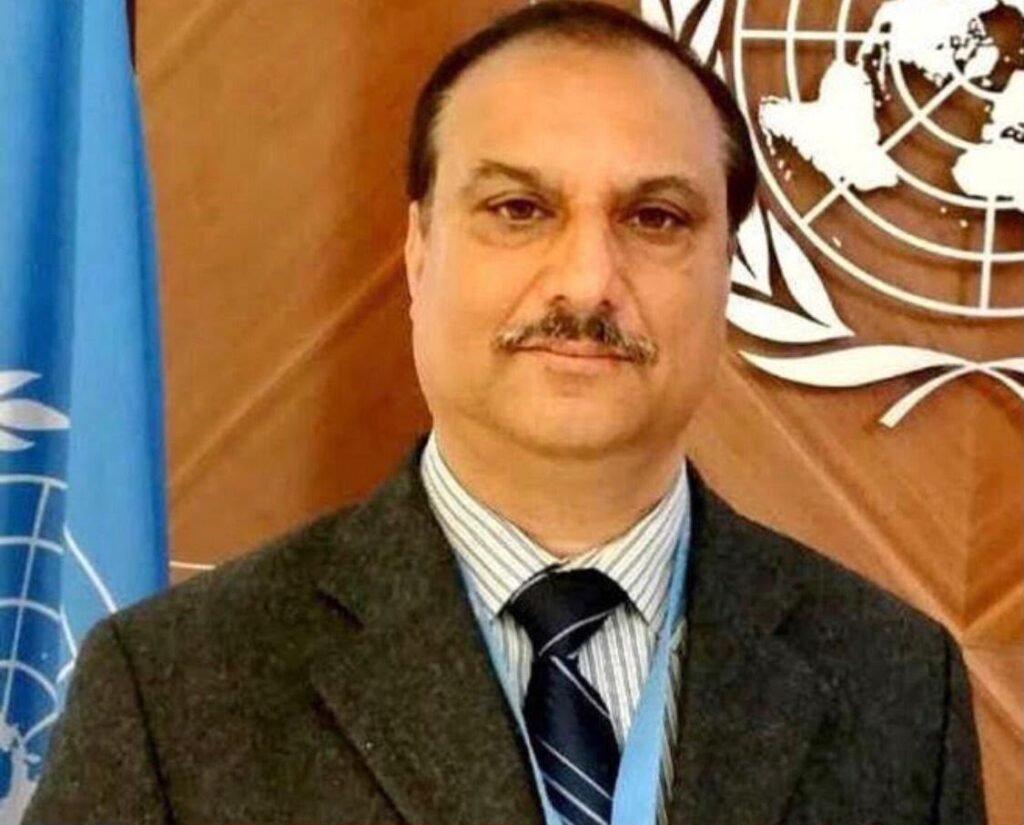
The author is senior leader of All Parties Hurriyet Conference (APHC) and legal expert of international law. He can be reached at faiz.naqshbandi@gmail.com & at WhatsApp number 03335145416.