By Farzaneh Bani Asad Azad
The attacks by the United States and Israel against Iran, which began on February 28, 2026, have highlighted a critical challenge in international law: civilian harm cannot always be understood by examining each damaged building or facility in isolation. Modern societies depend on interconnected systems, including hospitals, schools, electricity networks, water supplies, transport infrastructure, pharmaceutical production, agriculture and communications. Damage to one component can disrupt numerous other services, threatening the ability of civilian populations to maintain normal life during and after armed conflict.
According to Iranian documentation compiled by April 8, 125,630 civilian units had been severely damaged or destroyed, including 100,000 residential and 23,500 commercial units. Hundreds of schools, healthcare facilities and universities were also reportedly damaged. United Nations special-procedure mandate holders documented significant harm to civilian infrastructure and essential services. Although figures vary by source and reporting date, the reported destruction indicates widespread disruption across multiple sectors of civilian life.
Beyond Individual Targets
The article argues that international humanitarian law must consider not only the physical object attacked but also its function within society. A hospital depends on electricity, water, medicines, medical personnel and accessible transport routes. Pharmaceutical production requires functioning laboratories, energy supplies and distribution networks. Similarly, schools, universities and businesses depend on safe transportation and reliable public services.
The reported damage extended to residential areas, educational institutions, hospitals, pharmaceutical facilities, electricity infrastructure, water supplies, food-storage facilities, airports, bridges, railways, ports and fishing vessels. The attack on Shajareh Tayebeh Primary School in Minab on February 28 was among the gravest reported incidents, with Iranian authorities recording 168 children killed. UN mandate holders also called for an independent investigation into possible serious violations of international humanitarian law.
The article stresses that these incidents must be assessed individually rather than assuming every strike was unlawful. Nevertheless, their combined effects demonstrate why civilian harm must be evaluated across interconnected systems.
Connectivity and Civilian Livelihoods
Transport infrastructure is particularly important because it connects communities to essential services. Reported attacks damaged bridges, railway lines, airports, runways, radar equipment and passenger aircraft. Such destruction can impede the movement of patients, emergency responders, humanitarian personnel, medicines, food and other essential goods.
Ports and fishing facilities were also affected. Attacks on vessels and fishing infrastructure reportedly destroyed boats and disrupted the livelihoods of coastal communities. The destruction of a railway bridge connecting Iran with northern neighbours and Central Asia further illustrated how infrastructure damage can affect regional commerce and economic activity.
The consequences also extended to cultural and social life. Sports facilities, libraries, museums, historical buildings and public spaces were reportedly damaged. The article argues that civilian protection should encompass more than immediate physical survival: education, recreation, cultural participation and social interaction are also important components of a functioning society.
The Proposed Right to Civilian Continuity
The article introduces the concept of a “Right to Civilian Continuity” as an interpretative framework rather than an established, independent rule of international law. It proposes bringing existing protections under international humanitarian law, international human rights law and the right to development into a common analytical framework.
The proposed concept means preserving the minimum material, human, institutional and social conditions necessary for civilian populations to sustain individual and collective life during and after armed conflict. These conditions include access to healthcare, water, food, housing, education, transportation, communications and livelihoods.
Under this approach, the legal assessment of an attack would examine the object struck, the civilian functions it supports, the systems dependent on it and the resulting human consequences. The article argues that this broader perspective would improve documentation of civilian harm without replacing existing legal standards.
Foreseeable Consequences and Developmental Losses
A central argument concerns the reverberating effects of infrastructure destruction. When a power plant is damaged, the consequences may extend to hospitals, water pumps, food-storage facilities, communications and pharmaceutical production. Where these effects are reasonably foreseeable when an attack is planned or decided upon, they must be considered under the applicable rules governing proportionality and precautions in attack.
The article also highlights the long-term economic consequences. Rebuilding damaged hospitals, universities, bridges, airports and power plants consumes resources that could otherwise support new development. Infrastructure destruction therefore creates three forms of loss: accumulated investment from the past is destroyed, civilian life is disrupted in the present, and future development is delayed as resources are diverted towards reconstruction.
The article cautions that claims for legal reparation require separate assessment of causation, attribution and the applicable legal framework.
Accountability and the Chain of Decision-Making
The article examines public statements by US President Donald Trump concerning the destruction of Iranian bridges and power plants. It highlights his references to returning Iran to the “Stone Age,” his advance designation of April 7 as “Power Plant Day and Bridge Day,” and his subsequent acknowledgment that he had ordered the destruction of a bridge.
It also discusses his later remarks describing the potential consequences of destroying Iran’s electricity and transport networks for approximately 91 million people. The article argues that these statements warrant investigation into decision-making, knowledge of foreseeable civilian consequences, target selection and operational orders.
However, the author emphasises that public statements alone do not establish criminal responsibility. Each attack requires an independent assessment of the target’s status, anticipated military advantage, expected civilian harm, precautions, available information and the applicable mental element.
The International Criminal Court’s proceedings concerning attacks on Ukraine’s electricity infrastructure provide a comparative example of investigations extending from operational commanders to senior military leadership. Those proceedings do not determine the legality of attacks in Iran but illustrate how individual responsibility may be examined when supported by evidence.
Conclusion
The article’s central message is that international law should not stop at the physical site of destruction. Investigators must examine both the consequences of an attack for civilian life and the chain of decisions that led to it.
The proposed Right to Civilian Continuity offers a framework for understanding how interconnected infrastructure sustains society, while reinforcing the importance of existing legal protections. The author calls for evidence-based, attack-specific investigations that trace civilian harm outward and decision-making responsibility upward.
Ultimately, the objective is not simply to protect buildings and infrastructure, but to preserve the conditions that allow civilian society to function during and after war.
Note: this is an opinion piece by an official of one of the parties to the conflict, and the figures and incident accounts are drawn largely from Iranian government documentation. Orginal artilce are available at Act_of_Aggression_Iran_Civilian_Continuity. نهایی
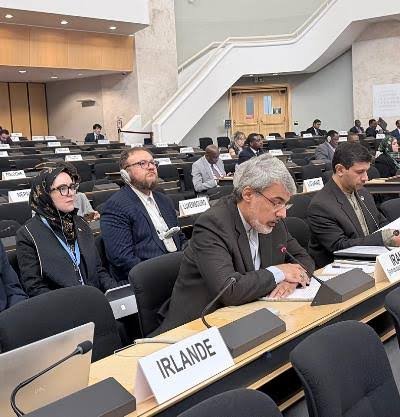
Author is a PhD candidate in Political Studies and Third Secretary at the Permanent Mission of the Islamic Republic of Iran to the United Nations Office and other international organisations in Geneva.