Fatima Sajjad
Peace is often understood as the absence of war. In Afghanistan, there is no active war under Taliban rule but in the Afghani society the economic instability, violations of rights, and unresolved ethnic and social grievances still exist. The absence of war or temporary calm may create the appearance of peace, but that stability remains fragile. In August 2021,the Taliban came to power, which changed the country’s security environment.As a result, Afghanistan is no longer experiencing the war that it faced for two decades. Before 2021, Afghanistan was facing Taliban insurgency, US/NATO operations and thousands of civilian casualties but post-2021 when the Taliban took over Afghanistan, war ended physically. The nature of conflict shifted from conventional battlefield competition to political exclusion, extremist violence, humanitarian insecurity, and structural grievances. An ordinary Afghan notices a huge difference from active fighting to sharp reduction in combat. However, the Taliban may have reduced the violence but reducing violence is totally different from resolving conflict. The deeper grievances, exclusion, and inequality persists at the roots of Afghan society. Does the absence of widespread warfare mean Afghanistan has achieved peace?
Afghanistan has achieved a form of negative peace, which is an incomplete form of peace as the conditions that are needed for positive peace is missing. Peace is not simply the absence of organized violence rather it is the state that involves political freedom, economic security, human rights, and social inclusion. The strongest limitation of Afghanistan’s post 2021 peace is political exclusion. The Taliban takeover ended all the previous direct forms of violence, but it introduced a new highly centralized system. This current system does not have the broad-based political participation which is crucial for positive peace in the society. Women have been largely excluded from political participation; opposition political actors have been restricted. The society can never be peaceful if large portion of its population has very little meaningful influence in governance. This kind of government is often associated with an authoritative form of government.
The Taliban’s ability to maintain order should therefore be evaluated alongside the quality and inclusiveness of the political order it has created. Grievances remain in the society until they are entirely resolved. Conflict does not fully disappear after active violence. If those concerns are not resolved such as political exclusion, then they can reproduce resentment. Moreover, economic deprivation has also become a major issue because peace cannot be sustainable when people remain trapped in severe economic insecurity. Afghanistan’s economy has faced unemployment, poverty, restrictions on financial flows, weakened institutions and limited investment. Economic hardship largely affected the women, young individuals, rural populations and internally displaced persons. When people cannot access employment, education, healthcare, food security and economic opportunities, their grievances and dissatisfaction deepen. Violence is not always in the form of bullets, bombs or missiles but it can take the form of deprivation. A society can become less violent while remaining deeply insecure. People may be quiet and there can be temporary peace in the society with existing grievances and perceived injustices.
Institutions and policies can create conditions in which people systematically experience deprivation. The treatment of women may be the biggest challenge in achieving sustainable peace in Afghanistan. The Taliban bans girls and women in Afghanistan from attending secondary school and higher education beyond the primary level. The Taliban has systematically stripped women in Afghanistan of their right to work and participate in public life. UN human rights officials have also formally categorized these actions as a “systematic exclusion” and “gender apartheid.” If millions of people remain excluded from society, then how can a society progress and find sustainable and durable peace. So, the peace remains socially incomplete.
Human security is more than just protection from violence. It includes dignity, opportunities, rights,and freedom from structural oppression. A country may be quieter, but quietness alone cannot be equated with justice. The perceived injustices should be resolved so that new conflict does not emerge because when root causes are not settled in time, they can shape into a more destructive form of violence.
The Taliban ended large scale warfare but has created greater territorial and military control. Negative peace can be necessary but insufficient. Afghanistan does not simply show what happens when a war ends. It shows what happens when a war ends without fully resolving the political, economic, social, and human grievances that sustained conflict in the first place. The real examination of peace in Afghanistan is not only about whether the guns have gone silent but also about whether Afghanistan has gained the political security, dignity, rights, and opportunities necessary for sustainable peace.
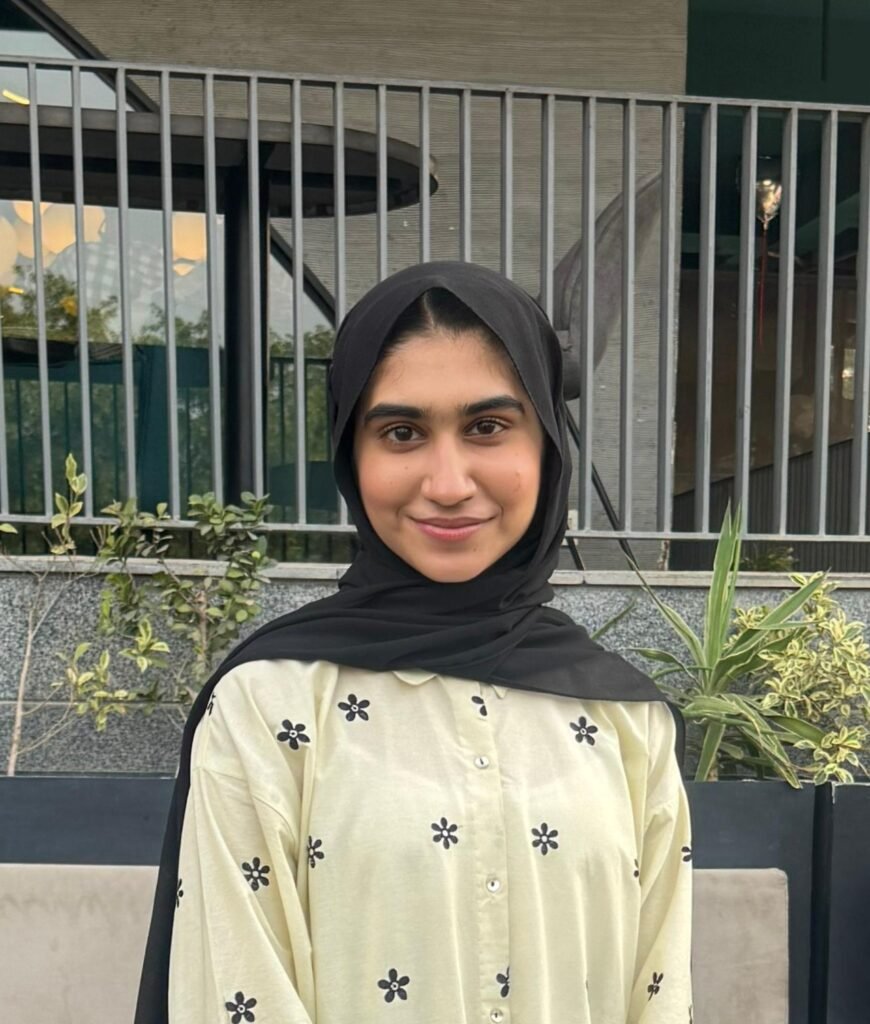
Fatima Sajjad is a Peace and Conflict Studies student and emerging researcher interested in understanding the deeper political, social, and security dimensions of contemporary conflicts. Her writing examines issues of power, peace, human rights, and international relations.