Muhamad Saeed
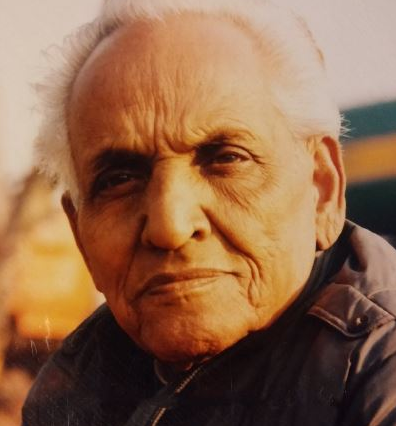
Nestled quietly within the serene pathways of the H-8 Graveyard in Islamabad lies the final resting place of a literary giant whose words continues to echo through the corridors of Urdu literature. On October 27, Pakistan observed the 31st death anniversary of Mumtaz Husain, globally celebrated by his pen name, Mumtaz Mufti. Passing away in 1995 at the venerable age of 90, Mufti left behind a legacy that did not merely enrich Urdu fiction but fundamentally revolutionized the way human psychology, social taboos, and spiritual metrics were explored in the Subcontinent. Today, more than three decades after his departure, his voice remains as relevant, piercing, and transformative as ever.
Born on September 11, 1905, in Batala, undivided Punjab, Mufti’s early life was a complex tapestry of observation and rebellion. He began his professional career as a schoolteacher and later transitioned into the civil service under British rule, eventually migrating to Pakistan after the Partition in 1947. However, it was his inner world—a restless, probing intellect deeply fascinated by Sigmund Freud, Alfred Adler, and Fyodor Dostoevsky—that defined his true calling. In the nascent stages of his literary journey, which famously began with his short story “Jhuki Jhuki Aankhen,” Mufti established himself as an uncompromising non-conformist. He openly discarded superficial social conventions, using his pen to conduct a psychological autopsy of the human mind, exposing suppressed desires and societal hypocrisies that conservative circles fiercely frowned upon. What truly elevates Mumtaz Mufti into the pantheon of literary legends is the profound, almost cinematic transformation his worldview underwent later in life. His trajectory from a staunch, Freudian religious skeptic into an ardent explorer of Sufism remains one of the most fascinating intellectual evolutions in subcontinental history. This magnificent shift was catalyzed primarily by his deep, lifelong companionship with the legendary civil servant and mystic intellectual, Qudrat Ullah Shahab. Yet, even as he leaned into the realms of mysticism, Mufti never lost his analytical rigor. He did not become a reclusive ascetic; instead, he approached spirituality through the lens of a psychological realist, questioning, observing, and stripping away artificial pretense Mufti’s masterful catalog of work is headlined by his monumental autobiographical epics, Alipur Ka Eli and Alakh Nagri. Alipur Ka Eli, initially viewed as a provocative account of a lover challenging entrenched social taboos, remains a masterclass in introspective realism. Its sequel, Alakh Nagri, masterfully documents his spiritual awakening, chronicling his devotion and exposure to the unseen dimensions of mysticism. His travelogue Labbaik, a raw, unconventional reportage of his Hajj pilgrimage, broke traditional boundaries of religious writing. Instead of relying on conventional, ritualistic narratives, Labbaik presented a breathtakingly honest account of a human soul standing naked before his Creator, full of flaws, doubts, and overwhelming love. Beyond these epics, Mufti was a master of short stories and character sketches. His collections, including Gubbare, Ram Din, Mom Ke Putle, Gudia Ghar, Asmarain, and Samay Ka Bandhan, showcase his uncanny ability to take the most mundane, micro-events of daily life and spin them into profound philosophical realizations. His sharp wit and observational prowess were further cemented in his celebrated books of character sketches like Piaz Ke Chhilke, Okhay Log, and Aur Okhay Log. In these texts, Mufti peeled back the metaphorical layers of human personalities—much like peeling an onion—to reveal the vulnerabilities, internal contradictions, and core truths hidden beneath. His swan song, Talash, served as a culminating philosophical quest, highlighting the true, inclusive spirit of Quranic teachings and divine love over rigid dogmatism. In recognition of his stellar lifetime achievements, the Government of Pakistan conferred upon him the prestigious Sitara-e-Imtiaz in 1986, followed by India’s Munshi Premchand Award in 1989. Yet, the greatest testament to Mufti’s genius is not found in official medals, but in the timelessness of his prose. As we navigate a highly fragmented 21st-century digital landscape characterized by hyper-materialism, alienation, and deep psychological anxiety, Mufti’s insights into inner reformation and structural empathy act as an essential cultural compass. Though he rests eternally alongside his lifetime friend Qudrat Ullah Shahab in Islamabad’s soil, Mumtaz Mufti continues to live vibrantly on the bookshelves and in the hearts of thousands of readers across the Urdu-reading world. He proved that while the mortal traveler must inevitably depart, the words penned with absolute honesty possess an immortal spark, passing down enlightenment to generations unborn.