

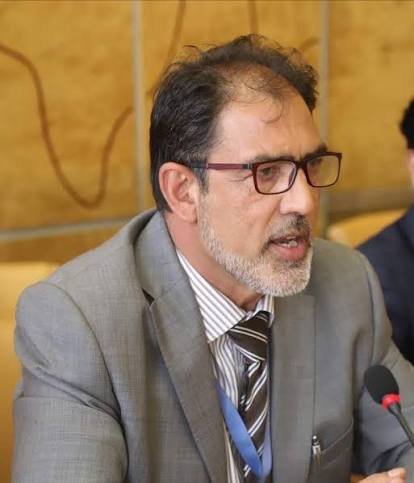
Altaf Hussain Wani
Allama Muhammad Iqbal is remembered as a philosopher-poet whose ideas reached far beyond the page. He wrote about faith, selfhood and the fate of the Muslim world, but Kashmir held a particular place in his imagination. Its mountains and lakes inspired him; the hardships faced by its people troubled him. For Iqbal, the valley’s beauty could not be separated from the lives of those who lived there.
His connection to Kashmir was both personal and political. He traced his family’s roots to the region, and he followed its affairs with deep concern. Though his work often addressed the wider Muslim community and the future of Muslims in India, he also spoke out against the conditions Kashmiris endured under Dogra rule. He captured the tragedy of this contrast—the fall of a once-glorious land into a state of helplessness—in his poignant verses:
آج وہ کشمیر ہے محکوم و مجبور و فقیر
کل جسے اہل نظر کہتے تھے ایرانِ صغیر
(Today that Kashmir is subjugated, helpless, and impoverished;Which the people of vision once called the ‘Little Iran’)
Life under Dogra rule
The political order that shaped Iqbal’s concern began with the Treaty of Amritsar in 1846, after which Kashmir came under Dogra rule. By the early twentieth century, the Muslim majority faced severe social and economic disadvantages. Many ordinary people laboured under heavy taxes and limited opportunities, while access to education and government employment remained unequal.
For Kashmir’s peasants, these pressures were not abstract questions of policy. They affected the ability to support a family, pursue an education or imagine a different future. Resentment grew over time, fuelled by a sense that the administration offered little voice or protection to much of the population.
Iqbal understood that this contrast mattered. Kashmir was celebrated for its natural beauty, yet its people were living with injustice. He lamented the plight of the “Man of Truth” who finds himself crushed by the machinery of power:
سینہء افلاک سے اٹھتی ہے آہ سوز ناک
مرد حق ہوتا ہے جب مرعوب سلطان و امیر
(A heart-wrenching sigh rises from the chest of the heavens,When the Man of Truth is intimidated by the Sultan and the Emir)
From concern to public advocacy
Iqbal’s engagement with Kashmir was not only intellectual. His visits to the region in the early 1920s brought him into contact with its people and conditions. The experience deepened his sense that the Kashmiri question was tied to larger systems of power: colonial influence, unequal rule and the concentration of political authority.
He used his standing as a poet and public figure to speak about Kashmir beyond the valley. His aim was to make its people’s grievances harder to ignore among British officials and the wider Indian public. He also recognised that political change required more than outside pressure. People facing injustice needed a way to organise, a language for their demands and confidence in their own capacity to act.
That need became especially visible in 1931. Protests in Srinagar were met with a violent crackdown, and the deaths of demonstrators are commemorated as Martyrs’ Day. The events gave new urgency to efforts to organise support for Kashmiris. Iqbal became involved in the formation of the All India Kashmir Committee in Lahore and served as its president.
The language of resistance
Iqbal’s poetry offered another kind of support. He did not write about suffering simply to record it. Again and again, he challenged readers to reject passivity and recover a sense of purpose. One of his central ideas, khudi—often translated as selfhood—urged people to recognise their moral strength.
For the people of the valley, Iqbal’s words served as a reminder that the spirit of the land is inextinguishable. He believed that the inherent dignity and passion of the Kashmiri people—symbolized by the Chinar—could never be fully suppressed:
جس خاک کے ضمیر میں ہے آتشِ چنار
ممکن نہیں کہ سرد ہو وہ خاکِ ارجمن
(In the soul of the soil where the fire of the Chinar burns,It is impossible for that radiant earth to grow cold)
His poetry supplied a broader moral and philosophical framework for thinking about justice and freedom. In Javid Nama and Sāqi Nāma, images of passion and spiritual awakening could be read as an appeal to resist resignation—not only in Kashmir, but wherever people struggled to live with dignity.
A lasting influence—and its limits
Iqbal’s ideas resonated with Kashmiri leaders and young people who were beginning to demand more than petitions to the Maharaja. However, he was also acutely aware of the tragedy of loss—not just of political freedom, but of the very land and heritage being eroded by greed and betrayal. This sense of loss is echoed in the haunting lines:
دہقان و کشت و جوئے و خیاباں فروختند
قومے فروختند و چہ ارزاں فروختند
(They sold the farmers, the fields, the streams, and the streets;The nations sold themselves, and oh, how cheaply they sold!)
Iqbal died in 1938, before the partition of British India and the upheaval of 1947. His political thought helped shape later arguments about Muslim political identity and the future of the subcontinent. After Pakistan was created, many saw it as connected to the hopes he had expressed.
Iqbal never led an uprising in Srinagar. His influence was exercised through words, public advocacy and political organisation. He helped turn attention towards a people whose grievances might otherwise have remained confined to the valley. His legacy lies not in claiming the Kashmiri struggle as his own, but in recognising its importance and giving it a wider audience. The Maharaja’s government could command force; Iqbal’s answer was to insist that dignity, once awakened, could not be easily silenced
Altaf Hussain Wani is the Chairman of the Kashmir Institute of International Relations (KIIR), specializing in the analysis of Kashmir politics, policy, and international advocacy. He can be reached on X at @sultan1913 or via email at; saleeemwani@hotmail.com.