

In international politics, irony is often mistaken for strategy. Few episodes illustrate this more starkly than the unfolding Nord Stream pipeline saga. Leading US economist Steve Hanke recently highlighted reports that German prosecutors have identified former Ukrainian Special Forces soldier Serhii Kuznetsov as a key figure in the 2022 sabotage operation. If these allegations are substantiated, they reveal one of the most extraordinary paradoxes of our age: Germany, Europe’s industrial powerhouse, may have become both victim and benefactor in the same conflict.
The Nord Stream pipelines were far more than engineering projects beneath the Baltic Sea. They were the steel arteries of Germany’s post-Cold War economic model. Cheap and abundant Russian natural gas-powered factories, stabilised energy costs, and helped transform Germany into Europe’s economic engine.
For decades, Berlin pursued Wandel durch Handel (“change through trade”), believing that economic interdependence would reduce conflict and encourage political moderation. Whatever its flaws, the policy delivered tangible benefits. German prosperity became closely intertwined with Russian energy supplies.
Then came the war in Ukraine.
Russia’s invasion in February 2022 shattered assumptions underpinning Europe’s security architecture. Yet the destruction of Nord Stream represented something even more profound. It was not merely collateral damage in a geopolitical confrontation but an attack on a central pillar of Germany’s economic infrastructure.
Pipelines are not simply conduits for gas. They embody national wealth, strategic leverage, and decades of economic planning. Their destruction was tantamount to severing a vital economic lifeline.
What followed makes the episode even more remarkable.
Germany emerged as one of Ukraine’s strongest supporters, allocating tens of billions of euros in military, financial and humanitarian assistance. German taxpayers absorbed substantial costs while consumers faced higher energy prices and economic uncertainty. The same nation whose infrastructure was destroyed became one of the principal financiers of the country allegedly linked to the perpetrators.
History offers few comparable examples.
Germany’s support for Ukraine is rooted in principles that transcend economics: defence of sovereignty, resistance to aggression and preservation of Europe’s security order. These are legitimate objectives. Yet states are also expected to safeguard their national interests. When moral commitments collide with material realities, difficult questions inevitably emerge.
The Nord Stream affair exposes a deeper tension within Western policymaking. Modern alliances often assume that shared values can override competing interests. History suggests otherwise. Alliances may soften conflicts of interest, but they rarely eliminate them. Beneath the rhetoric of unity, states continue to pursue their own security imperatives, sometimes at the expense of partners.
The nineteenth-century British statesman Lord Palmerston captured this enduring reality with characteristic clarity: “We have no eternal allies, and we have no perpetual enemies. Our interests are eternal and perpetual.” Whether one applauds or deplores such realism, the Nord Stream controversy demonstrates its continuing relevance. Nations may share friends, enemies and ideals, but they seldom surrender their interests. In moments of crisis, strategic necessity often overrides diplomatic sentiment.
Viewed through this lens, the Nord Stream affair is less an anomaly than a lesson in geopolitical realism. It underscores the uncomfortable truth that international politics remains governed by power, security calculations and competing national priorities rather than sentiment or gratitude.
For Germany, the episode raises profound questions about sovereignty and strategic autonomy. Can a major power remain truly sovereign if critical infrastructure can be destroyed without immediate political consequences? Can alliance cohesion endure when economic sacrifices appear increasingly one-sided? And how should democratic governments explain such contradictions to their citizens?
These are neither anti-Ukrainian nor pro-Russian questions. They are questions any democracy must confront when foreign policy choices impose significant domestic costs.
The lesson extends well beyond Europe. Across the world, both middle and great powers are rediscovering the limits of values-driven foreign policy. Strategic partnerships remain essential, but they are most durable when grounded in clear-eyed assessments of mutual interests rather than assumptions of permanent alignment.
In the final analysis, the Nord Stream affair may symbolise a defining contradiction of our era: a world in which friends can become liabilities, adversaries can become indispensable, and economic logic can be subordinated to geopolitical necessity. Germany’s experience serves as a cautionary tale about the complexities of modern alliance politics.
Hegel famously observed that history teaches us that humanity learns little from history. One hopes this time proves different.
If Germany indeed paid the price for losing its own economic lifeline and then helped finance the struggle of those connected to its destruction, future historians may view the episode not merely as a geopolitical controversy but as a monument to the contradictions of twenty-first-century statecraft. In an age of strategic ambiguity, the Nord Stream saga reminds us that nations ignore the balance between principles and interests at their peril. Sound policy requires coherence between values, interests and actions. When those elements drift too far apart, even the strongest alliances must eventually confront uncomfortable truths.
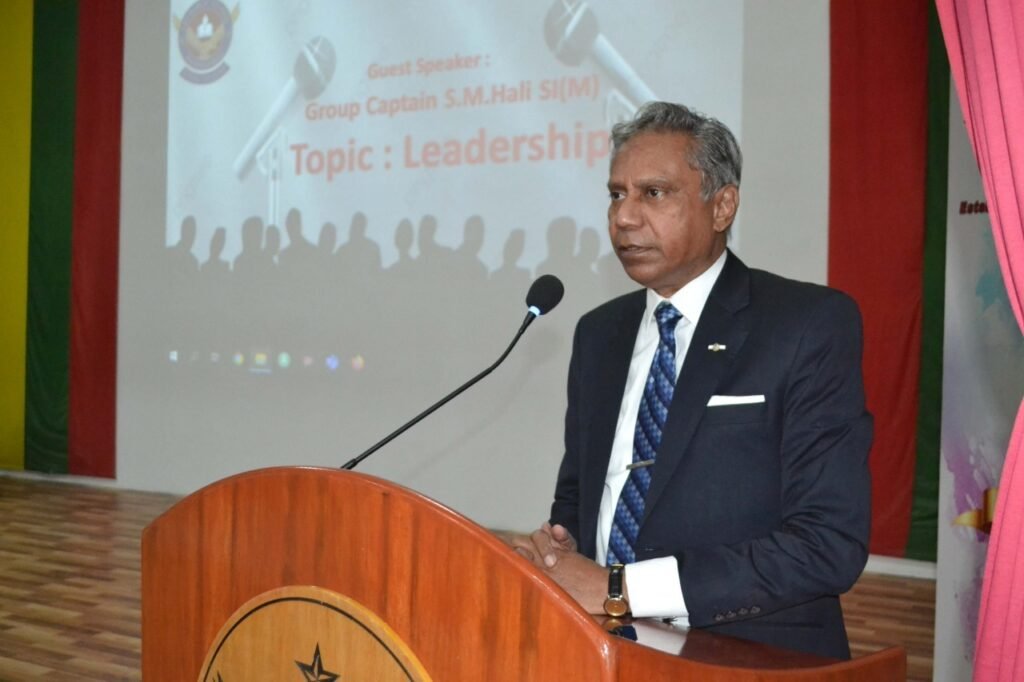
The writer is a retired Group Captain of the Pakistan Air Force (PAF). He is a columnist, analyst, and TV talk show host who has authored 16 books on current affairs, including ten on China.