Pakistan’s Livestock Sector at a Glance
|
Indicator |
Pakistan |
Global / Benchmark |
| Share of national GDP | 14.6% (FY2025-26) | — |
| Share of agricultural value addition | 62.4% | — |
| Rural families dependent on livestock | 8+ million | — |
| Milk production (2024-25) | ~66–69 million tonnes (3rd largest producer) | India 1st (~248 Mt), US 2nd (~103 Mt) |
| Average milk yield per animal | 1,500–1,800 L/lactation (10–14 L/day) | EU/N. America 8,000–10,000 L/lactation (50–60 L/day) |
| Meat production (FY2026) | 6.31 million tonnes | — |
| Meat exports | $196m (2015) → $427m (2024) → $500m+ (FY2025) | — |
Sources: Pakistan Economic Survey 2025-26; Ministry of National Food Security and Research; FAO/FAOSTAT; OECD-FAO Agricultural Outlook 2025-2034; USDA; PARC.
Introduction: Rethinking Pakistan’s Livestock Development Strategy
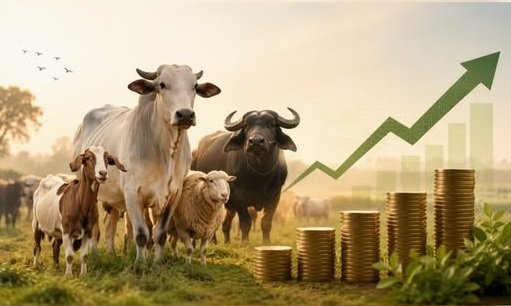
 Pakistan’s livestock sector stands at a decisive crossroads. The numbers alone justify the urgency: livestock now contributes 14.6 percent of national GDP and 62.4 percent of agricultural value addition, supporting more than 8 million rural families and providing 35 to 40 percent of household income in rural areas, according to the Pakistan Economic Survey 2025-26. Gross value addition from the sector rose from Rs 6,004 billion in FY2025 to Rs 6,229 billion in FY2026, growing at 3.75 to 4.72 percent even as crop agriculture lagged behind at under 1.5 percent. Yet translating this scale into sustainable economic gains requires more than financial investment or repeated institutional restructuring. It demands professional leadership, evidence-based policymaking, effective governance, indigenous research, and the systematic utilisation of Pakistan’s highly qualified human resources.
Dr Muhammad Younas, President of the Pakistan Animal Scientists Association (PASA), has raised important questions about the performance of the Livestock and Dairy Development Board (LDDB), the country’s reliance on foreign expertise, the employment prospects of animal production graduates, and the persistent challenges confronting livestock health, vaccination, breeding, and productivity. His concerns deserve serious consideration within a broader national and international framework, because Pakistan already sits among the world’s largest livestock economies, yet converts that scale into far less value than its competitors.
The Global Lesson: Scale Without Productivity
 Pakistan is the world’s third-largest milk producer, behind only India and the United States, with output of roughly 66 to 69 million tonnes in 2024-25 — about 6.8 percent of global production, according to FAO and OECD-FAO data. It also ranks among the top producers of buffalo and goat milk, and meat production reached 6.31 million tonnes in FY2026. On paper, this places Pakistan alongside the world’s dairy and meat powerhouses.
The reality is starkly different once productivity is measured per animal rather than by herd size. Pakistan’s dairy animals yield an estimated 1,500 to 1,800 litres per lactation — roughly 10 litres a day for buffaloes and 14 litres for cows — compared with 8,000 to 10,000 litres per lactation, or 50 to 60 litres a day, in the European Union and North America. Even India, farming under comparable agro-climatic conditions, achieves nearly double Pakistan’s per-animal output through sustained investment in cooperatives, breeding programmes, and balanced feeding. International experience — from New Zealand’s pasture-based dairy model to the Netherlands’ precision livestock systems — demonstrates that competitive livestock economies are built on strong veterinary services, research-driven breeding, reliable disease surveillance, quality-assured vaccines, and close collaboration between universities, farmers, industry, and government. Their progress depends not on importing technology alone but on developing domestic capacity to adapt, validate, and sustain it.
Foreign technical assistance remains valuable where it introduces specialised knowledge or addresses a genuine capacity gap. But Pakistan has a substantial academic and scientific base in veterinary medicine, microbiology, virology, biotechnology, animal nutrition, breeding, epidemiology, and vaccine development. The central question is not whether foreign experts should be engaged, but whether every international partnership carries a clear mechanism for transferring knowledge, training Pakistani professionals, strengthening local institutions, and producing measurable outcomes.
LDDB Reform: Beyond Organisational Restructuring
 PASA’s concerns about LDDB’s performance and restructuring deserve an independent, evidence-based assessment. Organisational restructuring alone cannot guarantee improved productivity, disease control, exports, or farmer welfare. A credible reform programme should begin with a comprehensive performance audit covering expenditure, project outcomes, procurement, vaccine effectiveness, breeding interventions, and measurable benefits delivered to farmers. Programmes addressing lumpy skin disease (LSD) and foot-and-mouth disease (FMD) should be evaluated against transparent indicators: disease incidence, vaccination coverage, vaccine quality, mortality reduction, reproductive performance, milk yield, and economic return. Public investment must be linked to demonstrable results, with technical review and, where appropriate, independent investigation for projects that fall short.
Human Capital: The Missing Link
 One of Dr Younas’s most important points concerns the employment prospects of animal production graduates. Pakistan’s universities produce qualified graduates in animal production, dairy science, veterinary medicine, animal nutrition, and biotechnology, yet these qualifications are often disconnected from industry needs and research opportunities. Animal health and animal production are complementary but distinct domains: veterinary professionals manage diagnosis, treatment, and preventive medicine, while production specialists drive nutrition, breeding, and farm management. A health-centred approach without attention to production efficiency cannot realise the sector’s economic potential, and the reverse is equally true. Government should build a structured employment framework for both fields — paid internships, competitive graduate placements, university-industry partnerships, and merit-based recruitment — so that appointments rest on qualifications and demonstrated expertise rather than institutional preference.
From Disease Control to Disease Prevention
Livestock diseases impose costs far beyond animal loss: they reduce milk and meat output, disrupt trade, raise veterinary expenditure, and threaten rural incomes. LSD and FMD outbreaks in recent years have repeatedly interrupted export consignments and depressed productivity, illustrating why emergency response must be embedded in a long-term animal health strategy. Vaccination is essential where scientifically indicated, but programmes must be matched with quality assurance, correct storage and administration, epidemiological surveillance, and monitoring of field effectiveness. The World Organisation for Animal Health (WOAH) framework for veterinary services and disease surveillance, together with the One Health approach linking human, animal, and environmental health, offer internationally recognised models that Pakistan should align with more systematically — strengthening independent vaccine testing, laboratory capacity, and disease reporting in partnership with universities and farmers.
Animal Nutrition, Genetics, and Farm-Level Productivity
Disease management alone cannot transform production. Pakistan must address inadequate feed quality, nutrient deficiencies, inefficient breeding, and weak farm management — the structural factors behind the yield gap described above. Internationally competitive systems rely on balanced nutrition, genetic improvement, reproductive management, accurate records, and locally appropriate technology. Pakistan should strengthen research on indigenous breeds such as Sahiwal and Nili-Ravi, which already outperform other local breeds, expand access to balanced feed and mineral supplementation, and evaluate imported genetics for suitability to local climate, disease risk, and farmers’ financial circumstances. Extension services should connect research institutions with farmers through field demonstrations and digital advisory tools, keeping smallholders — who manage roughly 80 percent of Pakistan’s dairy animals — at the centre of this transformation.
Export Competitiveness and International Standards
Pakistan’s meat exports have more than doubled over the past decade, from about US$196 million in 2015 to US$427 million in 2024, and exceeded US$500 million in FY2025 — evidence that targeted investment can yield rapid returns. Yet the country still captures only a fraction of its potential in global markets dominated by Brazil, India, Australia, and the European Union. Realising further gains requires far more than higher production volumes. International buyers demand consistent quality, traceability, food safety, and compliance with the World Trade Organization’s Sanitary and Phytosanitary framework and the specific requirements of each importing market. A comprehensive export programme should address the entire value chain: animal identification, veterinary certification, disease surveillance, hygienic slaughter, cold-chain management, laboratory testing, and traceability, with disease-free production zones considered where credible surveillance and biosecurity exist. The objective should be to strengthen domestic capacity and reduce avoidable input dependence, not to reject imports or foreign collaboration indiscriminately.
Professional Autonomy, Governance, and Accountability
Institutions perform better when responsibilities are clearly defined, decisions rest on evidence, and technical specialists hold appropriate authority within accountable management systems. Pakistan should undertake a comprehensive review of livestock governance across the LDDB, provincial departments, veterinary services, and research institutions to identify overlapping mandates and coordination gaps. Professional associations such as PASA can contribute independent perspectives on workforce gaps and technical policy, and their recommendations deserve structured consultation rather than dismissal on institutional grounds. Every major project should carry clearly stated objectives, a defined implementation period, an allocated budget, and an independent evaluation mechanism.
A Three-Year Livestock Transformation Programme
A time-bound, three-year programme could anchor this shift. Year one: an independent performance audit of major programmes, a map of available scientific expertise, a review of vaccine quality and surveillance, and baseline productivity indicators. Year two: expanded vaccination and surveillance, improved nutrition and breeding services, paid internships and merit-based graduate placements, and university-industry research partnerships. Year three: evaluation of disease incidence, milk and meat productivity, farmer incomes, graduate employment, and export compliance, followed by scaling of successful interventions and redesign of ineffective ones. An independent technical and management framework, with representation from animal health, animal production, academia, industry, and farmers, should oversee implementation, with progress reported publicly.
Conclusion: From Scientific Capability to National Self-Reliance
Dr Muhammad Younas has highlighted an important national question: why does Pakistan continue to struggle to convert substantial scientific and professional capacity, and one of the world’s largest livestock herds, into consistent sector performance? The answer requires honest examination of institutional governance, resource utilisation, professional opportunity, and accountability. Pakistan does not need to isolate itself from international expertise; it needs partnerships that build domestic capability, empower qualified professionals, and produce lasting benefits. Closing even half the productivity gap with regional competitors — through genetics, nutrition, disease prevention, and professional management — could substantially lift milk and meat output without adding a single additional animal. The ultimate measure of reform will be a healthier livestock population, more productive farms, better farmer incomes, meaningful opportunities for young scientists, stronger domestic institutions, and internationally competitive exports. Pakistan’s livestock sector can become a powerful engine of rural prosperity — but only when professional expertise is matched with institutional trust, transparent governance, and sustained commitment to results.
The writer is Former Professor & Head, Department of Entomology,University of Agriculture, Faisalabad