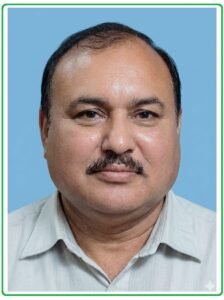
Amina Taj Abbasi
There is an old saying: if someone drills a hole in the ship, it does not matter whose side it is on. The whole ship will sink.
Think of the world as one ship. Nearly eight billion of us are aboard, and no matter which deck we live on, we share the same hull, the same water, and the same fate. Some travel in grand cabins and others in cramped quarters below deck, but when water rises, it does not check tickets.
This is exactly how climate change works. It does not matter which country drills the hole. Emissions released in one corner of the world warm the oceans, melt glaciers, and change rainfall everywhere else. A factory chimney in one nation can contribute to floods in another. The rich and the poor, the polluter and the victim, all end up in the same water if the ship goes down. Climate change knows no borders.
The Westphalian Blind Spot
Since the Treaty of Westphalia in 1648, the world has understood security in simple terms: states have borders, borders have armies, and a threat is something that crosses a border with weapons. Sovereignty meant that no one could harm your territory without facing consequences.
Climate change breaks this logic. Imagine a foreign army killed 10,000 Pakistanis in a single month. The response would be immediate and massive, with emergency sessions, military mobilisation, and a real risk of escalation. Yet climate change kills thousands every year through floods, heatwaves, and failed harvests, and no army marches, no treaty is declared void, and no one is held accountable.
The harm comes from emissions released thousands of kilometres away, by countries and companies that never intended to attack anyone. There is no invading force and no enemy flag. Our old definition of security has no place for an enemy who is everywhere and nowhere at once.
The Wettest Deck
Pakistan knows this injustice firsthand. The country contributes less than one percent of global greenhouse gas emissions, yet it sits among the most climate-vulnerable nations on Earth. In 2022, catastrophic floods killed over 1,700 people, affected around 33 million, and caused damage estimated in the tens of billions of dollars. Entire villages vanished underwater, and millions of livelihoods were lost.
Those who did the least to drill the hole were the first to drown. This is the central moral problem of the climate crisis: responsibility and suffering are distributed in opposite directions.
History’s Warnings
History offers warnings that we have chosen to ignore. In November 1970, the Bhola cyclone killed hundreds of thousands of people in East Pakistan. The anger over the slow and inadequate response from the government in West Pakistan became a turning point. Weeks later, the Awami League won a landslide election victory, and within a year the country was divided. A storm did not break Pakistan, but it exposed a fracture that governance had failed to heal.
Syria tells a similar story. Between 2006 and 2010, the country suffered one of its worst droughts on record, a severity researchers say was made more likely by a warming climate. Farmers abandoned their land and crowded into cities already strained by poverty and politics. When unrest began in 2011, the ground had been prepared. Scholars debate how large the drought’s role was, since water mismanagement and political repression also mattered, but few deny that it added fuel to the fire.
Climate change rarely starts wars on its own. It acts as a threat multiplier: it takes a weak harvest, a fragile state, or an ignored grievance and pushes it past the breaking point. The water rising in the ship finds every crack in the hull.
The Evidence Is Observable
The evidence is no longer a forecast; it is something we can observe. Glaciers are retreating, seas are rising, and coastlines are shrinking. Global sea level has already risen by roughly 20 to 25 centimetres since 1900, and the pace is accelerating. If the ice sheets of Greenland and Antarctica were to melt completely, the oceans would rise by around 70 metres, swallowing the continental shelves and the cities built on them. That is the worst case, and it would unfold over centuries. But even a rise of a metre or so by the end of this century would displace hundreds of millions of people and redraw the map of the world.
The international community has long known this. The Kyoto Protocol of 1997 set binding targets for developed countries, and the Paris Agreement of 2015 pledged to hold warming well below 2°C, and ideally to 1.5°C. Yet emissions have continued to rise, and promises have outpaced action. The problem is not a lack of knowledge. It is a lack of urgency.
Securitise the Climate
First, the world’s power elites must securitise climate change, treating it as an existential threat on par with war or terrorism, with the budgets, urgency, and political will that implies.
Securitisation is what turns an issue from “environmental policy” into a matter of survival. When something is declared a security threat, it receives emergency attention, institutional priority, and funding. States found trillions for wars and financial bailouts when they believed their survival was at stake. The same seriousness has never been applied to the crisis that threatens far more.
Reject Fatalism
Second, we must stop describing this disaster as destiny or the will of God. Floods and heatwaves may feel like acts of fate, but their rising frequency and severity are the result of human choices, which means humans can make different ones.
Fatalism is comfortable because it removes responsibility. If the suffering is destiny, no one needs to change. But climate change is not a punishment sent from above. It is a human-made disaster, and what humans have made, humans can unmake.
From Conferences to Solutions
It is time to move from conferences to solutions:
- Cut emissions fast enough to stay within the limits set at Paris, with the largest emitters leading the way.
- Finance clean energy in the developing world, so that poorer nations can grow without repeating the mistakes of the industrialised ones.
- Make polluters pay. Funds for loss and damage, agreed at recent climate summits, must become real money reaching real victims like those in Pakistan.
- Invest in adaptation, including flood defences, early warning systems, and climate-resilient agriculture, because some damage can no longer be avoided.
Conclusion
The ship is taking on water. The hole was drilled by human hands, and only human hands can repair it. We can keep arguing over whose side of the ship it is on, or we can accept that there is no safe cabin on a sinking vessel. Climate change is not a problem of one nation or one deck. It is the defining security challenge of our age, and the only question left is whether we will act together before the water reaches every deck.
The author is Student of international relations at National Defence University, Islamabad
and she can be reached at aminatajabbasi99@gmail.com