Humaira Motala
As a Karachiite, you grow up believing you are a cut above — more aware, more exposed, more tested. Call it pride, call it that superiority complex we carry. That feeling is multiplied if you are a member of Karachi Press Club. KPC is not just a building at Saddar, it is a history of struggle, resistance and democracy where any government intervention is traditionally seen as an invasion. With that KPC badge on my shoulder, I walked into Lahore Press Club at Shimla Pahari — a bit judgmental, a bit curious.
LPC Shimla Pahari — History and Scale
Lahore Press Club is at Shimla Pahari — heart of Lahore. It is considered the biggest press club in Pakistan by membership, around 3,250 members. Karachi Press Club is older and second in membership but first in democratic struggle history.
Veteran journalist Raja Aurangzeb played a major role in convincing late CM Ghulam Haider Wyne to allot land for LPC at Shimla Pahari in 1992. Elections are normally very tough. Journalist Panel led by Arshad Ansari made history — he is the only journalist elected 14 times as President, and in 2013 his panel won all 13 seats with record 1143 votes. Like KPC it also depends on government grants, but Punjab CMs visit LPC for oath-taking.
“LPC’s honorary membership is not routine — it is a mark of honour reserved for persons of distinguished merit, from Kuldip Nayar to Ali Zafar to Baba Najmi, and is conferred only once in years at the discretion of the Governing Body.”
President Arshad Ansari’s Vision:
Entering the President’s chamber at Lahore Press Club, I felt like I had stepped into an exquisite executive suite — fine furniture, spacious, well-lit. It immediately flashed my mind to KPC. Our General Secretary, Mr Aslam Khan, sits in a cramped room with three outdated chairs and a table, where there is hardly space to walk. And our President, Fazil Jamili — you can find him normally at first floor with other journalists in the club, because he does not even have a proper office to sit in.
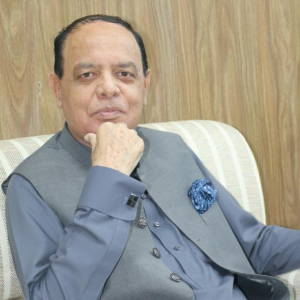
After being elected for the 14th time and setting a record, Arshad Ansari greeted a journalist from Karachi with warm hospitality. He shared that during his tenure, the Punjab government enhanced the annual grant from Rs 2 crore to Rs 5 crore. The recent development — the new cafeteria, updated Gym and other construction — is majorly supported by the Punjab government and corporate partners, he said.
Ansari added that LPC was perhaps the only press club where every member was insured, and the premium is being paid by the club itself. The present body, he said, was trying its best to serve members and their families — a full-time clinic with dedicated staff and doctors, MoUs signed with different hospitals for better healthcare.
“There are MoUs with school chains like Beaconhouse and Unique Group to facilitate members’ children with quality education at discounted fees. The club is equipped with a 100 KW solar system”, Ansari described his milestones.
LPC has put a stop to new membership for the last nine years. He recalled that after 2003, around 1,300 journalists were given 10-marla plots — roughly 250 square yards — where they built houses with their own resources. In his present tenure, he said, he was in negotiations with the Punjab government to secure plots for 2,000 more members.
Meeting Arshad Ansari, who brings in so much experience as President, I was reminded of Abigail Van Buren: “If we could sell our experiences for what they cost us, we would all be millionaires.” On a lighter note, looking through the lenses of his spacious, well-decorated office — he did seem like a millionaire.
Women Leadership — Madiha Almas
Apart from the President, other governing body members including General Secretary Afzal Talib and Vice President Madiha Almas were welcoming.
Madiha Almas, who is a program anchor at Neo TV and has previously served at Express TV and Dunya TV with 16 years of experience, told me “I am perhaps the only active news anchor participating in club politics.” She shared that for the first time, two reserved seats have been introduced in LPC — one for women and one for minority. “I am trying to engage more women in club activities through different events,” she noted.
Here I was surprised to learn that unlike KPC, LPC does not have formal committees for everything — including a women’s committee. What I perceived through my observation and experience was that committee or no committee, there wasn’t much difference in the working of both clubs.
By conversation, Almas comes across as a woman who believes in taking people along — especially women — and lifting them. And perhaps more fitting for her is what Madeleine Albright said: “There is a special place in hell for women who don’t help other women.” Madiha, clearly, believes in the opposite.
Same Purpose, Different Architecture
Then came the tour of the club. Every space, every corner, felt spacious and huge — especially the press conference hall. Unlike KPC, which is smartly designed and professional yet built in a much smaller space, LPC has the luxury of land.
One is awestruck looking at the Executive Room meant for high-profile dignitaries. It looked like the drawing room of some influential Dubai sheikh or a feudal lord — very finely done, artistic interiors. In KPC, again, we have a cramped conference room with chairs around a round table, no sofas, yet smartly and professionally designed where all dignitaries are entertained. The difference is of scale, not of hospitality.
LPC has a vast cafeteria, a big reception area, separate sitting areas, spacious computers room for journalists, including separate indoor games rooms and resting places. A separate room for women members with good decor. Long and wide corridors are decorated with memories — old governing body photographs and cultural paintings hanging on walls, telling the history of the club as you walk.
Very grand indeed, still I felt more proud because even in a limited space, we at KPC are provided with a professional yet homely environment, where our leadership keeps itself on a lower pedestal — not superior to its members.
I am not saying LPC is doing anything wrong. They do what they deem fit according to their space, resources and traditions — and they do it well. And KPC continues its own legacy — of togetherness, humility and making the most of what we have, with heart. Both clubs serve the same purpose: to give journalists a home. Just the architecture is different.
The Soul of LPC — People I Met
There I met The Daily Minute Mirror’s Editor Mr. Ahsan Raza — himself a fine, humble but very professional gentleman. Ahsan is from that breed of journalism which is on the edge of extinct now. You find him man of few words yet when he speaks, he does with authority and knowledge. I find him man of multi-tasking — visiting faculty, writing, TV current show appearances and running a full-fledged newspaper, which gets published also — daily. Ahsan Raza introduced me to one of his colleagues from The Nation and Daily Times, Mohsin Ali Turk, the LPC council member.
To be honest, I haven’t seen a man like him in my journalistic career so far, at least as far as I can recall. The guy was a wonderful example of hospitality, knowledge, courtesy, magnanimity — and when I say that word, I don’t mean only in things, but in behaviour also. He was generous enough to introduce his colleagues, to share his contacts, which I never find in my circle in Karachi. People normally get insecure to share their contacts, for one reason or another.
He was a weird combo of egotism and humbleness. He knew when to take a stand on his stance — there was no compromise. But he was quick to appreciate others and accept if he finds the arguments valid enough. No ego trip with friends. You would be short of words to describe his wisdom.
People say when they are happy, “You made my day.” But candid enough, as a journalist, he made my life as a journalist because when he read my first article on Kashmir while I was still there, he complimented me with something so weird and so beautiful, he said: “Ap ka feature parhne k baad maine apko un chand journalists ki list mai rakha hai jin ka nakhra karna banta hai.”
Weird, isn’t it? Men say such things for women’s beauty. Literally, coming from a person who is more experienced, more learned, more socially active and recognized, running his own huge publication — he made the most beautiful comment of my journalistic life.
Har achi baat par yaad aaya…
Ek shakhs ajeeb misaal huwa.
Meeting Mohsin as a journalist was altogether a different phenomenon, being a Kashmiri, he has that spirit of resilience and voicing for the have-nots. I have learnt so much from him as a journalist and as a human being. His philosophy of giving is altogether different. I didn’t find a single person to whom he has not offered food, tea, green tea — what they want — and it seemed as if he was running a langar in LPC on his account.
One of his remarks actually hit home- I couldn’t agree more: “Pakistan k log bohat ache hain agar jhoot bolna chor dein.” A great champion of cultural diversity and a great fan of Karachi. He was asking about Karachi and its people as if I had come from the USA, though he has been to the USA and China — but for him Karachi was something like a fantasy.
Abhi tou chand lafzon mai samaita hai tujhe maine,
Abhi meri kitabon mai teri tafseer baqi hai.
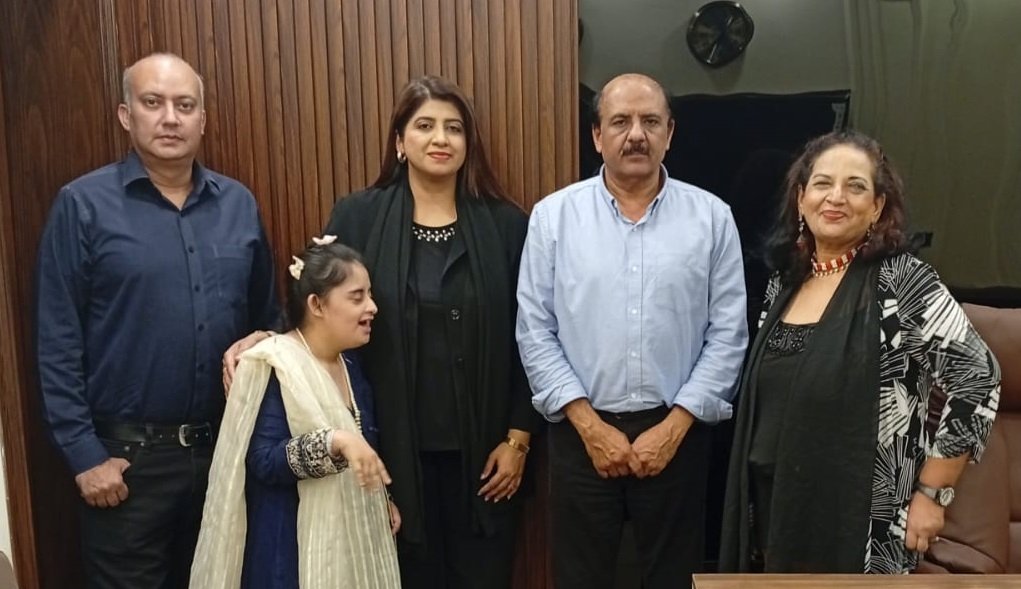
Mohsin introduced me to a very experienced female journalist, poetess and author with a warm smile, Saba Mumtaz Bano, seasoned but cheerful Shahida Butt, Farzana Chaudhry — a decent and serious lady who actively participates in club politics. On that dinner table you would find a serious man with a very good voice quality to be RJ enough, Arif Mian, who had written a book on Mr Nawaz Sharif PML (N). All of the are council members of LPC
All one way or another were different. They were not normal run-of-the-mill stuff. Be it Ahsan Raza or Saba Bano, Madiha Almas or Mohsin Turk.
As Albert Schweitzer said, “In everyone’s life, at some time, our inner fire goes out. It is then burst into flame by an encounter with another human being. We should all be thankful for those people who rekindle the inner spirit.”
Visiting LPC altogether was that flame for me — the one that reminded me why I became a journalist in the first place.
The writer is a senior journalist and columnist covering crime, law, social issues, governance, energy, health, literature, and women and children’s rights across Pakistan’s leading English media houses.