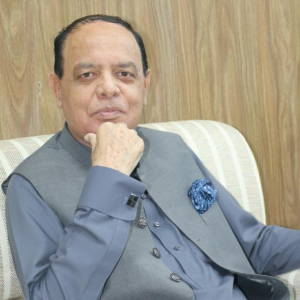
M. Jamil Ahmed Shahid (Samahnvi)
Kashmir is not merely a piece of land. It represents a history, a civilisation, a distinct identity, a collective national sentiment and the future of millions of people. For decades, the Kashmir dispute has remained a major issue in South Asian politics, deeply affecting relations between Pakistan and India and the prospects for peace in the region. In this sensitive environment, the debate over making Azad Jammu and Kashmir a formal province of Pakistan has emerged as an important constitutional, political and historical question.
Would provincial status resolve administrative and economic challenges, or could it create new complications for Kashmiri identity, the freedom movement and the right to self-determination?
This issue demands serious reflection, historical awareness and constitutional clarity rather than emotional reactions or political slogans.
The Present Status of Azad Kashmir and the Provincial Debate
Azad Jammu and Kashmir is not currently one of Pakistan’s four constitutionally recognised provinces. It has its own Interim Constitution of 1974, President, Prime Minister, Legislative Assembly and judicial system. Despite this administrative structure, questions concerning the distribution of powers, financial resources, governmental autonomy and relations with Pakistan have remained subjects of political debate.
It is important to distinguish between political statements, public speculation and an officially approved government policy. At the time of writing, no claim is being made here that a final decision to convert Azad Kashmir into a province has been formally adopted and implemented. Any such development must be assessed through official announcements, proposed constitutional amendments and the relevant legal proceedings.
Article 257 of Pakistan’s Constitution addresses the relationship between Pakistan and the State of Jammu and Kashmir in the event that the people of the state decide to accede to Pakistan. It provides an important constitutional context for examining the issue. Therefore, any proposal concerning Azad Kashmir’s future status must be considered in light of the broader Kashmir dispute, the wishes of its people and the constitutional principles involved.
The question is not simply whether a province would be administratively convenient. The more fundamental issue is whether such a change would protect the political rights, identity and aspirations of the Kashmiri people.
Would Provincial Status Weaken the Kashmir Cause?
The central question in the Kashmir dispute concerns the right of the people of Jammu and Kashmir to determine their political future. Relevant United Nations Security Council resolutions remain an important part of the historical and diplomatic framework surrounding the dispute. Pakistan’s stated position has also emphasised a peaceful and just settlement that respects the aspirations of the Kashmiri people.
If a proposal to make Azad Kashmir a province of Pakistan were formally introduced, several questions would require careful examination. What would be its constitutional basis? What objectives would it serve? What safeguards would protect the Kashmir cause and the principle of self-determination?
If such a change were presented as permanent integration without a settlement of the wider dispute, India might use it to advance arguments in support of its own political position. However, it would also be inaccurate to claim that provincial status alone would automatically end the Kashmir dispute or necessarily alter its international legal status.
The consequences would depend on the precise legal measures adopted, the diplomatic circumstances, international responses and the broader political context.
Pakistan must therefore ensure that any policy concerning Azad Kashmir remains consistent with the principle of self-determination and does not create unnecessary uncertainty about the future of the Kashmir dispute.
What Would Be the Impact on Indian-Occupied Kashmir?
The situation in Indian-administered Jammu and Kashmir remains part of a complex constitutional and political dispute. In August 2019, India revoked the region’s special constitutional status and reorganised the former state into two Union Territories. Several Kashmiri political parties opposed these measures, while their constitutional, political and identity-related consequences have continued to generate debate.
In this context, any major change in the status of Azad Kashmir would inevitably raise questions about how it might be perceived by people across the Line of Control.
Would the people of Indian-administered Kashmir view such a change as an arrangement intended to strengthen Kashmiri rights and representation? Or might some fear that the distinct identity of the historic state was being further diminished?
These questions cannot be answered through speculation alone. Nevertheless, significant constitutional developments in Azad Kashmir could carry political implications on both sides of the Line of Control.
If the objective were to strengthen Kashmiri rights, representation and future prospects, the process would require clear legal safeguards, meaningful consultation with Kashmiri leadership and a coherent diplomatic strategy.
Conversely, a decision taken without public consultation could deepen mistrust and increase political divisions.
The Kashmir issue cannot be addressed effectively without recognising the concerns and aspirations of the people who have lived with its consequences for generations.
Will the Kashmiri People Accept This Change?
This is perhaps the most important question in the entire debate.
The collective opinion of the Kashmiri people cannot be determined by the statements of a single political party, a governing group or a handful of individuals. Within Azad Kashmir, some people might regard closer constitutional integration with Pakistan as a means of improving economic stability, employment opportunities and governance. Others might view it with concern because of its possible implications for their distinct political identity and the future of self-determination.
Both perspectives deserve to be heard.
For the people to make an informed judgment, the government would need to explain the proposed benefits and consequences in clear terms. What would provincial status mean for the existing Legislative Assembly and judicial system? Who would control financial and administrative powers? What guarantees would protect local employment, resources and political representation? How would the change affect Kashmiri identity and the broader Kashmir dispute?
The elected representatives of Azad Kashmir, political parties, lawyers, intellectuals, students, civil society and ordinary citizens should be included in meaningful consultations.
A decision of such historical significance cannot be treated as a purely administrative matter or placed beyond public scrutiny simply because it is presented as a political necessity.
Public confidence is essential for any constitutional change to achieve legitimacy and stability.
The Future Political Landscape of Azad Kashmir
The future of Azad Kashmir depends on much more than the question of provincial status. Good governance, financial autonomy, employment, education, healthcare, electricity, roads, local resources and public representation are equally important concerns.
If people feel that their problems are being ignored and that major decisions are being taken without consulting them, political dissatisfaction could increase.
On the other hand, greater transparency, the rule of law, an effective local government system, financial accountability and meaningful public participation could help resolve disagreements through peaceful and democratic means.
It is also essential that unverified reports about provincial status should not be allowed to create unnecessary fear, hostility or confrontation. Constitutional disagreement is a legitimate part of democratic society, but it must be addressed through reasoned debate, dialogue and peaceful political engagement.
The government should provide accurate information about any proposed changes, explain their implications and allow the public to examine the relevant legal and constitutional documents.
A transparent process would help distinguish genuine policy developments from rumours and political speculation.
Any Decision Must Serve the National Interest and Public Confidence
If the proposal to make Azad Kashmir a province genuinely enters the policymaking process, its legal, political, economic and diplomatic implications must be carefully assessed.
It is not enough to claim that provincial status would automatically bring development. Equally, it would be premature to conclude without a detailed legal assessment that such a change would necessarily end the Kashmir dispute.
Several fundamental questions must be answered.
Would the proposed arrangement strengthen the rights of the Kashmiri people? Would it improve governance and public accountability? Would it protect local political representation and economic interests? Would there be a clear strategy for pursuing a peaceful and just settlement of the Kashmir dispute? Most importantly, would the people of Kashmir have a meaningful opportunity to express their views?
Without satisfactory answers, a major constitutional decision could undermine political confidence rather than strengthen it.
Pakistan’s leadership and the government of Azad Kashmir should recognise that the issue is too sensitive to be handled through political rhetoric alone. It requires constitutional expertise, historical understanding, diplomatic foresight and a genuine commitment to public consultation.
Conclusion: Kashmiri Identity and the Right to Self-Determination Must Remain Central
The future of Kashmir should not be determined solely through maps, administrative boundaries or constitutional terminology. It concerns the rights, aspirations and political future of the people whose lives have been profoundly affected by the dispute.
Pakistan’s leadership, the government of Azad Kashmir and political parties must discuss any proposed change openly, present the relevant facts and take the Kashmiri people into confidence. The rights and aspirations of the people of Indian-administered Kashmir must also remain central to every policy concerning the region.
The debate over making Azad Kashmir a province requires neither unconditional support nor baseless opposition. It demands constitutional clarity, historical awareness, public consultation and a serious assessment of the national interest.
The confidence of the Kashmiri people is the real strength behind any political decision. No administrative change can create lasting political stability unless it adequately safeguards public rights, distinct identity and the principle of self-determination.
The voices of the Kashmiri people must be heard before decisions are made about their future. This is not merely a question of governance; it is a question of identity, dignity, political rights and the future of generations to come.
Any lasting solution must be based on justice, dialogue, constitutional clarity and respect for the aspirations of the people of Jammu and Kashmir.
The future of Kashmir must be shaped by informed decisions, democratic consultation and a sincere commitment to a peaceful and just resolution of the dispute.