
A prolific horticulturist at the University of Agriculture Faisalabad is bridging laboratory and field, linking seed science, protected cultivation and smart technologies with the livelihoods of Pakistan’s growers
Every season, a Pakistani vegetable grower makes dozens of decisions: which variety to sow, how much water to apply, when to harvest and where to sell. Each quietly shapes the family’s income. The scientist’s task is to make those decisions better informed, and that is the mission to which Dr Irfan Ashraf, Assistant Professor at the Institute of Horticultural Sciences, University of Agriculture Faisalabad (UAF), has committed his career.
The stakes are national. Vegetables feed households, employ rural labour and increasingly earn foreign exchange, yet the sector is held back by uneven seed quality, water scarcity, weak post-harvest handling and volatile prices. Universities able to turn research into usable practice are therefore a necessity, not a luxury. With approximately 30 research papers, two books, numerous book chapters and direct advice to hundreds of farmers, Dr Ashraf belongs to precisely this bridge-building generation.
From pea fields to better seed
His doctoral research, titled Determination of Agro-management Practices for Enhancing Seed Yields and Quality in Peas, addressed a question on which every vegetable industry depends: how to produce seed that is both plentiful and of high quality. Seed is the cheapest input a farmer buys and the costliest to get wrong, because a poor seed lot cannot be rescued later by fertiliser or irrigation.
Peas are an instructive crop. As both a vegetable and a legume, they contribute to dietary diversity, nutrition and farm income while enriching the soil through nitrogen fixation. Dr Ashraf’s work examined how different fertiliser treatments influence growth and development, how irrigation affects the crop, and how seed moisture content relates to seed quality and management. The central lesson is that nutrition, water and seed physiology must be managed together rather than as isolated subjects.
From this research he has recommended the Climax cultivar to pea growers. As with any varietal recommendation, farmers are best served by testing it against their own agro-climatic conditions, comparing it with other suitable varieties and confirming seed availability before committing large areas.
“Research that stays in the journal reaches few farmers; research that reaches the field changes livelihoods.”
 Books that carry the greenhouse to the grower
Dr Ashraf’s contribution extends well beyond journal articles. His books and chapters aim to make horticultural knowledge accessible to students, researchers and growers alike. Among his educational titles are Practical Management of Solanaceous Vegetables, Practical Management of Greenhouses and Practical Management of Vegetable Production through Tunnel Farming.
The choice of subjects is shrewd. Solanaceous crops, including tomato, chilli, capsicum and brinjal, weigh heavily in Pakistani kitchens and markets, and they demand skill at every stage from nursery raising and transplanting to harvest and post-harvest handling. Tunnels and greenhouses extend growing seasons, shield crops from adverse weather and give growers tighter control over temperature, humidity and irrigation. Protected cultivation rewards good management and punishes careless management, which is why practical manuals matter more than theory.
Pakistan’s vegetable economy: strong foundations, fragile margins
The Pakistan Economic Survey 2024–25 shows what the sector can deliver. Provisional potato production rose to about 9.4 million tonnes from 8.43 million tonnes the previous year, an increase of 11.5 per cent, while onion output climbed 15.9 per cent to about 2.67 million tonnes. Potato has become one of the country’s largest crops by volume, behind only wheat, rice and sugarcane, and onion is the second-largest vegetable after potato.
Those harvests spilled into trade. Vegetable exports reached an all-time high of about 1.395 million tonnes, worth roughly $353 million, in July–May 2024–25, surpassing the earlier record of 1.336 million tonnes set in the whole of 2022–23. Exporters estimate that potatoes alone accounted for more than a million tonnes. Pakistani vegetables, in other words, can find buyers abroad when supply and quality align.
Beyond the big three, peas, carrots, cauliflower, cabbage, spinach, okra, cucumber and chillies add to household nutrition, employment and crop diversification. Pakistan must increasingly treat vegetables as a commercial enterprise rather than a supplementary activity: better yields, grading, packaging, storage and marketing open real opportunities for farmers, entrepreneurs, exporters and agricultural graduates.
The picture is not uniformly bright. Provisional estimates for 2025–26 point to a further surge in potato output, to about 12.17 million tonnes against a revised 9.88 million tonnes a year earlier, yet tomato production fell nearly 12 per cent to about 556,000 tonnes from about 631,000 tonnes as the area under the crop shrank by a similar margin. Gluts and shortfalls alternate, and price volatility is their familiar companion. The remedy is equally familiar: better cultivars, sound crop planning, cold storage, grading and organised marketing.
A global transformation in horticulture
 Globally, horticulture is among agriculture’s most dynamic sectors. According to the Food and Agriculture Organization of the United Nations (FAO), world fruit and vegetable production reached 2.1 billion tonnes in 2023, up 1 per cent from 2022. China and India lead the rankings by a wide margin, with India alone producing around 221 million tonnes. Between 2010 and 2024, fruit and vegetable output grew faster than cereals; horticulture now accounts for nearly a quarter of global agricultural production value, about $1.4 trillion, and exports reached roughly 175 million tonnes worth $240 billion in 2024.
Two FAO observations deserve Pakistan’s attention. First, farms of 20 hectares or less produce over half of the world’s fruit and vegetables, and more than 80 per cent in Asia and sub-Saharan Africa, so technology must be affordable for smallholders if it is to matter. Second, rising output has not translated into healthier diets, which makes local production, kitchen gardens and nutrition-focused horticulture more important, not less.
“The future of horticulture will be written on small farms.”
Meanwhile, leading producers are investing in automated greenhouses with climate control, fertigation and sensors, precision irrigation, hydroponics, vertical farming and artificial intelligence-based crop monitoring. Hydroponics can improve water-use efficiency and enable year-round production where suitable land is scarce, while vertical farming, though still constrained by investment and energy costs, offers a way of growing selected high-value crops close to cities. Dr Ashraf believes Pakistan must progressively embrace these systems, and he is motivating students, growers and the general public towards innovative and organic vegetable cultivation.
UAF: where research meets enterprise
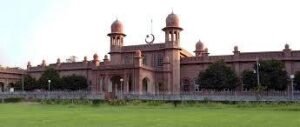 UAF, founded in 1906 as the Punjab Agricultural College and Research Institute, Lyallpur, and upgraded to university status in 1961, has long been a home of agricultural innovation. Its Institute of Horticultural Sciences works on vegetable nutrition, hybrid seed production, planting dates, crop spacing and tunnel cultivation of cucumber, tomato and chilli, alongside tissue culture and citrus sanitation. A patented plug-tray growing medium, UAF-Gro, developed by an institute colleague, shows how such research reaches nurseries.
Recent milestones are encouraging. In February 2026, a UAF-led team demonstrated what is described as the country’s first multifunctional vegetable nursery transplanter, developed under a Punjab Agricultural Research Board project at the university’s Water Management Research Centre. In a single pass it prepares two beds, lays mulch and drip laterals and transplants four rows of vegetables, an important advance in a country where transplanting has largely remained manual, labour-intensive and costly. Its developers say it was designed around local field conditions, and that uniform planting and spacing support better irrigation scheduling and less water wastage.
Sustainability is also on the agenda. Field trials in Sargodha, run by UAF with Yunnan University, reported in September 2025 that an eco-friendly management system known as 3MP cut chemical pesticide use in tomato by more than 40 per cent while keeping yields comparable to conventional farmer practice.
Institutionally, the Special Technology Zones Authority notified UAF in August 2022 as Pakistan’s first AgriTech Park, with a focus on precision agriculture, biotechnology, smart farming, post-harvest value addition and AI-driven crop monitoring. Such platforms can carry inventions from the laboratory to the market, where entrepreneurs and industry can scale them.
Nurseries, women and rural enterprise
Horticultural innovation also creates livelihoods. A vegetable value-chain project led by CABI in Pakistan, with funding from the Australian Centre for International Agricultural Research, trained 343 vegetable farmers directly and reached another 1,166 indirectly. Where women adopted improved tomato nursery practices, using seedling trays, quality potting mix and a shared protective tunnel, germination and seedling vigour improved. Tomato growers using those seedlings obtained a 28 per cent price increase for better-quality fruit, the number of women raising nurseries grew from two to more than 20 within three years, and two established their own seedling enterprises.
These results show that horticultural innovation delivers benefits beyond crop yields. It creates small businesses, empowers rural women, expands employment and strengthens local vegetable value chains.
Taking the university beyond the campus
Perhaps the most valuable dimension of Dr Ashraf’s work is his engagement with the farming community. He has advised hundreds of farmers on improved vegetable-growing practices and encourages kitchen gardens and community plots, including organic production. Organic vegetables can reach differentiated markets, but they require careful soil management, organic nutrient sources, biological pest control, crop rotation and, wherever commercial organic claims are made, proper certification.
For farmers, the ultimate objective is net income rather than yield alone. Appropriate varieties, balanced fertilisation, efficient irrigation, timely harvesting and better marketing together raise it. Dr Ashraf’s interaction with growers extends the university’s educational mission: making research understandable, accessible and useful to the people who live by the land.
The way forward: from traditional cultivation to smart horticulture
 Pakistan’s vegetable strategy should aim at more output per unit of land and water, without sacrificing quality, profitability or sustainability. Certified seed, locally tested cultivars, balanced fertilisation, efficient irrigation, integrated pest management and climate-resilient practices must become priorities. Government departments, universities, research institutions and the private sector should collaborate to deliver affordable technology and reliable technical guidance.
Equally urgent is the post-harvest chain: cold storage, transport, grading, packaging and processing. Record exports prove that quality produce finds markets; investment in handling will help farmers keep more of the value they create. Digital advisory services, weather information and market intelligence can empower younger growers, and universities should present horticulture to students as a professional and entrepreneurial field spanning greenhouse management, nursery development, seed enterprises, hydroponics, consultancy, food processing and agri-technology.
Faculty members who combine research, teaching, publications and farmer engagement are the bridge between knowledge and the realities of production. Dr Irfan Ashraf’s papers, books, doctoral research and field advice reflect that commitment. With scientific guidance, technological innovation, better market infrastructure and stronger university–farmer partnerships, Pakistan’s vegetable sector can become a driver of rural prosperity, nutritional security and agricultural diversification.
The writer is Former Professor & Head, Department of Entomology, University of Agriculture Faisalabad (UAF).He can be reached at jalalarif807@yahoo.com