
 S.M. Hali
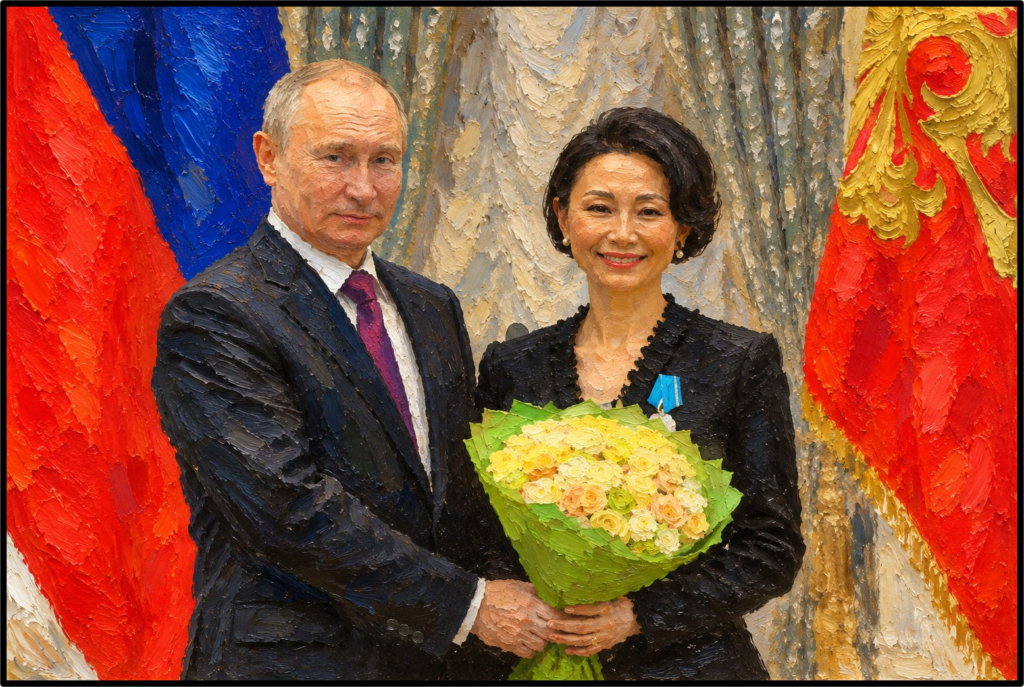
When Russian President Vladimir Putin awarded the Pushkin Medal to South Korean translator Kim Jung Ah, the honour resonated far beyond the ceremonial walls of the Kremlin. It was not merely recognition of an accomplished translator. It was, in a deeper sense, a tribute to the enduring power of literature to transcend political frontiers, ideological divisions, and cultural boundaries.
The significance of the occasion was heightened by the fact that Kim Jung Ah reportedly endured fierce criticism and personal attacks simply for dedicating herself to translating the works of Fyodor Dostoevsky. That a scholar could become the target of hostility merely for introducing the literary heritage of one nation to the readers of another is a troubling reminder of the increasingly polarised world in which we live. Yet her recognition also offers an important counterpoint: great literature belongs not to governments or political systems, but to humanity.
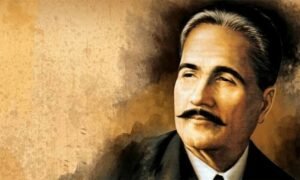
History provides abundant examples of this phenomenon. Shakespeare is read with reverence in Japan. Goethe found admirers in China. Tagore inspired intellectuals across Europe. Allama Iqbal drew upon the philosophical traditions of both East and West. The greatest writers speak to universal human experiences, and their works travel farther than armies, ideologies, or economic systems ever can.
Dostoevsky occupies a special place among such writers. More than a novelist, he was an explorer of the human condition. His characters wrestle with faith, doubt, guilt, redemption, love, suffering, and moral responsibility. The emotional and philosophical questions embedded in Crime and Punishment, The Brothers Karamazov, and The Idiot are no less meaningful in Seoul than they are in Moscow, London, Lahore, or Buenos Aires.
Indeed, Dostoevsky himself understood the unifying force of human compassion. Among his most celebrated observations is the line:
“The mystery of human existence lies not in just staying alive, but in finding something to live for.”
That sentiment explains why his works continue to attract readers across continents and generations. The search for meaning is not Russian, Korean, European, or Asian. It is human.
Translation is the bridge that makes such encounters possible. Yet translators often remain invisible figures, labouring for years so that others may enter worlds they could never otherwise access. A translator is not merely converting words from one language to another. He or she is carrying emotions, cultural nuances, historical experiences, and philosophical insights across linguistic frontiers. It is among the most sophisticated forms of intellectual diplomacy.
This is precisely why the recognition of Kim Jung Ah carries symbolic importance. Her work demonstrates that culture remains one of the few domains where dialogue can flourish even when politics becomes confrontational. Governments may disagree. Alliances may shift. Diplomatic relations may cool. But literature continues to create channels of understanding between peoples.
The contemporary international environment makes this lesson particularly relevant. Across many societies, cultural products are increasingly judged through political lenses. Books, films, music, and scholarly exchanges sometimes become casualties of geopolitical rivalries. The temptation to reduce art to the nationality of its creator rather than the quality of its insight is growing stronger.
Yet such an approach impoverishes humanity’s shared cultural inheritance.
No one ceases to admire Tolstoy because of contemporary politics, just as admiration for Shakespeare is not contingent upon agreement with British foreign policy. The value of a literary masterpiece does not fluctuate according to diplomatic circumstances. If it did, civilisation’s cultural treasury would become hostage to every international dispute.
Dostoevsky’s legacy illustrates this point vividly. Readers embrace him not because he was Russian, but because his writings illuminate the complexities of the human soul. The same principle applies to countless literary giants from every civilisation. Their enduring relevance stems from their ability to address timeless questions rather than transient political controversies.
Kim Jung Ah’s recognition should therefore be viewed not merely as an award for linguistic excellence but as a reaffirmation of a broader principle: intellectual curiosity must never become a victim of political tribalism.
The attacks directed at a translator simply for engaging with literature reveal a dangerous misunderstanding of culture itself. Reading a Russian novelist does not constitute a political endorsement any more than reading Socrates makes one an ancient Athenian or studying Confucius transforms one into a citizen of imperial China. Literature invites understanding, not allegiance. Its purpose is to expand horizons rather than impose identities.
In many ways, translators are among the world’s quiet peacemakers. They challenge ignorance by making foreign cultures accessible. They replace stereotypes with knowledge. They encourage readers to discover common humanity beneath differences of language, religion, ethnicity, and nationality. Their contribution is rarely dramatic, but it is profoundly consequential.
As global tensions intensify and societies become more inward-looking, the need for such cultural bridges becomes greater, not smaller. The future of international understanding will depend not only upon diplomats and statesmen but also upon scholars, translators, artists, and educators who keep the channels of human dialogue open.
The Pushkin Medal awarded to Kim Jung Ah is therefore a reminder of something larger than politics. It reminds us that literature remains one of humanity’s most universal languages. A novel written in nineteenth-century Russia can move a reader in twenty-first-century South Korea. A translator can devote her life to bringing those worlds together. And readers, regardless of nationality, can recognise themselves in the struggles, hopes, and dreams of characters created thousands of miles away.
That is the enduring triumph of great art.
Borders may divide states. Ideologies may separate governments. But literature, at its finest, crosses every frontier. It belongs to no single nation because it speaks to every human heart. In that sense, the honour bestowed upon Kim Jung Ah is ultimately an honour bestowed upon the timeless idea that culture unites where politics often divides.
The writer is a retired Group Captain of PAF. He is a columnist, analyst and TV talk show host, who has authored six books on current affairs, including ten on China.He can be reached at sultanm.hali@gmail.com