
News Desk
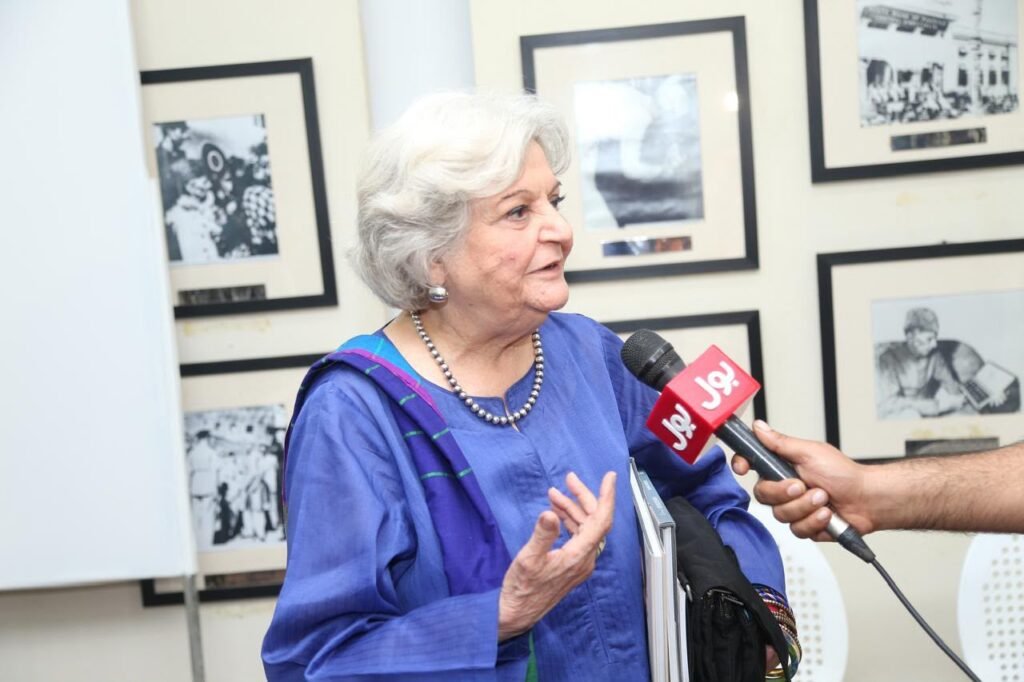
KARACHI — In a compelling evening that bridged history, politics, and the visual arts, celebrated artist, curator, and human rights advocate Salima Hashmi took center stage at the Quaid-e-Azam House Museum (QAHM) to deliver an evocative multimedia lecture: Reimagining Jinnah – Artists Speak.
Addressing a packed hall of artists, poets, actors, academics, media figures, and civil society leaders, Hashmi—daughter of the legendary poet Faiz Ahmed Faiz—traced how Pakistani artists have envisioned and reinterpreted Quaid-e-Azam Muhammad Ali Jinnah over nearly eight decades. Her presentation illuminated how creative expression often sharpens during times of civic crisis, arguing that turbulent governance and societal fractures frequently ignite an artist’s boldest, most passionate work. Showcasing decades of shifting artistic interpretations, Hashmi highlighted the fearless originality of her younger students, whose fresh perspectives continue to challenge and reinvent Jinnah’s visual legacy.
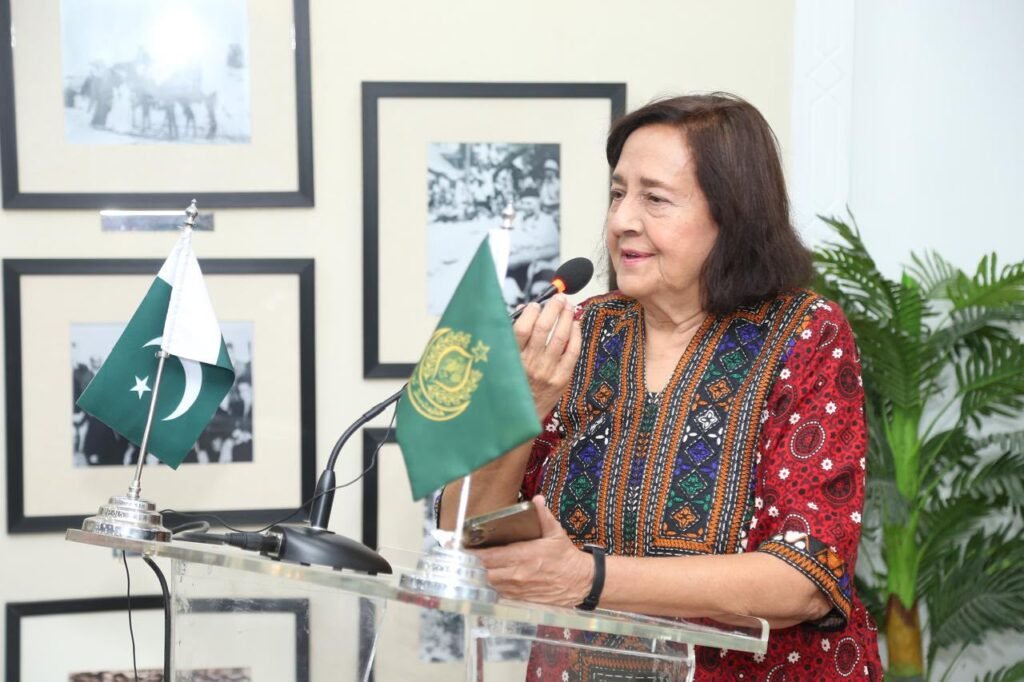 The presentation culminated in a vibrant, thought-provoking dialogue with an engaged audience.
The evening commenced with welcoming remarks from QAHM Senior Vice Chairman Liaquat Merchant, followed by an introduction of the keynote speaker by Board of Governors member Ameena Saiyid (S.I.). Ikram Sehgal brought the proceedings to a close with reflective concluding observations.
A distinguished gathering marked the occasion, including Noorjehan and Akeel Bilgrami; Dr. Yaqoob Bangash, Dean at IBA; Khushbakht Shujaat; Khalid Awan of TCS; Prof. Stephen Lyon and Dr. Ather Imam of the Aga Khan University; and Nadia Ghani, Publishing Director at Lightstone Publishers, among other prominent cultural luminaries.
Through initiatives like this, the Quaid-e-Azam House Museum continues to serve as an active crucible for critical discourse—deepening public engagement with Jinnah’s vision, Pakistan’s evolving identity, and its place on the global stage.