
City Desk
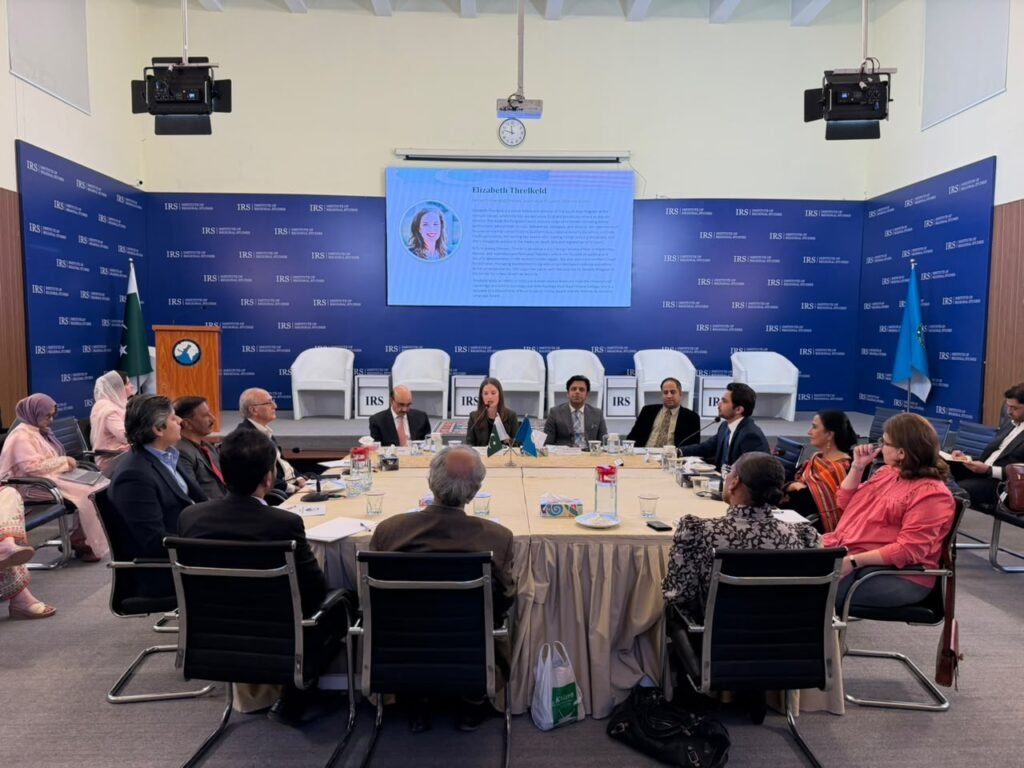
ISLAMABAD: Experts at a seminar at the Institute of Regional Studies (IRS), Islamabad, agreed that Pakistan and the United States should build institutional channels around their growing cooperation to sustain the present momentum. Pakistan had become a valuable partner for Washington in five areas: counterterrorism, cryptocurrency, critical minerals, crisis management in South Asia, and conflict in the Middle East. They noted Pakistan’s role in facilitating a ceasefire and talks between Iran and the United States.
The participants stressed that the durability of this cooperation would depend on whether both governments institutionalise it. Close ties between the two countries’ leaders had created an opening, and regular dialogues, investment bodies and economic frameworks could carry this goodwill forward. They pointed to the bilateral counterterrorism dialogue, US development finance in Pakistan, and the work of US trade and investment agencies, and called for these channels to become more active.
Participants highlighted the scope for economic cooperation. They noted that around 100 American companies operate in Pakistan and that Pakistan has invited US companies to invest in its critical minerals sector. They identified renewable energy, agriculture, dams, information technology and education as further areas for collaboration. The participants urged the United States to expand market access for Pakistani goods, including through the Generalized System of Preferences, and to facilitate Pakistani students seeking admission to natural sciences programmes at US universities. Some participants proposed a trilateral framework of Pakistan, the United States and Gulf countries to support investment in Pakistan’s refineries and renewable energy.
On security, the participants noted that terrorist groups operating from Afghanistan, including the Tehreek-e-Taliban Pakistan, were using US weapons left behind in Afghanistan in 2021 in cross-border attacks on Pakistan. They called on Washington to support Pakistan’s counterterrorism efforts, including through the provision of advanced defence equipment.
The participants recalled Pakistan’s long partnership with the United States, from CENTO and SEATO to the Afghan war of the 1980s and the war on terror. Pakistan bore heavy human and economic costs in these partnerships. The participants urged Washington to build a stand-alone relationship with Pakistan, in line with Secretary of State Marco Rubio’s stated aim of expanding cooperation beyond counterterrorism into economic and strategic areas.
The participants said Pakistan wants to work with both the United States and China on shared strategic and economic interests, and its partnership with one should not be viewed as directed against the other. They noted that China had remained a steadfast partner of Pakistan in defence supplies and economic investment.
The participants also stressed that the benefits of government-to-government cooperation should reach the people of both countries, to strengthen public support for the relationship. They advised both sides to keep expectations realistic so that commitments match delivery, and to use the present goodwill to address some of the irritants constructively.
The participants included Ambassador Jauhar Saleem, President IRS; Elizabeth Threlkeld, Senior Fellow and Director, South Asia Program, Stimson Center; Ambassador Masood Khan, former President of Azad Jammu and Kashmir and former Ambassador of Pakistan to the United States, the United Nations and China; Dr Rizwan Naseer, Senior Research Fellow and Director, Centre for Countering Terrorism and Violent Extremism Studies, IRS; Dr Usman Chohan, Research Fellow, IRS; Mr. Riaz Khokhar, Research Officer, IRS, and all other researchers from the Institute, former diplomats, academics and researchers from Islamabad also attended the talk.
…