
Commerce Desk
GUJRANWALA: Pakistan’s rice sector is exploring opportunities to conserve irrigation water, reduce greenhouse gas emissions and potentially access carbon markets through climate-smart farming practices.
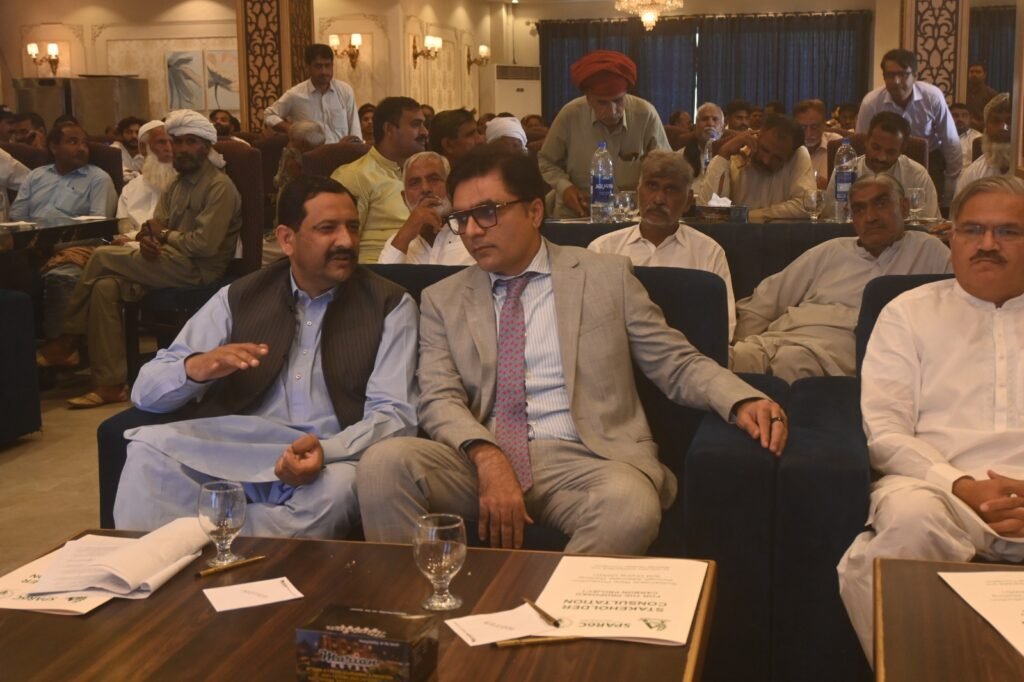
Hundreds of farmers, government officials, researchers and industry representatives attended a stakeholder consultation in Gujranwala to discuss a proposed rice-sector carbon initiative based on Alternate Wetting and Drying (AWD), a water-management technique that allows rice fields to dry periodically between irrigations.
Commissioner Gujranwala Division Muhammad Ali attended as chief guest, while Arif Goheer, Executive Director of the Global Change Impact Studies Centre (GCISC), was the guest of honour.
Supported by the Supporting Preparedness for Article 6 Cooperation (SPAR6C) programme, the proposed initiative will be implemented by Galaxy Agrinomix and the Pakistan Basmati Heritage Foundation (PBHF). It aims to register under Gold Standard and explore carbon financing opportunities under Article 6 of the Paris Agreement, with support from the Global Green Growth Institute (GGGI).
Technical presentations highlighted the potential of AWD to save around 30 per cent of irrigation water and reduce methane emissions by up to 48 per cent. However, actual results depend on local soil, water and climatic conditions and require field-level measurement.
Experts explained that farmers could use perforated field tubes to monitor water levels and determine irrigation requirements, while taking appropriate precautions during the crop’s flowering stage.
Participants were also briefed on carbon-project requirements, including documentation, monitoring, measurement, auditing and independent verification. Speakers stressed that adopting AWD alone would not automatically generate carbon credits; participating farms must comply with the applicable procedures and verification standards.
The consultation highlighted the importance of farmer training, reliable water control, effective drainage and continued technical assistance to ensure sustainable adoption without compromising crop productivity.
Representatives from Punjab’s agriculture and environmental departments, research institutions, universities, rice processors, fertiliser manufacturers and crop-protection companies participated in the event.
The initiative is expected to explore ways to combine efficient water management with potential financial benefits from verified emission reductions, although its success will depend on implementation arrangements, carbon-market conditions and transparent participation terms for farmers.
SPAR6C is a five-year programme running from 2022 to 2027, supported by Germany’s International Climate Initiative. It aims to strengthen carbon-market readiness in Pakistan, Colombia, Thailand and Zambia, with global implementation led by GGGI.
The consultation provided a platform for stakeholders to discuss practical approaches to climate-smart rice cultivation and the development of a credible carbon-project framework.