

Bakhtiyor Salomov
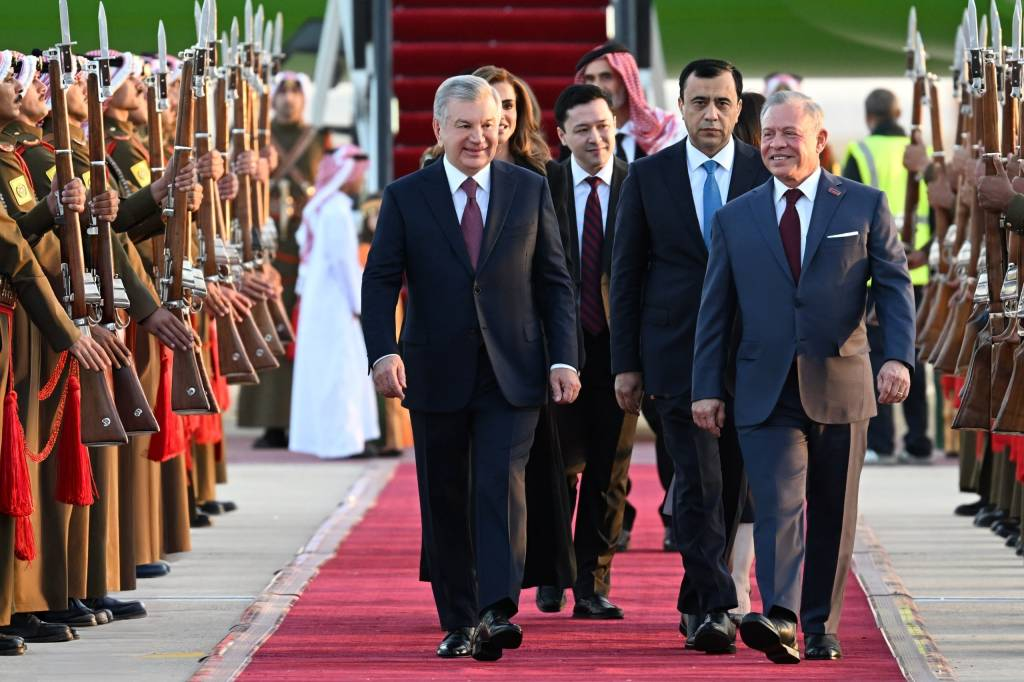
Visit of the President of Uzbekistan Shavkat Mirziyoyev to Jordan on 23–24th November this year opens a new stage in the development of Uzbek-Jordanian relations. It is intended to give fresh impetus to political dialogue, expand trade, economic and investment cooperation, and identify new areas of bilateral partnership.
Uzbekistan has a developed industrial and agricultural base, natural resources and a growing domestic market. Jordan, in turn, holds strong positions in pharmaceuticals and the chemical industry, has experience in the rational use of water resources and opportunities to expand its presence in Middle Eastern markets. The complementarity of the two economies creates conditions for increasing trade, attracting investment and implementing joint projects.
The upcoming talks will build on the political dialogue that has intensified in recent years and will aim to further develop the agreements already reached.
Political Dialogue as the Foundation for a Deeper Partnership
Diplomatic relations between Uzbekistan and Jordan were established on 15 February 1993. Since then, bilateral relations have acquired an institutional foundation, opening up opportunities for further deepening political dialogue and practical cooperation.
An important milestone was the state visit of King Abdullah II to Uzbekistan on 25–26 August 2025. Following the talks, the heads of state signed 15 bilateral documents covering trade, investment, education and tourism.
In 2026, the focus shifted to the practical implementation of the agreements reached. The first meeting of the Uzbek-Jordanian Intergovernmental Commission, held on April 3rd this year, marked a transition to discussing joint projects in industry, pharmaceuticals, agriculture and logistics.
Additional conditions for expanding business and people-to-people contacts were created by the establishment of a Business Council, the introduction of a visa-free regime from 25 September 2025 and the launch on July 1st 2026 of two weekly flights between Amman and Tashkent.
Political dialogue continued with the meeting between Shavkat Mirziyoyev and Abdullah II on 6 November 2026 in Astana on the sidelines of the Aqaba Process meeting. The sides discussed the implementation of the agreements reached and the further expansion of trade, economic, cultural and humanitarian ties.
At the current stage, the key task is to ensure that the agreements reached deliver practical results and that joint projects are implemented.
Trade and Industrial Cooperation: New Growth Points
Trade and economic cooperation remains one of the most promising areas of the partnership. In 2025, mutual trade turnover increased by 79%. However, trade volumes still remain relatively small. There are also 18 enterprises with Jordanian capital operating in Uzbekistan.
The development of industrial cooperation could give new momentum to the partnership. In September 2025, representatives of Uzbekistan’s Ministry of Investment, Industry and Trade discussed with the management of Dar Al-Dawa the localisation of pharmaceutical production, technology transfer and the implementation of joint investment projects. The company exports its products to more than 40 countries.
Broad prospects are linked to the chemical industry, in particular the use of Jordan’s phosphate and potash reserves. Also of interest is the initiative of the Uzbek company UzBasalt and Jordan’s National Arab Mining and Downstream Industries Company (NAMC) to establish basalt fibre production in Jordan. In October 2026, the parties examined the relevant opportunities. The project is currently under study.
Mutual access to the markets of the two regions opens up significant opportunities. Uzbekistan is of interest to Jordanian companies as a promising platform for doing business in Central Asia, while Jordan can help Uzbek producers expand their presence in Middle Eastern markets.
The potential of such cooperation is confirmed by a Jordan Exports study published by the Petra news agency in October 2026. According to its data, of Uzbekistan’s USD 35.3 billion in imports in 2024, about USD 2.28 billion fell into product categories that Jordan produces and exports. Yet Jordan’s actual supplies in these categories amounted to only about USD 741 thousand. Pharmaceuticals, processed foods, confectionery, plastics and packaging materials were identified as the most promising areas.
The Preferential Trade Agreement, work on which is ongoing, could become an important incentive. Its conclusion could simplify mutual supplies and enhance the competitiveness of products. At the same time, realising the existing opportunities will require developing distribution networks, improving certification and reducing logistics costs.
Water Resources and Food: Sharing Experience and Joint Solutions
Agriculture and the rational use of water are areas where the interests of Uzbekistan and Jordan overlap considerably. For both countries, water-use efficiency is directly linked to the resilience of the agricultural sector and to food security.
Uzbekistan has considerable agricultural potential and a well-developed processing industry. However, according to OECD estimates, agriculture accounts for about 90% of the country’s total water consumption, which makes it necessary to modernise irrigation infrastructure and introduce water-saving technologies.
For Jordan, water scarcity is even more acute. According to the World Bank, its renewable internal water resources amount to about 61 cubic metres per person per year, far below the international threshold of absolute water scarcity of 500 cubic metres. In response, the country is developing the reuse of treated wastewater, modern irrigation systems and hydroponics.
Jordan’s experience is of practical interest to Uzbekistan in introducing water-saving technologies, digital monitoring of water consumption and adapting agriculture to an arid climate. Cooperation could include technology exchange, joint research and the training of specialists.
Cooperation in the food sector is no less promising. Uzbekistan could expand supplies of fruit and vegetables, dried fruit, pulses and processed foods to the Jordanian market. This will require developing cold-storage infrastructure, improving logistics and ensuring that products comply with phytosanitary requirements.
Transport Connectivity: New Logistics Opportunities
For landlocked Uzbekistan, diversifying international transport routes is of fundamental importance. In this regard, the port of Aqaba, Jordan’s main seaport on the Red Sea coast, is of particular interest, as it could potentially be used to deliver Uzbek products to the markets of the Middle East and North Africa.
Realising these opportunities will require working out multimodal routes, assessing the cost and timing of shipments, and harmonising customs procedures. Cooperation between transport operators, logistics companies and the relevant government agencies of the two countries could play an important role here.
Another factor strengthening ties has been the launch of direct flights between Amman and Tashkent, which creates more convenient conditions for business contacts and tourist exchanges.
Energy: Renewable Sources and Technology Exchange
Energy is a promising area of cooperation. According to Jordan’s Ministry of Energy, renewable energy sources accounted for 26.9% of electricity generation in 2024. Uzbekistan is also actively building up new generating capacity: in 2025, solar and wind power plants generated more than 10.5 billion kWh of electricity.
Areas of mutual interest include technology exchange, participation of companies in renewable energy projects, improving energy efficiency, deploying energy storage systems and digitalising the management of energy infrastructure.
Cooperation in this field can contribute to the energy security of both countries and to achieving their goals for developing a green economy.
Technological Partnership and Human Capital Development
New prospects for cooperation are linked to digital technologies, the training of specialists and the modernisation of the energy sector. Both countries are interested in developing the IT industry and digitalising public administration and the economy. In March 2026, the relevant agencies explored opportunities for cooperation in digital medicine.
Cooperation between universities plays an important role. Practical evidence of the parties’ interest was the first Forum of Rectors of Universities of Uzbekistan and Jordan, held in Tashkent on 17–18 November 2026. It brought together representatives of 19 Uzbek and 16 Jordanian universities. Participants discussed joint educational and research projects, including in artificial intelligence, engineering, energy, water resources and medicine.
Regional Security: New Areas of Cooperation
Regional and international security issues occupy an important place on the bilateral agenda. One of the platforms for such dialogue is the Aqaba Process, launched by King Abdullah II in 2015. This format aims to strengthen international coordination in countering terrorism, extremism and other transnational threats.
An important milestone was the first participation of the President of Uzbekistan in the Aqaba Process at the level of heads of state. On 6 November 2026 in Astana, Shavkat Mirziyoyev took part in a summit dedicated to security in the field of artificial intelligence.
In his speech, the head of state put forward a number of initiatives aimed at strengthening international cooperation in countering contemporary threats. In particular, he proposed launching the concept of “Digital Development for the Benefit of People”, supported the idea of holding a UN Global Dialogue on Artificial Intelligence Governance, and expressed readiness to open a regional office of the UN Office of Counter-Terrorism in Tashkent.
In addition, he proposed launching, on the basis of the Center of Islamic Civilization in Tashkent, the international programme “Enlightenment against Ignorance in the Digital Age”, which envisages the development of multilingual information resources, training religious figures to work in the digital environment and supporting young researchers.
The participation of both states in the Aqaba Process creates additional opportunities for cooperation between the relevant agencies, the training of specialists and the exchange of analytical work, complementing the bilateral agenda with cooperation in regional security.
People-to-People Ties: Culture, Education and Tourism
The cultural and historical heritage of Uzbekistan and Jordan creates additional opportunities for strengthening bilateral relations. Both countries hold a special place in the history of Islamic civilisation and possess a rich heritage of interest for mutual cultural exchange.
Uzbekistan is known for its historic centres of Samarkand, Bukhara and Khiva, while Jordan attracts tourists with ancient Petra, the Dead Sea, Wadi Rum and its religious sites.
The visa-free regime and direct flights create favourable conditions for expanding tourist contacts. Prospects lie in cooperation between tour companies, the development of thematic routes and the joint promotion of the two countries’ tourism potential.
The development of academic exchanges and scientific ties is of particular importance, including in the study of Islamic heritage, Arabic studies and history. Ultimately, direct contacts between citizens and mutual familiarity with each other’s culture create a public foundation for the long-term rapprochement of Uzbekistan and Jordan.
From Agreements to Practical Results
Despite the positive dynamics of relations, further expansion of cooperation will require addressing a number of practical issues: relatively small trade volumes, transport costs, certification and customs clearance procedures, and insufficient awareness among entrepreneurs of the opportunities offered by the markets of the two countries.
Therefore, political support must be accompanied by consistent work by government bodies, industry associations and businesses. The Intergovernmental Commission and the Business Council are called upon to play a special role by focusing their efforts on identifying investment opportunities, supporting joint projects and removing barriers for entrepreneurs.
The upcoming high-level talks in Amman provide an opportunity to set cooperation priorities and give impetus to the implementation of the agreements reached.
The main measure of success of the new stage should be not the number of documents signed and initiatives announced, but real results: growth in trade, new investment, the creation of joint production facilities, entry into new markets and sustainable business contacts.
The consistent transformation of political trust into concrete economic, technological and humanitarian results will determine the prospects for the new stage of relations between the two countries. If the existing potential is effectively realised, the Uzbek-Jordanian partnership could become a significant example of expanding mutually beneficial cooperation between Central Asia and the Middle East.
The writer is Leading Research Fellow, International Institute for Central Asia