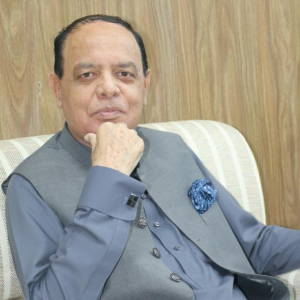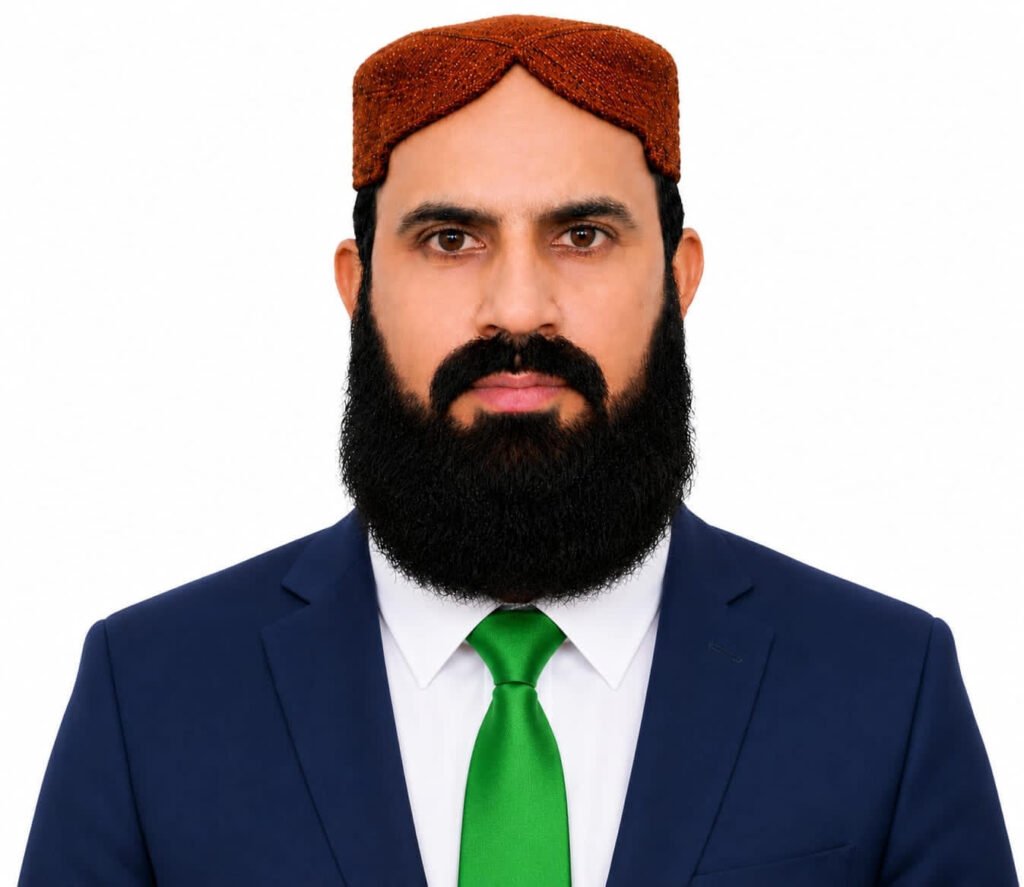
Mansoor Nizamani
Pakistan is currently passing through a political, economic and social situation that is no longer limited to disagreements between the government and the opposition. Rather, it has evolved into a crisis connected with the country’s overall governance, institutional performance, democratic system and the future of its people. Political instability is a major obstacle to the development of any country. When political leadership spends most of its time fighting for power, exchanging accusations and weakening one another, the fundamental problems of the people are pushed into the background. Pakistan has also been experiencing political confrontation for several decades, the effects of which are visible in the national economy, administrative system, investment climate and everyday lives of ordinary citizens. The question is: who is responsible for bringing the country out of this situation?
A review of Pakistan’s political history reveals that democracy has never been given a fully stable environment in which to flourish. Changes in elected governments, undemocratic forces, political alliances, dismissals of governments and struggles for power have prevented continuity in the political system. Following the removal of Imran Khan’s government through a vote of no confidence in 2022, political confrontation intensified further. Political differences have continued even after the 2024 general elections. The lack of trust between the ruling coalition and Pakistan Tehreek-e-Insaf, protests, legal disputes and parliamentary tensions have made the political environment increasingly complicated. The European Union’s October 2026 report on Pakistan also identified political tensions, restrictions on opposition activities and institutional conflicts as major challenges facing the country.
One of the major reasons behind the political crisis is that politics in Pakistan has increasingly become a means of acquiring and retaining power rather than serving the public. Political parties make ambitious promises to the people during election campaigns, but after coming to power, they often prioritise political revenge against their opponents instead of fulfilling those commitments. The role of the opposition is not to oppose every government decision but to identify shortcomings and present better policy alternatives. Similarly, the government has a responsibility to recognise differences of opinion as an essential part of the democratic process. When political parties choose confrontation instead of dialogue, the consequences are not limited to any single party; the entire national system suffers.
Political instability also has a significant impact on the national economy. Pakistan is already struggling with a heavy debt burden, rising energy prices, inflation, unemployment, weaknesses in the taxation system and obstacles to industrial activity. When there is no continuity in national policies, the confidence of domestic and foreign investors is also undermined. In October 2026, the federal government raised the State Bank’s policy rate to 12 per cent, while the central bank projected economic growth of 3.7 per cent for the current fiscal year. This indicates that the road to economic recovery remains full of challenges. In such circumstances, political confrontation makes economic recovery even more difficult.
Another major challenge facing the country is the deteriorating law and order situation. Increasing terrorist incidents in Khyber Pakhtunkhwa and Balochistan are resulting in the loss of lives among security personnel and ordinary citizens, creating further anxiety among the public. According to the European Union’s October 2026 security assessment, thousands of people lost their lives in incidents of armed violence in Pakistan between November 2024 and July 2026, with Khyber Pakhtunkhwa and Balochistan being the worst-affected provinces. In such circumstances, military operations alone are not sufficient. The underlying causes of terrorism, border management, local communities’ grievances, education, employment and political deprivation must also be addressed seriously. The state has a responsibility to protect the lives and property of its citizens and restore public confidence in the affected regions.
In addition, Pakistan is facing several other challenges, including inadequate educational opportunities, poor healthcare facilities, unemployment, poverty, corruption, water shortages, expensive electricity and gas, and administrative inefficiency. A significant proportion of the country’s younger generation prefers to move abroad in search of better employment and a secure future. For ordinary citizens, obtaining justice has increasingly become a distant dream. Moreover, the lack of basic facilities in rural areas and population pressure in urban centres clearly expose weaknesses in government policies. Unfortunately, public issues are not given consistent priority amid political power struggles, even though the real meaning of politics for ordinary people is access to employment, education, healthcare, security and a life of dignity.
Another important question is how to maintain a balance of powers and responsibilities among national institutions. Parliament, the judiciary, the administration and other state institutions must operate within their respective constitutional boundaries. In any democratic country, parliament is the most important institution representing the people’s elected representatives, where national issues are debated, legislation is enacted and the government is held accountable. If parliament becomes weak or state institutions remain in conflict with one another, the entire system of governance is affected. Political problems can only be resolved through constitutional principles, the rule of law, transparency and dialogue, rather than pressure, political victimisation or the use of force.
The time has come for all political parties to rise above their personal and party interests and give priority to national interests. Meaningful dialogue between the government and the opposition should begin, grievances regarding elections and political disputes should be addressed through constitutional and legal mechanisms, parliament should be strengthened, and reforms should be introduced in the judicial system to ensure timely justice for ordinary citizens. Continuity in economic policies, a fair taxation structure, industrial growth, modernisation of agriculture, employment opportunities for young people and improvements in the quality of education must become national priorities. At the same time, a comprehensive strategy against terrorism should be adopted, with particular attention given to development projects and the restoration of public confidence in affected regions.
The reality is that Pakistan’s crisis is not limited to a single government, political party or institution. Rather, it is the result of decades of policy failures, political intolerance, weak governance and institutional conflicts. Instead of further political experiments, revenge-driven politics and struggles for power, the country needs a national vision based on democracy, the rule of law, economic stability and public welfare. If political leadership continues to ignore national responsibilities and remains unwilling to resolve differences through dialogue, future generations will also have to bear the burden of these crises. Pakistan does not merely need a change of government; it needs a transformation in its governance system, political attitudes and national priorities. Ultimately, the real measure of a country’s success is not who occupies the seat of power, but how safe, prosperous and dignified the lives of ordinary citizens have become.
The writer is Teacher and Columnist