

City Desk
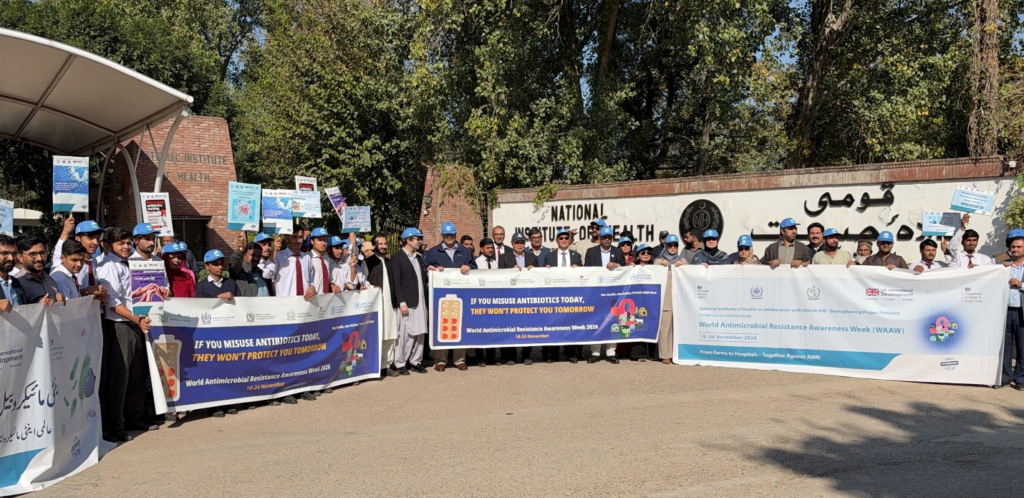
Islamabad : Pakistan’s National Institute of Health (NIH), the World Health Organization (WHO), the UK Health Security Agency (UKHSA) and the Food and Agriculture Organization (FAO) launched World Antimicrobial Resistance Awareness Week with a symbolic walk. Students and civil society groups also took part. Its slogan warned that antibiotics misused today will not protect people tomorrow.
Officials said antimicrobial resistance (AMR) is linked to more than 200,000 deaths in Pakistan each year. Close to 40,000 are directly attributable to AMR, and over 160,000 are associated with it. Without urgent action, these figures could rise to 63,000 and 262,000 annually by 2050.
Under the global theme “One Health, one action: Prevent AMR now,” speakers stressed that human, animal and environmental health are interdependent. NIH CEO Dr. Muhammad Salman cited drivers of resistance in Pakistan, including irrational prescribing, over-the-counter antibiotic sales, weak infection control in hospitals and communities, and misuse of antimicrobials in agriculture and livestock.
WHO Representative Dr. Luo Dapeng said these deaths are preventable and urged people to use antibiotics only when truly needed. UKHSA’s Dr. Zeeshan Iqbal Baig called for moving beyond awareness to responsible use, while FAO’s Dr. Pawin Padungtod stressed coordinated cross-sector action.
The walk promoted the pillars of Pakistan’s National Action Plan 2.0 on AMR: stronger surveillance across human and animal sectors, better public and professional education, and strict infection prevention in healthcare facilities. The organizers urged policymakers, healthcare providers, veterinarians, farmers and the public to turn commitments into action.