
A price announced before sowing, certified seed in every drill and science carried to the village — why the 2026-27 wheat season marks a rare alignment of policy, price and practice
In the soft November sunshine, as the drill moves across the fields of Punjab and the golden dreams of spring are buried in the soil, something far larger than a crop is being sown. A nation’s daily bread is being planted. Wheat is not merely a grain; it is the foundation of our dastarkhwan, the backbone of the rural economy and the first wall of national food security.
This Rabi season of 2026-27 is therefore a season of restored confidence. A price announced before sowing, firm assurances from the government, an organised campaign by the agriculture department and the practical participation of university students have together lit a fresh lamp of hope across the countryside. For the grower who has waited years for exactly such clarity, the message is simple and long overdue: the state has decided to reward the farmer judiciously.
A Promise Made Before the First Seed
 The recent past explains why this promise matters. In the 2024-25 season, Pakistan set a wheat production target of 33.58 million tonnes, but the actual harvest came to roughly 28.42 million tonnes. For 2025-26, the Federal Committee on Agriculture fixed a target of 29.678 million tonnes, against which the Pakistan Economic Survey 2025-26 places provisional output at 29.61 million tonnes. For the current Rabi season of 2026-27, the permissible national target has been set at 33 million tonnes, of which Punjab is expected to contribute 25 million tonnes. Yet the Federal Committee made its final target conditional on one decisive act: the announcement of an indicative price.
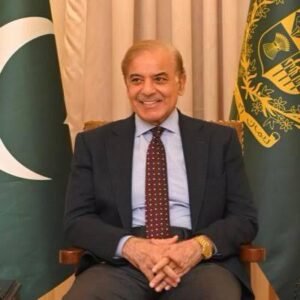
That act has now come. Through the efforts of Prime Minister Muhammad Shehbaz Sharif and Federal Minister for National Food Security and Research Rana Tanveer Hussain, an indicative price of Rs4,500 per 40 kg has been announced for the current season. It is an extraordinary step forward — Rs1,000 higher than last year — and, crucially, it was fixed before sowing, which is precisely what farmer organisations have demanded for years. A grower who scatters seed today can finally know what his crop will fetch tomorrow.
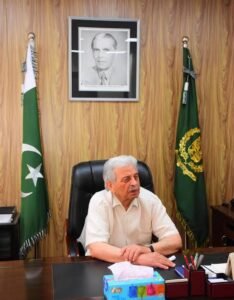 According to Rana Tanveer Hussain, the announced price is close to the estimated cost of imported wheat, which makes it far wiser to pay our own growers than to send precious foreign exchange abroad. He spoke of a storage target of six million tonnes, anticipated an increase of ten to fifteen per cent in the area under wheat, and held out the prospect of exports in the years ahead. Economics and equity, for once, point in the same direction.
“The wheat farmer does not ask us for charity. He asks for justice.”
Punjab Moves From Announcement to Action
 Announcements become achievements only when someone carries them to the field. In Punjab, Agriculture Minister Syed Ashiq Hussain Kirmani and Secretary Agriculture Shakeel Ahmed Mian have pursued the same sincerity of purpose: that the grower must receive his full price without delay.
Under the leadership of Director General Agriculture Extension, Shahbaz Akhtar Chaudhry, a three-point agenda has been carried to the farmer’s doorstep across the province’s 41 districts: use registered, certified seed; sow in lines with a drill or super seeder; and complete sowing between 1 and 20 November, extending to the end of the month only in exceptional circumstances. Under his supervision, 14 divisional, 64 district and 111 tehsil-level committee meetings have been held, and more than one lakh pieces of informative literature have been distributed. He stressed that timely land preparation and certified seed are fundamental to better yields, and that modern sowing machinery improves plant population, optimises input use and raises per-acre production. He also urged growers to make full use of the Kisan Card, the provision of super seeders and the Rs4,500 support price. Director Agriculture Extension Dr Iqbal Niazi, Director Agriculture Faisalabad Khalid Mahmood Chaudhry and Rashid Ali have been equally active, ensuring that the latest recommendations reach growers while there is still time to act on them.

At the apex of this effort stands Chief Minister Maryam Nawaz Sharif, who has placed the prosperity of wheat growers, higher yields and food security among her government’s foremost priorities. The Kisan Card, with its financial assistance and interest-free credit, the promotion of modern agricultural technology, the use of certified seed and the mobilisation of the department’s field services all reflect that vision. The real measure of success will be whether the farmer receives a fair reward for his labour alongside a better harvest.
Farmer bodies have welcomed the announced price warmly. Fixing a fair rate before sowing, they say, will naturally encourage growers to expand cultivation, but the purpose will not be fully served without effective procurement, storage and a transparent marketing system. Khalid Mahmood Khokhar, Chairman of the Pakistan Kissan Ittehad, described the Rs4,500 price as a heartening step forward for growers.
Science Walks Into the Field
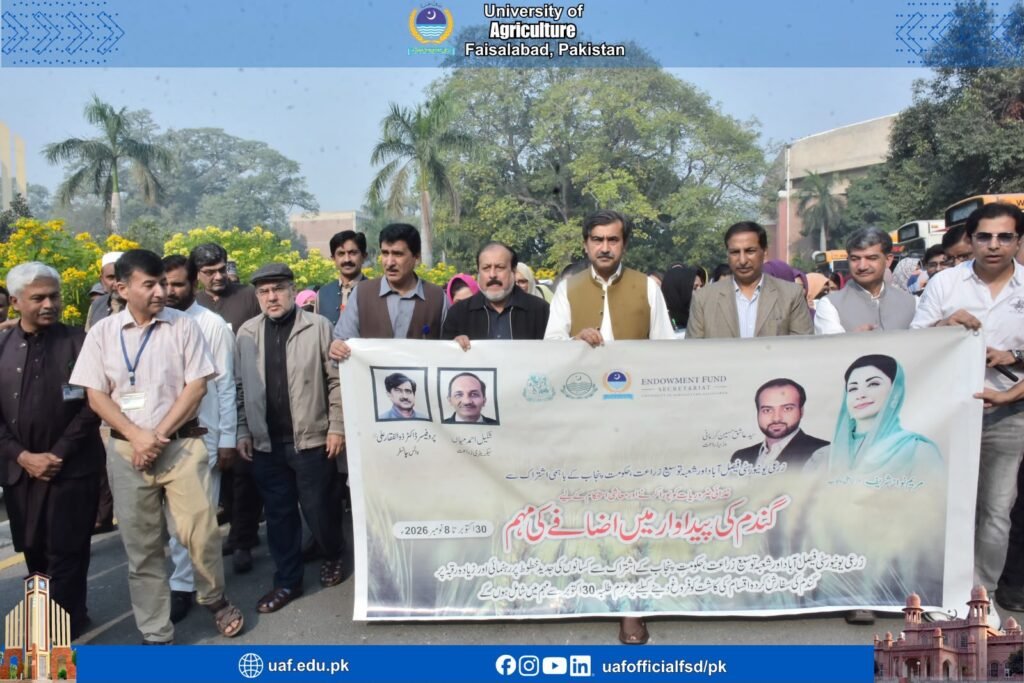
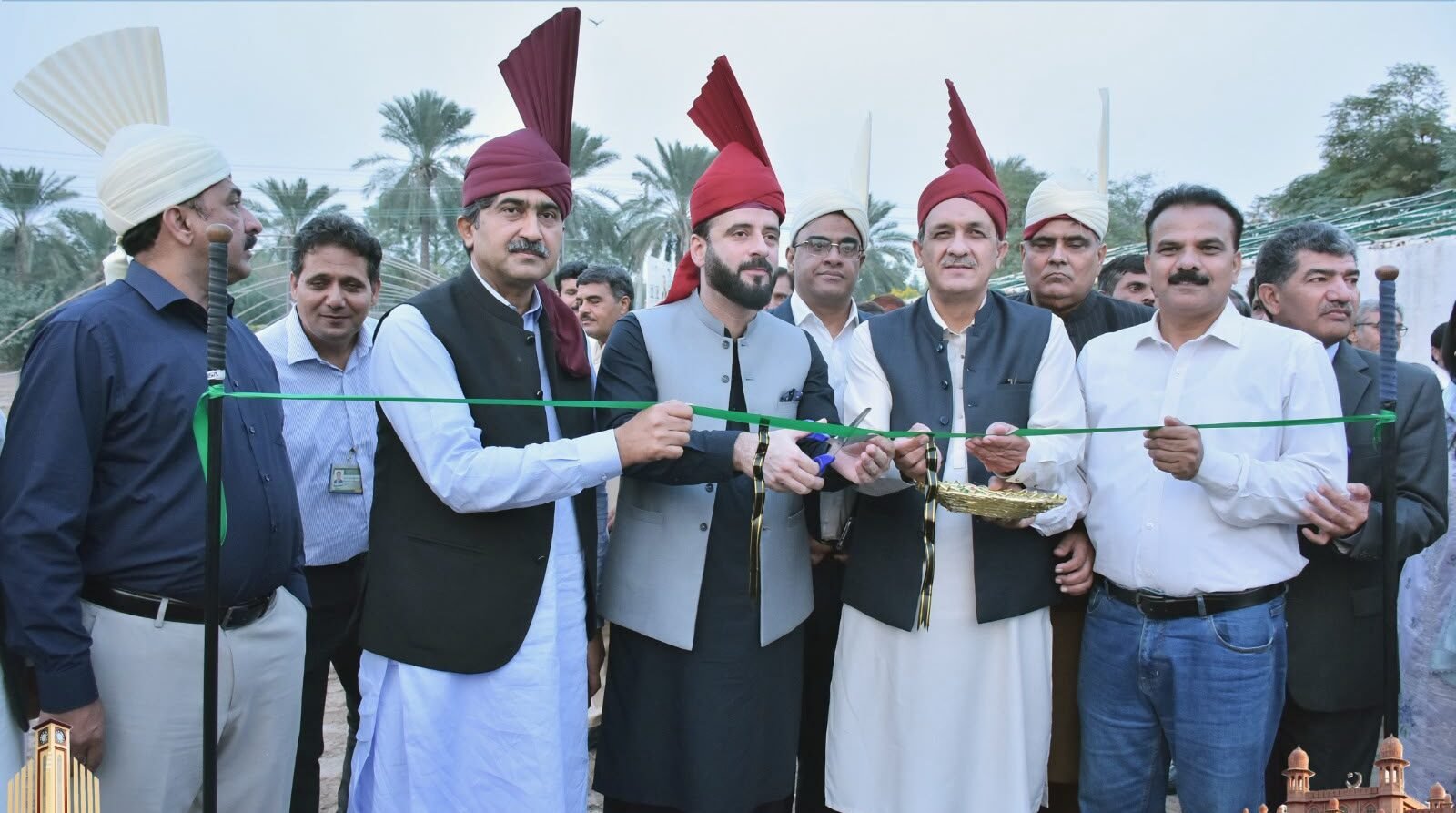
While policy sets the price, science must secure the yield, and here the University of Agriculture Faisalabad has taken its laboratories to the furrow. Led by Vice Chancellor Prof Dr Zulfiqar Ali and Dean Faculty of Agriculture Prof Dr Ghulam Murtaza Sandhu, 33 thousands of UAF students joined the Punjab Agriculture Extension Department in a ten-day wheat production awareness campaign from 30 October to 8 November. They fanned out across the divisions of Faisalabad, Gujranwala, Gujrat, Lahore, Sahiwal and Sargodha, sitting beside farmers, demonstrating timely sowing and modern methods and identifying the field-level problems that hold yields back. In those ten days, 152 road shows, 63 mega smart farmers’ gatherings and 174 training programmes were organised. The movement began under the vision of Prof Dr Iqrar Ahmad Khan, and it continues with undiminished energy in every division of Punjab.
The campaign culminated in a Farmers’ Day at Trend Agricultural Farm, Chak No. 125-GB, Jaranwala, attended by farmers, agricultural experts and students. Prof Zulfiqar Ali’s vision is to carry the university out of the four walls of the laboratory and into the field and the mandi, so that students stand shoulder to shoulder with farmers and turn science into practical success. He called farmers the driving force of agricultural development and urged them to prefer drill sowing and super seeders over the traditional broadcast method, because row sowing ensures uniform seed placement, reduces seed consumption and makes crop management easier. Integrating research with the farmer’s own experience, he said, could unlock the enormous potential of the wheat sector.
The Green Revolution shows what such partnership can achieve. In the 1960s, Pakistan’s wheat yields stood at a mere 10 to 12 maunds per acre. Sustained work by scientists, researchers and farmers, together with high-yielding varieties and improved seed technology, has changed the picture: progressive growers now harvest more than 80 maunds per acre. Last year Farrukh Naeem of Jaranwala obtained 63 maunds, and a grower from Athara Hazari harvested over 70 maunds per acre. Assistant Commissioner Jaranwala Ziaullah Gondal assured growers that the administration would ensure the transparent and timely delivery of government facilities, while progressive farmer Zia Alamdar Hussain appreciated the university and the extension department for taking technical guidance directly to the farmer.
Healthy Soil, Healthy Seed
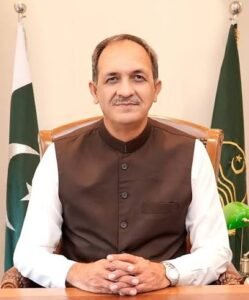
Secretary Agriculture Punjab
Good seed deserves good soil, and no one made this point more clearly than Prof Dr Muhammad Naveed of the Institute of Soil and Environmental Sciences, UAF. Farmers who plan to sow their own preserved seed, he advised, must clean it properly and treat it with recommended chemicals before sowing. To meet the crop’s nutritional needs he recommended 55 kg of nitrogen (N), 35 kg of phosphorus (P) and 30 kg of potash (K) per acre, applied in balance at the time of sowing and, preferably, guided by soil-test results and local agronomic recommendations. He also stressed organic manure and waste decomposers, which accelerate the breakdown of crop residues and organic matter, improve soil health, enhance nutrient availability and promote sustainable wheat production. A deficiency of essential nutrients, he warned, can considerably reduce the final yield. The wisest investment a grower can make is often a soil test costing a few hundred rupees.
The choice of variety completes the picture. The Ayub Agricultural Research Institute (AARI) Faisalabad has approved Akbar-19, Dilkash-20, Nishan-21, Aroj-22, Falak-24 and Soorya-24, and growers are encouraged to prefer them. Falak-24, Aroj-22 suit irrigated areas, while Aroj-22 and Nishan-21 are the most suitable choices for rainfed regions. Director General AARI Dr Sajid ur Rehman and Chief Scientist Dr Javed Iqbal and his team are playing a key role in introducing better varieties.
Trust Is the Real Currency
An indicative price becomes a genuine guarantee only when a strong and transparent system stands behind it. Procurement centres must announce their schedule during sowing, not after harvest. The small grower must receive preference, and payment must reach his account within days, not months. The Punjab government has set a wheat cultivation target of 16.5 million acres. If the federal and provincial governments, the agriculture department, the agricultural universities and the farmer organisations stand in one line, that target can become a symbol of restored trust.
 Three practical safeguards would turn good intentions into lasting confidence. First, procurement and payment dates should be published openly, so that no grower is left guessing at the mandi gate. Second, storage and moisture-testing facilities must be strengthened, so that a bumper crop is never converted into a marketing crisis. Third, the extension department and the universities should keep the field partnership alive beyond this campaign, because a farmer who has once seen a drill outperform broadcast sowing becomes the most persuasive teacher in his village.
Credit is due to all who have made this season possible: the Prime Minister and the Chief Minister, Rana Tanveer Hussain, Ashiq Hussain Kirmani and Shakeel Ahmed Mian, the Vice Chancellor and his deans and teachers, Dr Shahbaz Akhtar Chaudhry and his extension teams, the soil scientists and wheat breeders, and above all the students who spent ten days in the dust of village lanes.
The wheat farmer asks for justice, not charity. He wants to be certain, as he sows the chest of the earth, that the full reward of his labour will fall into his lap in the coming spring. The day the edge of the plough and the honour of the promise become one, the fields will yield more than wheat; they will yield trust. A prosperous farmer is the surest guardian of Pakistan.
The writer is Former Professor & Head, Department of Entomology, UAF.He can bereached at jalalarif807@yahoo.com