
Abdul Majid
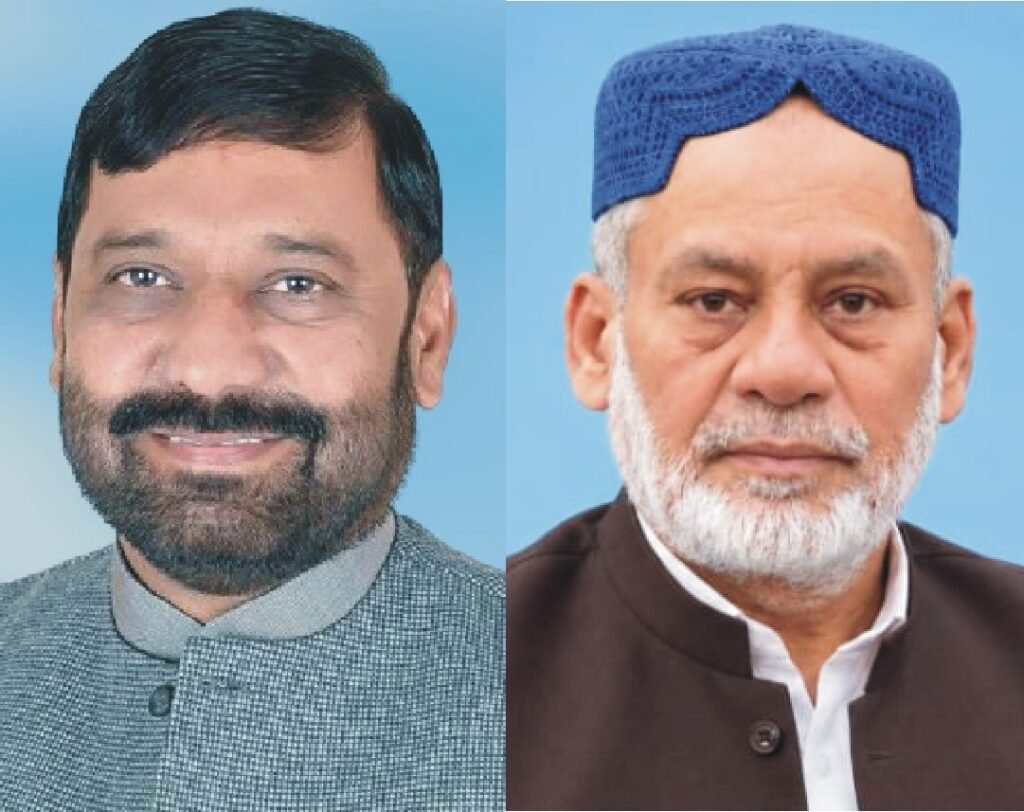
Faisalabad: Khalid Mahmood Chaudhry, Central Chief Organizer of the Railway Prem Union, and Mian Tahir Ayub, former Union Council Nazim and Chairman, stated in a joint declaration that the ongoing movement—led by Jamaat-e-Islami Emir Hafiz Naeem-ur-Rehman—to abolish the ‘levy’ (extortionary tax), reduce electricity costs, and address other public demands will, God willing, soon succeed. In essence, this movement is a struggle to establish a just, equitable, and welfare-oriented system in Pakistan. There is a need for a system capable of eradicating inflation, unemployment, hunger, and poverty, thereby fostering prosperity, comfort, and ease in the lives of 250 million Pakistanis. They remarked that an ideal state is one where no individual is forced to die of hunger; where parents are never driven to the extreme measure of killing their own children due to starvation and helplessness; and where every person has access to dignified employment, shelter, and a peaceful environment. If a ruler and a system fail to provide the basic necessities of life to the public—leading people, out of sheer desperation, to turn toward crime—then a serious examination of the causes behind this situation and the responsibilities of the government is essential. This is because the provision for, protection of, and welfare of the public are among the fundamental duties of the state. Khalid Mahmood Chaudhry and Mian Tahir Ayub stated that holding power—the “crown and throne”—is not merely a matter of authority and control; rather, it is a profound test and a heavy responsibility, for which rulers must answer both to their Creator and to the people. True governance and justice require not only the punishment of criminals but also the elimination of the root causes of crime. An ideal state is one where justice and social welfare go hand in hand, ensuring that no citizen is forced to endure humiliation or helplessness due to a lack of basic necessities. They emphasized the urgent need to break free from the self-serving mafias and the archaic system that have dominated the country for the past 79 years. In their place, a system must be established where the rulers’ primary priorities are serving the public, supporting the underprivileged, and maintaining a constant awareness of their accountability before Allah Almighty. Rulers should be guided by the spirit of the words of Hazrat Umar Farooq (RA), who once remarked that if even a dog were to die of hunger on the banks of the Euphrates, he feared that Allah would hold him accountable for it. This sense of responsibility is the very foundation of true governance and a welfare state. They appealed to the 250 million people of Pakistan to support the movement currently led by Hafiz Naeem-ur-Rehman—a movement aimed at establishing a just, equitable, and welfare-oriented system—and urged them to set aside all linguistic, regional, political, and other prejudices to become united, organized, and active. He stated that for a sustainable resolution of the individual and collective problems faced by the public, it is essential to establish a system in the country that ensures justice, equality, employment, basic amenities, and public welfare