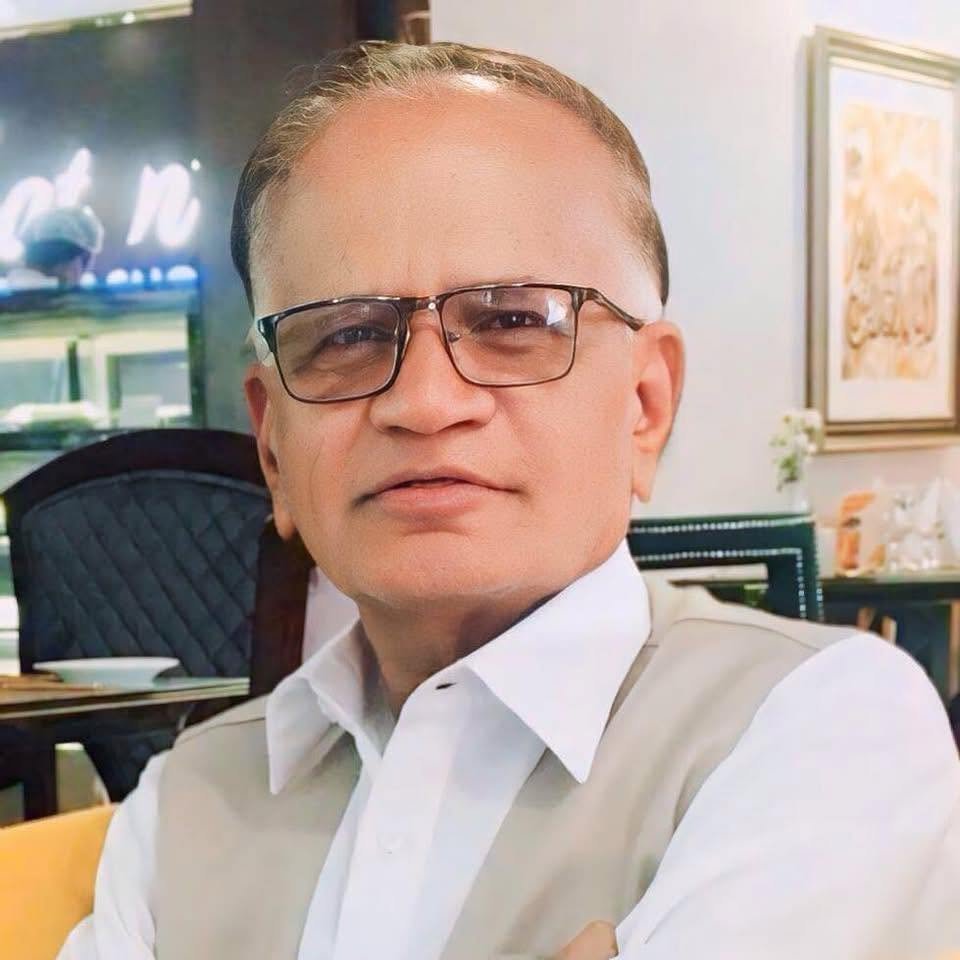
Ch Muhammad Anwar Chohan
A recent complaint from Islamabad raises a question that goes far beyond the conduct of three restaurants. While visiting F-10 Markaz with his children, a father says his six-year-old daughter urgently needed a washroom. He approached three nearby food outlets, one after another. According to his account, one said it had no washroom, while another refused access because its facility was reserved for customers. Even after he explained the child’s urgent need, he says, he could not obtain assistance.
The restaurants concerned should have an opportunity to explain their policies; a complaint alone is not a complete investigation. Businesses may have legitimate reasons to restrict access to private facilities. Yet when a young child faces an immediate need, should a commercial policy be the final word?
A washroom is a basic facility associated with health, dignity and human comfort. A restaurant has the right to manage its premises and cannot be expected to provide every facility to every passer-by. But rules should organise operations, not suspend compassion in exceptional circumstances. A supervised exception for a child in distress is a small gesture that can make a lasting difference.
This brings us to a question well beyond Islamabad: do we need legislation to correct every failure of everyday courtesy and civic responsibility? Must the state issue a notification or impose a penalty before people recognise an obvious human need?
Pakistan does not suffer from a complete absence of laws. Rules already govern traffic, public health, sanitation, consumer protection and commercial premises. Departments and local authorities are also responsible for enforcement. The concern is whether rules are implemented consistently, businesses monitored effectively, and citizens able to seek redress. Adding another law may appear decisive, but without implementation it remains words on paper.
This does not mean that law has no role. Where a genuine gap exists, or repeated conduct creates a public risk, clear and proportionate regulation may be justified. Authorities can examine whether busy commercial areas have adequate public toilets, whether existing licensing and building requirements are observed, and whether facilities are accessible to children, older people and persons with disabilities. Market associations and local administrations can work together on practical arrangements so that families are not left searching from one door to another during an emergency.
Regulation should be based on evidence, not an impulse to punish. Not every restaurant has the space or resources to operate a public washroom. Equally, a request for urgent help should not automatically be dismissed because no meal has been purchased. There is a difference between routine public access and an urgent humanitarian exception. Sensible policies can recognise both the rights of businesses and the dignity of people.
The deeper issue is social training. Laws can prescribe conduct and penalties can discourage violations, but neither can manufacture kindness. A society becomes civilised not merely when people fear consequences, but when they understand their responsibilities towards one another. An employee dealing with a distressed parent may have limited authority. Management should therefore train staff and empower them to respond sensibly to genuine emergencies. A clear policy for children and other vulnerable people would prevent confusion while protecting businesses.
Businesses are part of the communities in which they operate. Their reputation is shaped not only by food quality, prices and décor, but also by how they treat people when no transaction is taking place. Hospitality should mean more than serving a paying customer. It should include courtesy, discretion and an awareness that an unexpected emergency can happen to anyone.
The reported incident should be an opportunity for reflection, not a final verdict on the establishments involved. The restaurants can clarify their position, while market management and relevant authorities can assess whether public washroom facilities in busy commercial centres are adequate. Citizens, too, should report concerns responsibly and seek practical solutions rather than turning one account into a blanket accusation.
Ultimately, the choice is not between law and humanity. Society needs both. Laws provide a framework, enforcement gives it meaning, and civic values shape behaviour when no official is watching. Before demanding a new law for every social shortcoming, we should ask whether existing rules are being implemented and whether institutions are fulfilling their responsibilities. More importantly, we should ask what has happened to the compassion that should require no legislation at all.
A six-year-old child’s urgent need reminds us that public life is measured not only by the rules we write, but by the humanity we practise.