
Bureau Report
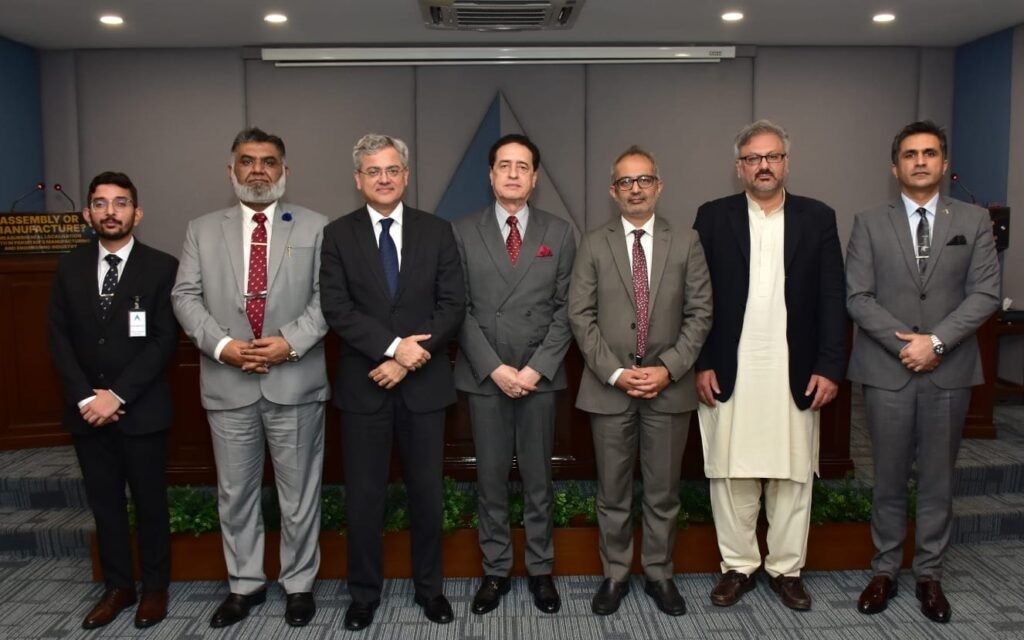
LAHORE: The Centre for Aerospace & Security Studies (CASS), Lahore, organised a seminar titled “Assembly or Manufacture? Measuring Real Localisation Depth in Pakistan’s Manufacturing and Engineering Industry,” where academics, intellectuals and business professionals discussed opportunities and challenges facing the sector. Dr Shahid Razzaque, Director (Economy), CASS Lahore, gave the opening remarks.
Tecno Group CEO Amir Allawala urged Pakistan to move beyond assembly towards deep manufacturing, indigenous component production and technology absorption, saying this would strengthen employment, engineering and defence capabilities. He named tariff struggles, the high cost of doing business and a lack of raw-material industries as key barriers.
Dr Ali Salman, Founder and CEO of Prime Institute, said localisation should be a means rather than an end, with competitiveness, productivity, innovation and exports guiding policy. He advocated trade openness, competition and integration into global value chains, cautioned against excessive protectionism, and called for realistic targets and an export-oriented industrial policy.
Usman Khan, Director of LUMS’s Technology for People Initiative, called for policy focused on measurable capabilities such as value addition, productivity, technological learning and human capital. He cited economic constraints, inadequate public investment, regulatory burdens and skills gaps, and urged policy continuity, institutional reform and stronger government-private sector collaboration.
CASS President Air Marshal Asim Suleiman (Retd) stressed a coherent industrial strategy built on measurable localisation, technology, productivity and skilled manpower. He highlighted the strategic value of indigenous production for economic resilience, reduced external dependence and defence preparedness, and acknowledged the Pakistan Air Force’s contribution through initiatives such as NASTP.
An interactive session covered challenges in assembly and manufacturing, product quality, civil-military collaboration, gaps in education and the way forward.