A Great Woman Who Kept the Flag of Democracy Flying Amid the Struggle Between Right and Wrong
 M. Jamil Ahmed Shahid (Samahnvi)
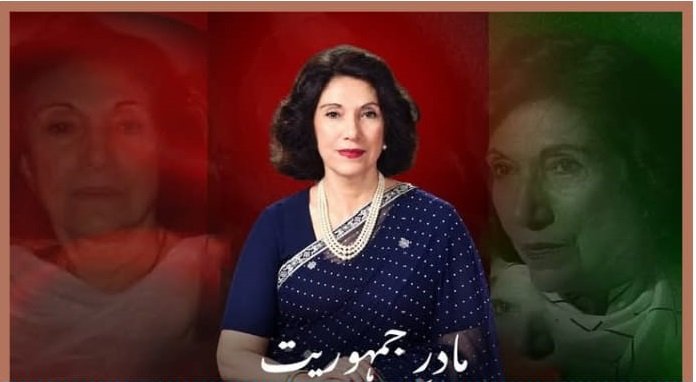
In Pakistan’s political history, there are personalities whose lives represent far more than personal achievements and setbacks. They become symbols of an era defined by struggle, sacrifice, and unwavering commitment to principles. Begum Nusrat Bhutto was one such remarkable woman who played an unforgettable role in the struggle for democracy, public rights, and constitutional supremacy. Her place in Pakistan’s political history extends far beyond her position as a former First Lady and leader of the Pakistan Peoples Party. She represented the determination to preserve democratic ideals and the people’s mandate despite immense pressure and adversity.
The Beginning of Her Political Journey
Begum Nusrat Bhutto was born on March 23, 1929, in Isfahan, Iran, into a family of Iranian origin. In 1951, she married Zulfikar Ali Bhutto, who later became the Prime Minister of Pakistan. Through this marriage, she became connected with a major chapter in Pakistan’s political evolution, a period marked by growing public awareness, social inequality, political awakening, and renewed demands for democratic rights.
Throughout Zulfikar Ali Bhutto’s political career, Nusrat Bhutto stood by his side and played an important role in the political journey of the Pakistan Peoples Party (PPP). When Zulfikar Ali Bhutto assumed power in 1971, she became Pakistan’s First Lady. However, her identity was never confined to this ceremonial position. Through her participation in political activities, engagement with party workers, and involvement in organizational affairs, she established a distinct place for herself in national politics.
The Era of Trials After 1977
In 1977, General Zia-ul-Haq seized power through a military coup, bringing an end to Zulfikar Ali Bhutto’s government. Pakistan entered a difficult and controversial period in its political history. Democratic institutions were suspended, political activities were restricted, and opposition voices faced severe challenges.
The execution of Zulfikar Ali Bhutto in April 1979 was a devastating blow to his family and the Pakistan Peoples Party. During this difficult period, Nusrat Bhutto did not withdraw from political life. Instead, she assumed a leading role in the party and worked to keep its organization and political struggle alive.
This was the period when her courage and determination became particularly evident. On one side, she faced profound personal grief; on the other, she carried the hopes of party workers and the responsibility of continuing the struggle for democracy. Despite these challenges, she remained politically active and emerged as a symbol of resistance to authoritarian rule.
Her Role in the Movement for the Restoration of Democracy
The Movement for the Restoration of Democracy, commonly known as the MRD, holds an important place in Pakistan’s political history. Established in 1981, the movement sought an end to military rule and the restoration of democratic government. Begum Nusrat Bhutto played a prominent role in this struggle, raising her voice for democratic rights alongside various political forces.
Her political journey was far from easy. She faced arrests, restrictions, and health challenges, among other difficulties. Nevertheless, she continued to contribute to the effort to sustain political resistance and encourage democratic activists.
This is where the central significance of Nusrat Bhutto’s political legacy becomes clear. She presented democracy not merely as a means of gaining political power, but as a fundamental principle connected with the people’s right to choose their representatives, political freedom, and constitutional governance.
Political Guidance and Benazir Bhutto’s Leadership
Another important aspect of Begum Nusrat Bhutto’s historical role was her connection with the political development and leadership journey of her daughter, Benazir Bhutto. Following the death of Zulfikar Ali Bhutto, Benazir entered the political arena and eventually became the first woman Prime Minister of Pakistan in 1988.
Nusrat Bhutto supported her daughter during this journey and continued to perform important responsibilities within the party. Her life demonstrated that political leadership is not simply about holding office. It also involves accepting responsibility during difficult circumstances, maintaining contact with political workers, and preserving continuity in political ideals.
At the same time, different periods in the history of the Pakistan Peoples Party witnessed disagreements over leadership and the role of political families. Therefore, a balanced assessment of Nusrat Bhutto’s legacy must recognize both her contributions and the complexities of the party’s political history.
Her Place in Pakistan’s Political History
Begum Nusrat Bhutto is widely remembered by the title “Mother of Democracy.” This title symbolizes her struggle to restore democratic government despite political adversity. Her role became particularly significant during a period when political disagreements, struggles for power, and questions about the future of democratic institutions had intensified in Pakistan.
One of the most important aspects of her legacy is the example she set for women seeking an active role in national politics. She remained engaged in political life at a time when women faced considerable social and political barriers to leadership. Her life demonstrated that women can play an influential role in national decision-making, political movements, and the development of democratic institutions.
Her struggle also highlighted the importance of political courage, organizational commitment, and perseverance in the face of adversity. She became a significant figure in the broader history of women’s participation in Pakistan’s political affairs.
The End of an Era, the Memory of a Struggle
Begum Nusrat Bhutto passed away in Dubai on October 23, 2011. Her death marked the end of an important chapter in Pakistan’s political history. However, her struggle and sacrifices continue to be remembered in discussions about the country’s democratic evolution.
Her life teaches us that political struggle is rarely an easy journey. It involves personal grief, disagreements, hardships, and uncertainty. Yet a commitment to principles, support for public rights, and continued efforts to strengthen democratic institutions can leave a lasting mark on history.
Conclusion
Begum Nusrat Bhutto was an important and influential woman in Pakistan’s political history. Her personality reflected the compassion of a mother, the responsibilities of a political leader, and the determination of a committed advocate of democracy. She raised her voice for democratic rights during military rule, worked to sustain the Pakistan Peoples Party through a difficult period, and highlighted the importance of women’s leadership in national politics.
Today, when Pakistan debates democracy, constitutional supremacy, the people’s mandate, and political tolerance, the struggle of Begum Nusrat Bhutto reminds us that the true strength of democracy lies in the people’s right to choose their representatives and in respect for constitutional institutions.
Her historical significance rests on her struggle, courage, and political perseverance. Her life remains a subject of reflection for future generations and a reminder that the journey toward democracy demands determination, sacrifice, and an unwavering commitment to the rights of the people.