City Desk
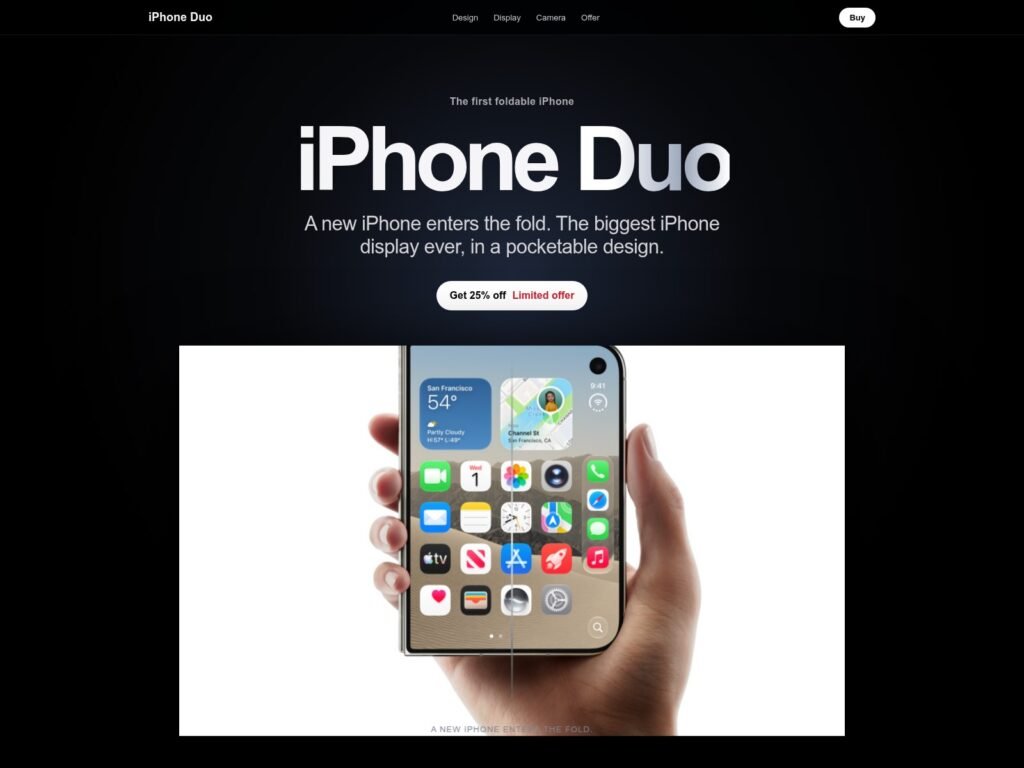
Islamabad: With Apple’s iPhone Duo, its first foldable phone, now officially on sale, Kaspersky has detected numerous scam attempts targeting buyers in different parts of the world who want early access to the premium device.
One English-language site claimed to offer a 25% discount and mimicked Apple’s visual style. A countdown timer saying only 30 minutes remained created false urgency and pushed visitors toward impulsive decisions. At checkout, users were asked only for contact details and a shipping address, with the site saying a manager would later call to confirm delivery and payment. Kaspersky notes this is often the opening move of a fraud that can end in financial loss.
The scams are not limited to English speakers. Kaspersky also found multilingual fake sites that showcased the phone’s features, invited preorders and let users choose their currency. One falsely suggested buyers would be redirected to Apple’s official website.
Olga Altukhova, Senior Web Content Analyst at Kaspersky, said scammers move fast when a flagship device launches because hype creates urgency and urgency lowers caution. These campaigns look credible and push targets into private exchanges before they can verify anything. Flagship buyers are high-value targets, already willing to spend heavily and more likely to share personal or payment details, so unofficial discounts, preorders or “availability checks” should be treated as red flags.
Kaspersky recommends that users:
- Buy new products only through official and reputable stores.
- Use a reliable security solution such as Kaspersky Premium, which detects fraudulent stores and blocks phishing links. It includes AI-powered scam protection combining machine learning-based anti-phishing, real-time behavior monitoring, and Data Leak and Identity Theft checkers. In 2025, it received the “Approved” certification in AV-Comparatives’ Fake Shops Detection test.
- Protect payment information by using dedicated virtual cards or payment services for online purchases, and storing credentials and financial data in Kaspersky’s password manager for secure auto-fill and cross-device sync.