Commerce Desk
LAHORE: The Pak International Business Forum (PIBF) has unveiled a 15-point economic and industrial agenda for the elections of the Federation of Pakistan Chambers of Commerce and Industry (FPCCI), calling for industry-led economic policies, affordable energy, improved ease of doing business, greater investment and effective representation of the business community to strengthen Pakistan’s economy.
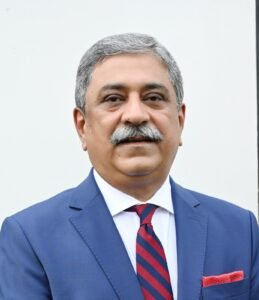
PIBF Central President Dr Mushtaq Mangat and Central Secretary General Muhammad Ejaz Tanveer said industrial development must be the foremost priority of national economic policymaking, supported by concrete measures to increase production, investment, exports and employment. They emphasised that meaningful participation of the business community in legislation and economic policymaking was essential to ensure that decisions reflected ground realities and the needs of industry and commerce.
The forum has proposed reserving at least 25 per cent of seats in the National Assembly, Senate, provincial assemblies and district-level elected bodies for business technocrats to strengthen professional representation in legislation affecting trade and industry. It has also called for greater investment in research and development (R&D) and the inclusion of relevant sectoral experts in FPCCI standing committees to improve their performance and policy contributions.
To strengthen district economies and encourage small-scale industrialisation, PIBF has proposed establishing 500 modern small industrial estates across the country under public-private partnerships (PPPs), with affordable solar-powered electricity for businesses operating in these estates. The forum has also called for a review of agreements with independent power producers (IPPs), a reduction in capacity payments and a reliable supply of affordable electricity to improve the competitiveness of Pakistani industry.
The forum has proposed establishing national data centres in collaboration with the private sector to utilise surplus power-generation capacity, promote technology-based businesses and support the expansion of Pakistan’s digital economy. It has further recommended bringing the policy interest rate down to single digits and directing 60 per cent of bank lending towards the industrial sector to facilitate investment, capacity expansion and productive economic activity.
To improve the business environment, PIBF has called for eliminating unnecessary bureaucratic hurdles and integrating relevant government departments into a digital, one-window system. It has also proposed appointing qualified professionals with relevant expertise as secretaries in the finance, commerce, information technology and other business-related ministries, with a tenure of at least three to four years in a particular position to ensure policy continuity and effective implementation.
Emphasising the importance of construction and real estate in economic growth, the forum has advocated promoting housing projects and high-rise buildings while replacing the traditional property-file system with a transparent digital record of ownership and transactions. In agriculture, it has called for investment in modern farming practices, agricultural value addition and supply chains. The forum has also proposed introducing open licensing for the corporate sector in the sugar industry to promote competition and discourage cartelisation.
PIBF has called for granting industrial status to the information technology sector, extending additional facilities to IT businesses and facilitating the transfer of funds from overseas to support the growth of Pakistan’s IT exports and foreign-exchange earnings.
The agenda also focuses on expanding economic opportunities for young people, Generation Z and women entrepreneurs through home-based industries and small and medium-sized enterprises (SMEs). The forum has stressed the need for vocational skills, entrepreneurship training, microfinance and improved access to markets to encourage self-employment and business development.
To improve freight transportation, logistics and supply-chain efficiency, PIBF has proposed developing a modern inland rail transport system through public-private partnerships. It has also called for stronger linkages between educational institutions and industry, urging institutions to align academic curricula and technical training with market requirements so that young people acquire relevant skills for employment, self-employment and entrepreneurship.
The forum’s leadership reaffirmed its commitment to promoting industrial development, affordable energy, a business-friendly regulatory environment, technological advancement, a skilled workforce and a transparent economic system as essential pillars of a stronger, more competitive and sustainable Pakistani economy.
PIBF’s commitment: Industrial growth, affordable energy, ease of doing business and a stronger Pakistan.