 There are cries of pain that cannot be heard, tears that remain hidden behind smiles, and battles that millions of people fight silently within their own minds. Depression, anxiety, psychological trauma, loneliness and other mental health conditions can rob individuals of peace, confidence, productivity and hope. Yet their suffering is too often dismissed, misunderstood or concealed behind a wall of social stigma.
World Mental Health Day, observed every year on 10 October, reminds humanity that mental well-being is not a luxury reserved for the privileged. It is an essential component of human health, dignity and social progress. The occasion must serve not merely as an annual observance but as a solemn call to governments, healthcare professionals, educational institutions, families and communities to recognise suffering and provide meaningful assistance.
The World Federation for Mental Health established this international observance in 1992. Since then, it has helped promote public understanding, challenge discrimination and encourage governments to improve mental healthcare systems worldwide. This year’s theme — Caring for the Mind — resonates with particular urgency in Pakistan, where tens of millions require psychological or psychiatric assistance yet face formidable barriers to obtaining it.
MENTAL HEALTH IS AN ESSENTIAL HUMAN RIGHT

The World Health Organization defines mental health as a state of well-being that enables people to cope with life’s stresses, realise their abilities, learn and work effectively, and contribute meaningfully to their communities. This definition places mental health at the very centre of human development. A person’s psychological well-being determines educational achievement, family relationships, professional performance, physical health and participation in civic life.
Mental health conditions are not evidence of weak character, deficient faith or personal failure. They arise through a complex interaction of biological, psychological and social factors. Genetic vulnerability, traumatic experiences, poverty, unemployment, bereavement, domestic violence, discrimination and prolonged insecurity can all erode mental well-being. The good news, affirmed by decades of global research, is that most conditions respond effectively to timely assessment, evidence-based therapies, appropriate medication and sustained social support.
THE GLOBAL BURDEN: MORE THAN ONE BILLION PEOPLE

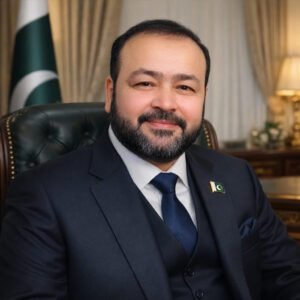
Chief Secretary, Punjab
The WHO’s World Mental Health Today report estimates that more than one billion people worldwide live with mental health conditions. Depression and anxiety are among the most prevalent, while access to treatment remains deeply unequal across nations. Suicide represents one of the most devastating outcomes of untreated mental illness. The WHO records approximately 720,000 deaths by suicide annually — a figure that underscores the catastrophic human cost of neglect and stigma.
These individuals need understanding, timely professional assessment and accessible care. They must never be reduced to data points or abandoned to their suffering.
PIONEERS WHO CHANGED THE WORLD: GLOBAL PSYCHIATRISTS AND THEIR LEGACIES
The modern response to mental illness was not inevitable. It was shaped by courageous individuals who challenged indifference and transformed a field that society long preferred to ignore. Their stories carry direct lessons for Pakistan today.
Dr. Aaron Beck (USA)
Developed Cognitive Behavioural Therapy (CBT) at the University of Pennsylvania in the 1960s. Once dismissed by peers, CBT has since become the world’s most widely studied psychological treatment, benefiting hundreds of millions of people across every continent. Dr. Beck proved that compassionate science, persistently pursued, can change lives at global scale.
Professor Norman Sartorius (Switzerland)
Served as Director of the WHO’s Division of Mental Health and later as President of the World Psychiatric Association. He dedicated his career to dismantling stigma, integrating mental healthcare into primary medicine, and establishing mental health as a matter of human rights — not charity.
Dr. Vikram Patel (India/USA)
Professor at Harvard University and co-founder of Sangath, a community health organisation in Goa, Dr. Patel pioneered the task-shifting model — training community health workers to deliver evidence-based mental health support in low-resource settings. His research demonstrates that lay workers, when properly trained and supervised, can effectively treat depression and anxiety. This model is directly applicable to Pakistan’s vast rural population.
Sir Robin Murray (United Kingdom)
Among the world’s foremost schizophrenia researchers, Sir Robin’s work established that social adversity, urban environments and early trauma contribute substantially to serious mental illness — reinforcing the argument that poverty alleviation and social justice are integral components of any credible mental-health strategy.
Dr. Judith Herman (USA)
Professor at Harvard Medical School and author of Trauma and Recovery, Dr. Herman transformed the clinical and moral understanding of psychological trauma, giving credibility to the experiences of survivors of violence, abuse and war — people whose suffering had too often been dismissed or pathologised.
Pakistan’s emerging generation of psychiatrists and psychologists can draw on this global inheritance while building approaches suited to local realities, languages and cultural contexts.
GLOBAL INSTITUTIONS SETTING THE STANDARD
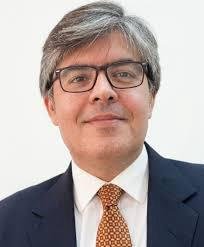
Secretary Health Punjab
Internationally, several institutions demonstrate what Pakistan must aspire to build. The National Institute of Mental Health (NIMH) in the United States is the world’s largest research body dedicated to mental health science, translating discoveries into better prevention, diagnosis and treatment. The National Institute of Mental Health and Neurosciences (NIMHANS) in Bengaluru, India — established in 1954 — combines specialised treatment, postgraduate training, community outreach and policy research, serving as a regional model for integrating academic psychiatry with public health.
In Pakistan, the Aga Khan University’s Department of Psychiatry in Karachi has produced clinicians and researchers who have advanced evidence-based practice. Fountain House Lahore has provided rehabilitation and social reintegration for people with chronic mental illness for decades. Karwan-e-Hayat in Karachi combines psychiatric treatment with community support. The Punjab Institute of Mental Health in Lahore, despite chronic resource constraints, remains a major public referral centre. These institutions cannot individually carry the national burden, but their experience, their trained staff and their commitment provide the foundation on which a broader system must be built.
PAKISTAN’S MENTAL HEALTH EMERGENCY
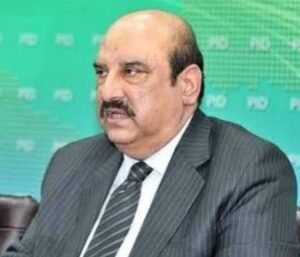
CEO, Nawaz Sharif. Cancer Hospital
On 1 October 2026, the Government of Pakistan announced the launch of its National Mental Health Policy 2026–2035 — a milestone that signals official acknowledgement of a crisis long underestimated. The announcement cited WHO estimates that approximately 32.4 million people in Pakistan need mental healthcare, while only around five per cent of the population has access to mental-health services. Pakistan has approximately 0.19 psychiatrists per 100,000 people, compared with an average of seven per 100,000 in high-income countries.
This gap reflects institutional priorities, training pipelines, funding allocations and social attitudes that have allowed mental illness to remain invisible at the level of formal policy. The newly announced national policy offers a genuine opportunity to turn the page — but its success will depend on adequate funding, clear implementation responsibilities, provincial coordination and transparent monitoring of measurable outcomes.
THE SIMS PROGRAMME: VOICES THAT DESERVE TO BE HEARD
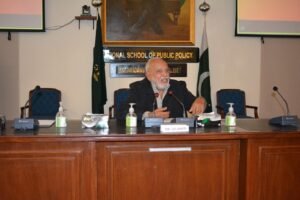
The World Mental Health Day guest-speaker programme organised by the Department of Psychiatry at Services Hospital Lahore, within the Services Institute of Medical Sciences (SIMS), deserves recognition for bringing this vital subject into academic and public discourse.
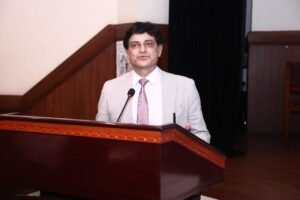
Principal. Services Institute of Medical Sciences (SIMS), Lahore
Held on 9 October 2026 at the SIMS Auditorium, the event was organised under the patronage of Prof. Dr. Sohaib Nabi, Principal of SIMS, and attended by Madam Rushda Lodhi, Parliamentary Secretary for Specialized Healthcare and Medical Education, as the chief guest. Her presence at this programme signals the kind of political engagement that mental health advocacy in Pakistan urgently needs. Mental health policy cannot advance through clinical effort alone; it requires champions within government who carry the cause into budget discussions, legislative chambers and administrative structures. Madam Lodhi’s participation must translate into sustained institutional action — not merely ceremonial attendance.
The programme was organised by Prof. Dr. Ammara Butt, Head of the Department of Psychiatry at SIMS, whose leadership reflects the critical responsibility of academic psychiatry in educating healthcare professionals and shaping public understanding. Prof. Dr. Imtiaz Ahmad Dogar, the principal guest speaker, brought clinical experience and intellectual authority to his insights into the alarming reality of suicide and the imperative of taking mental distress seriously.
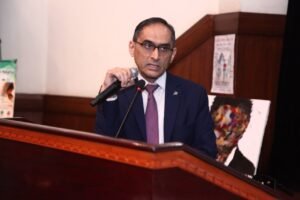
I deeply acknowledge Prof. Dr. Imtiaz Ahmad Dogar, Professor of Psychiatry at Faisalabad Medical University (FMU), for his inspiring leadership in transforming the Psychiatry Department of Allied Hospital-II Faisalabad — rescuing hundreds of patients from the depths of mental suffering and meaningfully improving the lives and learning of children with disabilities. His work at FMU stands as a beacon of what dedicated clinical leadership can achieve even within the constraints of a public-sector institution. I also respectfully appeal to HEC Chairman Dr. Niaz Ahmad Akhtar — whose student-centred policy approach has earned wide admiration — to establish dedicated mental-health and neurocognitive centres in public universities across Pakistan, so that students may find professional support within their own academic environments. I equally urge PHEC Chairman Dr. Iqrar Ahmad Khan, a steadfast champion of educational inclusion in Punjab, to prioritise the establishment of mental-health facilities in Punjab’s public universities, providing structured care for students facing depression, anxiety and psychological distress. The university must become not only a place of intellectual growth but also a sanctuary of well-being.
Prof. Dr. Ali Madeeh Hashmi — a distinguished psychiatrist and grandson of the legendary poet Faiz Ahmed Faiz — also attended. His life’s work combining psychiatric practice with advocacy for the arts as instruments of healing embodies an approach that Pakistan’s rich cultural traditions are well placed to support. Media support was provided by Prof. Dr. M. Adnan Aslam, Head of the Department of Neurology at Services Hospital Lahore and Vice President of the Pakistan Headache Society.
THE FAMILY: A SOURCE OF HEALING, NOT HUMILIATION

Head of Psychiatry department, (SIMS), Lahore
Pakistani families possess remarkable reserves of loyalty, endurance and love. These qualities can be the most powerful resource available to a person experiencing psychological distress — or, when misapplied, the most damaging obstacle to recovery. A person experiencing depression may be told simply to pray more or grow stronger. A child struggling with anxiety may be labelled disobedient. An adult seeking psychiatric care may face ridicule from relatives who fear community judgment.
Families must be educated and supported. They should learn to listen patiently, to recognise warning signs, to accompany loved ones to qualified professionals without embarrassment and to understand that mental illness carries no moral stigma. At the same time, family relationships must not be weaponised to justify violence or coercion. A compassionate society helps families become places of healing — while ensuring that every individual retains dignity, safety and the right to seek treatment.
AN APPEAL TO PAKISTAN’S LEADERSHIP
I respectfully appeal to Chief Minister Punjab Maryam Nawaz Sharif; Provincial Minister for Specialized Healthcare and Medical Education Khawaja Salman Rafique; Prime Minister Shehbaz Sharif; the Federal Minister for National Health Services, Regulations and Coordination; Federal Minister for Planning, Development and Special Initiatives Ahsan Iqbal; and all relevant provincial and federal health secretaries to give mental health the urgent and sustained attention it demands.

Psychiatry department SIMS
The priorities must include expanding the mental-health workforce, strengthening psychiatric departments in public hospitals, introducing counselling and referral services in educational institutions, improving suicide-prevention systems and integrating mental-health screening into primary healthcare. Particular urgency attaches to young people, women experiencing domestic violence, economically disadvantaged families, people with disabilities and individuals who cannot access private treatment. Community-based services must reach beyond the major cities, and mental-health funding must demonstrably produce measurable improvements in people’s lives.
CONCLUSION: LISTEN TO THE CRIES THAT SOCIETY CANNOT HEAR
World Mental Health Day must awaken our collective conscience. The millions of people who experience psychological distress are not asking for sympathy alone. They are asking for understanding, treatment, protection and the opportunity to live in dignity.
The legacies of Aaron Beck, Norman Sartorius, Vikram Patel, Robin Murray and Judith Herman remind us that mental health is transformed not by declarations alone but by sustained scientific effort, political will and human compassion. Pakistan has people of comparable dedication. What it now requires is a system worthy of their efforts — and of the millions who are waiting for help.
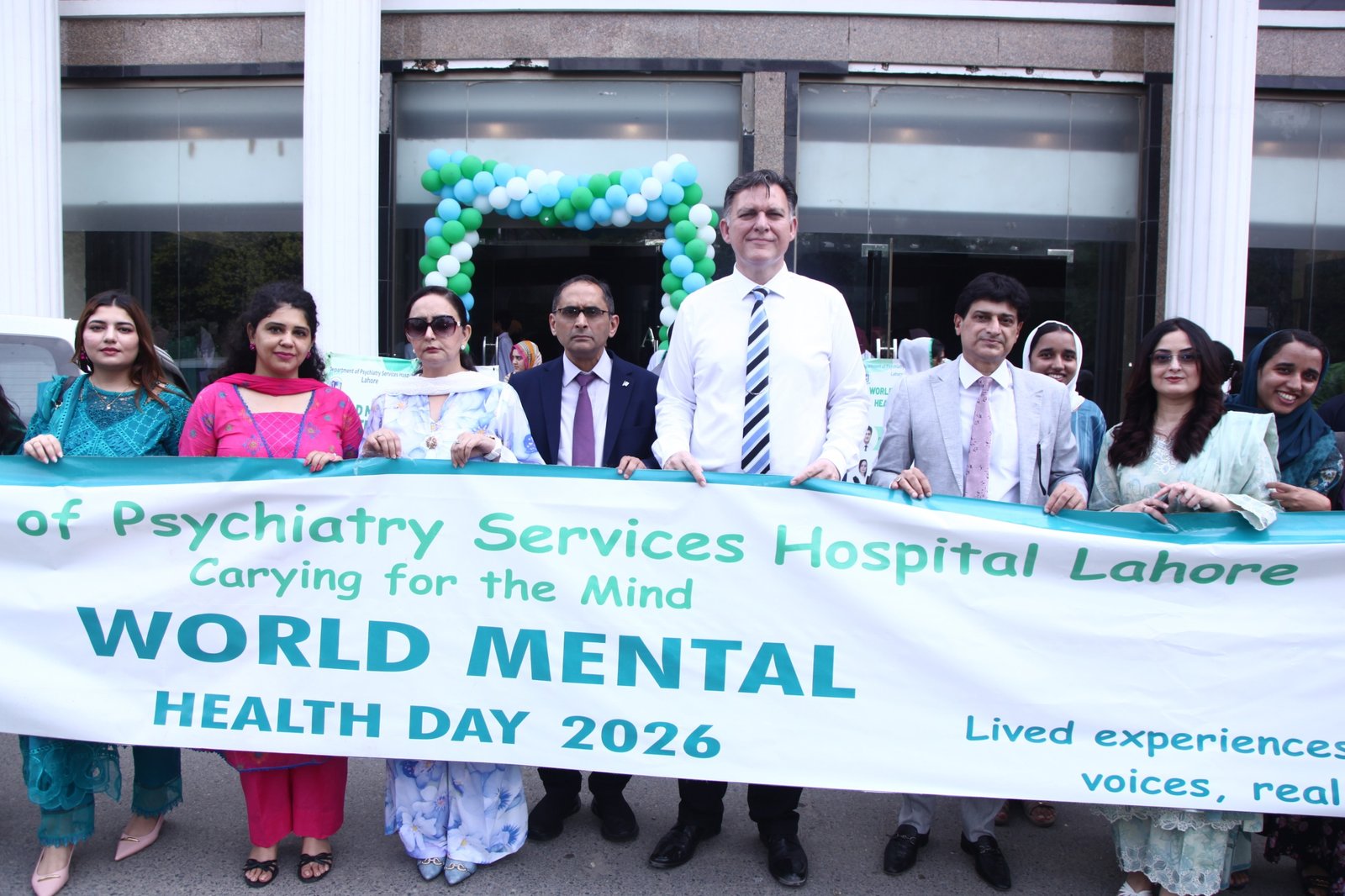
I strongly endorse the efforts of SIMS, the commitment of Prof. Dr. Ammara Butt and her colleagues, the advocacy of Madam Rushda Lodhi, and the intellectual leadership of Prof. Dr. Imtiaz Ahmad Dogar and Prof. Dr. Ali Madeeh Hashmi.
Dr. Zara Benazir, Assistant Professor of Psychiatry, is highly appreciated for her outstanding efforts in organising and facilitating seminars.
 I urge every academic institution, medical professional, family and public authority to turn awareness into continuing action.
The author is a Former Professor & Head, Department of Entomology,University of Agriculture Faisalabad (UAF) and analyst .He can be reached at jalalarif807@yahoo.com