
Abdul Majid
Karachi:Experts from health, agriculture, food safety and environmental sectors have called for coordinated action to address antimicrobial resistance (AMR), warning that the misuse and overuse of antibiotics are increasingly threatening the effectiveness of medicines used to treat infections.
The call was made at a one-day event organised by the Department of Microbiology,University of Karachi, in collaboration with the Food and Agriculture Organization of the United Nations (FAO), to mark World Antimicrobial Resistance (AMR) Awareness Week 2026, observed from Nov 18 to 24. The event was held under the theme “One Health,One Action: Prevent AMR Now.”
Addressing the gathering, Dean of the Faculty of Sciences Prof Dr Bilquees Gul
stressed the importance of multidisciplinary collaboration to tackle AMR, which requires coordinated efforts across human, animal and environmental health.
Prof Dr Shakeel Ahmed, former vice chancellor of Salim Habib University, highlighted the One Health approach and the importance of understanding the mechanisms through which microorganisms develop resistance to antimicrobial medicines.
FAO guest speaker Dr Pawin Padungtod presented an overview of the global
antimicrobial usage, burden of AMR and outlined international and Pakistan efforts to address the growing challenge through coordinated action and responsible antimicrobial use. He also called on everybody to take simple actions to prevent AMR for a healthier future.
Antimicrobial resistance occurs when microorganisms, including bacteria, develop the ability to withstand medicines used to treat infections. The misuse and overuse of antibiotics and other antimicrobials accelerate resistance, making infections increasingly difficult to treat and threatening the effectiveness of medicines used in human and veterinary healthcare.
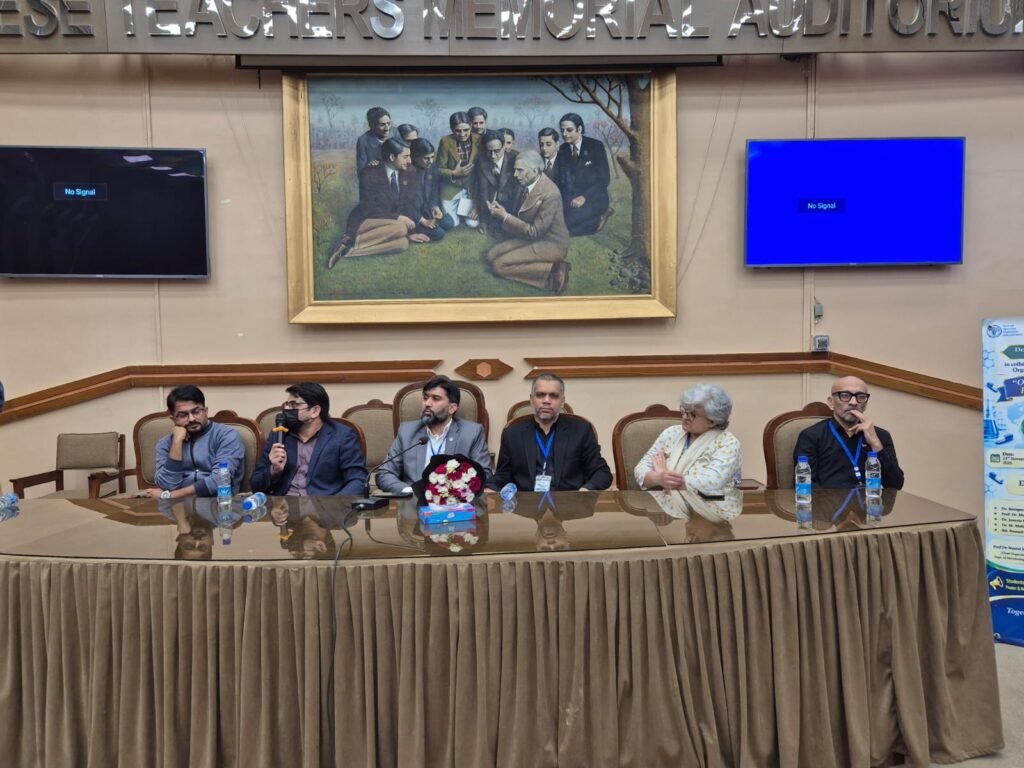
A panel discussion, moderated by Dr S. Faraz Moin of the Centre for Proteomics,University of Karachi, brought together experts to examine AMR from different perspectives.
Dr Joveria Farooqi of Aga Khan University highlighted the worsening AMR situation,particularly its implications for neonatal health. Prof Dr Mushtaq Hussain discussed the role of vaccines in preventing infections and reducing reliance on antibiotics, while Prof Dr Abdul Haq, chairman of the Department of Food Science and Technology, underscored the importance of food safety, smart packaging and technological innovation.
Dr Fayyaz Salih of the Sindh Environmental Protection Agency drew attention to environmental factors contributing to AMR, including limitations in wastewater treatment, and stressed the need to address these challenges to reduce the spread of resistant microorganisms.
Dr Shankar Lal of the Sindh Health Department discussed AMR surveillance sites and the importance of generating reliable data to inform the National Action Plan for 2028.
Dr Riasat Waseeullah, national project coordinator at FAO Pakistan, reviewed progress in addressing AMR and emphasized the need for sustained behavioral change across society. He said coordinated action under the One Health approach was essential to advancing the objectives of the Global Action Plan on AMR.
The event also featured student-led awareness activities, including flyers, posters and short videos, highlighting the risks associated with AMR and the importance of responsible antimicrobial use. Students participating in the activities were awarded prizes in recognition of their efforts.
In his concluding remarks, chief organizer Prof Dr Nusrat Jabeen of the Department of Microbiology, University of Karachi, thanked the speakers, dignitaries and participants and reiterated the importance of adopting preventive practices to curb AMR.
Preventing AMR requires collective responsibility, including avoiding self-medication,using antibiotics only on qualified medical advice, following prescribed treatment,maintaining good hygiene, practicing food safety and ensuring responsible antimicrobial use in livestock.
FAO Pakistan is working with the government and One Health partners to strengthen animal health systems, improve disease surveillance, promote responsible antimicrobial use, enhance veterinary services and raise public awareness about AMR.