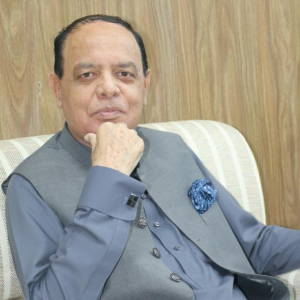
 Ambassador Dr Ahmed Ali Sirohey
An insider’s account of diplomatic frustration, institutional intrigue, the unfinished Kashmir agenda and Pakistan’s persistent failure to translate diplomatic opportunities into strategic outcomes.
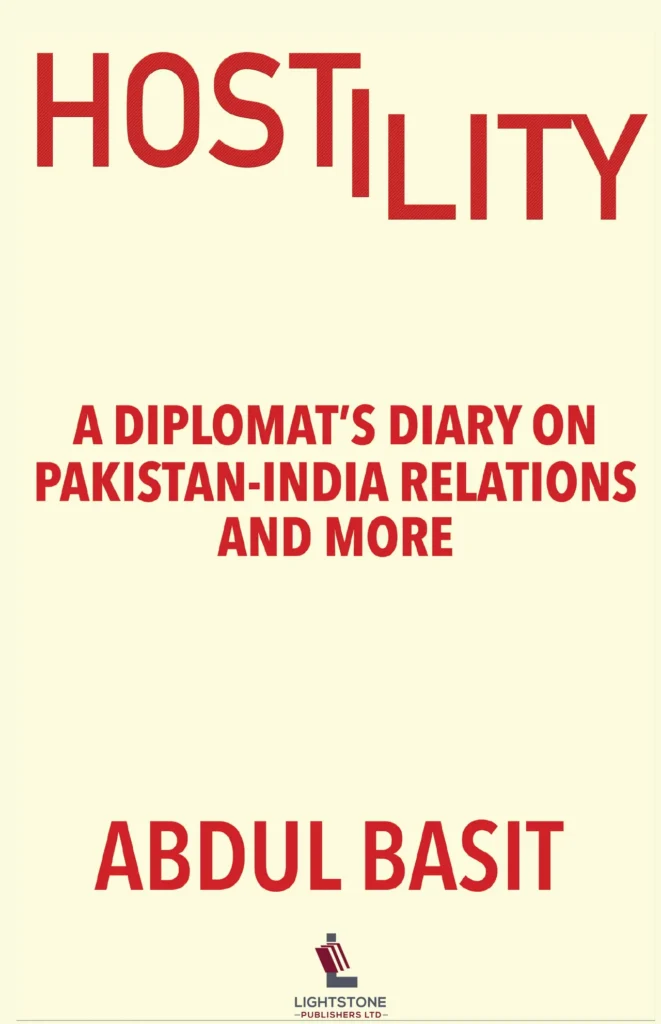
Ambassador Abdul Basit’s Hostility is more than a memoir of his tenure as Pakistan’s High Commissioner to India from 2014 to 2017. It is an account of the difficult intersection of diplomacy, domestic politics, institutional rivalries and the enduring hostility that has defined Pakistan–India relations. The book offers an insider’s perspective on the obstacles confronting a Pakistani diplomat in New Delhi and, perhaps more importantly, the limitations imposed on him by his own institutional environment.
It is a story of a diplomat who wanted to pursue peace without compromising Pakistan’s principled position on Kashmir, but found himself operating in an environment where hostility was not merely a bilateral phenomenon. It also appeared, according to his account, to have acquired institutional dimensions within Pakistan’s own diplomatic establishment.
Diplomacy in the shadow of hostility
 One of the most compelling aspects of the book is Ambassador Basit’s description of his efforts to promote peace and meaningful engagement with India. His approach combined traditional diplomacy with public diplomacy and economic diplomacy. He understood that sustainable relations could not be built exclusively through official statements, diplomatic protests and political exchanges. There was a need to engage intellectuals, journalists, business communities, civil society and other influential constituencies.
His efforts, however, encountered considerable resistance from the Indian government. The denial of visas to Pakistani diplomats, officials, business delegates and other visitors severely restricted opportunities for engagement. The lack of reciprocal diplomatic access and the political atmosphere in New Delhi made even routine diplomatic initiatives difficult.
The account raises an important question: how can two nuclear-armed neighbours pursue peace when one side systematically restricts the space for diplomatic interaction?
Basit’s experience demonstrates that public diplomacy and economic diplomacy require not only initiative from the sending mission but also a minimum degree of political receptiveness from the host government.
The asymmetry of diplomatic access
Perhaps one of the more disturbing dimensions of the narrative concerns the disparity in access enjoyed by Pakistani and Indian representatives.
Ambassador Basit describes his limited access to India’s Prime Minister and President, while Indian representatives and other individuals reportedly enjoyed considerably greater access to Pakistan’s political leadership.
The contrast is particularly striking in the context of the access reportedly available to Indian High Commissioners and individuals whose journalistic identities and possible intelligence connections raised questions within Pakistani circles.
The larger issue is not simply protocol. It is the absence of a coherent institutional mechanism for managing sensitive diplomatic engagement. Access to political leadership should be governed by national interests, institutional safeguards and professional judgment rather than personal preferences or informal networks.
Diplomacy cannot function effectively when the representative of the state is denied meaningful access to the leadership of the host country while competing channels operate freely.
When the home institution becomes an obstacle
The book becomes particularly revealing when Ambassador Basit turns his attention to the Foreign Office in Islamabad.
His observations about professional jealousy, internal rivalries, sycophancy and the alleged unwillingness of some senior colleagues to support his initiatives are among its most consequential passages.
He conveys the impression that information concerning important developments and decisions was often communicated to him through third parties rather than through the proper institutional chain of command. He also suggests that certain colleagues were more interested in his failure than in the success of Pakistan’s diplomatic mission.
His assessment of the Foreign Office is especially critical. He portrays an institution weakened by personal loyalties, cronyism, jealousy and a culture in which professional competence does not necessarily translate into institutional support.
This is an uncomfortable but important subject. A diplomat posted in a difficult country should not have to fight two battles simultaneously: one against the policies of the host government and another against resistance within his own ministry.
A Foreign Office that cannot protect, support and professionally empower its ambassadors risks compromising the very national interests it is supposed to advance.
The aborted Foreign Secretary appointment
Another revealing episode concerns Ambassador Basit’s eventual appointment as Foreign Secretary, which, according to his account, was subsequently undermined by manoeuvres within the establishment, resulting in the government reversing its decision.
The reported contradictory positions of Tariq Fatemi and Sartaj Aziz, and the impression that the two were operating through separate channels, illustrate a larger problem of fragmented political and institutional leadership.
A country’s foreign policy cannot be effectively implemented when its principal decision-makers are unable to speak with one voice.
The episode raises serious questions about the role of personal preferences, bureaucratic manoeuvring and internal power struggles in appointments to the highest positions in the Foreign Service.
The Foreign Secretary’s office should be occupied through a transparent and credible process, not become the subject of competing institutional ambitions.
Kashmir: A question of political will
Perhaps the most significant message of Hostility concerns Kashmir.
Ambassador Basit appears disappointed by the lack of sustained political determination within Pakistan to pursue the Kashmir cause with the urgency and international mobilisation it deserves.
His reflections suggest that Pakistan’s leadership has frequently lacked the will to convert its diplomatic position into an effective international campaign.
The Organisation of Islamic Cooperation (OIC), with its 57 member states, represents an important diplomatic platform. Yet Pakistan has not always utilised its potential to build a sustained coalition in support of the Kashmiri people.
Kashmir requires more than annual statements, commemorative events and occasional diplomatic protests. It demands institutional continuity, coordinated international lobbying, engagement with influential capitals and sustained mobilisation of multilateral organisations.
This is where the book invites an additional reflection from the perspective of Pakistan’s diplomatic experience in Africa and the OIC.
The missing dimension: What happened in Niamey and Jeddah?
While Ambassador Basit discusses Pakistan’s efforts to pursue the Kashmir agenda through the OIC, his narrative could have benefited from a more comprehensive examination of the diplomatic work undertaken by Pakistan’s missions in the organisation’s member states.
One particularly relevant example is the OIC Council of Foreign Ministers conference in Niamey, Niger.
The diplomatic effort surrounding that conference deserves fuller recognition. Ambassador Dr Ahmed Ali Sirohey, then Pakistan’s Ambassador in Niger, played a significant behind-the-scenes role in ensuring that Indian External Affairs Minister S. Jaishankar did not attend the OIC meeting, and that the Indian Ambassador was also not represented in the manner that could have undermined Pakistan’s diplomatic objectives.
This was not a routine diplomatic achievement. It required anticipation, political engagement, coordination and sustained interaction with the host government and relevant OIC stakeholders.
The successful outcome of the conference, including the protection of Pakistan’s position on Kashmir and the avoidance of diplomatic complications concerning Western Sahara, demonstrated what an active and strategically engaged mission could achieve.
Similarly, during his assignment in Jeddah, Dr Sirohey was instrumental in persuading the OIC Secretary General to preside over the Kashmir Solidarity Day observance on 5 February for the first time. It was a significant diplomatic development, giving the Kashmir cause institutional visibility at the highest level of the OIC.
These examples are important because they demonstrate that the OIC is not necessarily an ineffective organisation. Its potential depends considerably on the initiative, persistence and diplomatic entrepreneurship of member states and their representatives.
It is also relevant to acknowledge that Dr Sirohey’s contribution to the Niamey initiative and the broader OIC diplomatic effort deserves recognition in any comprehensive account of Pakistan’s Kashmir diplomacy during this period.
The untapped potential of economic diplomacy
Another dimension that deserves greater attention is the relationship between public diplomacy, economic diplomacy and political influence.
Ambassador Basit recognised the importance of engaging beyond conventional diplomatic channels. However, the institutionalisation of economic diplomacy remains one of Pakistan’s unfinished foreign policy projects.
Ambassador Dr Ahmed Ali Sirohey, who has specialised in African affairs and economic diplomacy, has consistently advocated a model in which diplomatic goodwill is translated into trade, investment, education, tourism, health cooperation and institutional partnerships.
He holds a PhD in Economic Diplomacy and has authored four books dealing with public and economic diplomacy. His professional experience in Africa and the OIC has generated proposals for converting diplomatic relationships into tangible economic and strategic partnerships.
Yet, despite this academic and professional specialisation, he has not been provided the institutional opportunities commensurate with his expertise.
This raises a broader question that resonates with the central message of Hostility: why does Pakistan frequently fail to utilise the professional knowledge and experience available within its own Foreign Service?
The problem is not necessarily a shortage of competent officers. It is often the absence of a system that identifies, rewards and places them according to their expertise.
The institutional culture of the Foreign Office: An unfinished reform agenda
The experiences described in Hostility are particularly relevant because they do not appear to be isolated concerns of one ambassador or one particular period.
The persistence of internal rivalries, preferential treatment, cronyism and the marginalisation of professionally competent officers suggests a deeper institutional malaise.
The unfortunate reality is that the same concerns about professional jealousy, selective career advancement, informal networks and the sidelining of independent-minded officers continue to be raised within the Foreign Office.
The consequences are serious:
* Officers with specialised knowledge are not necessarily assigned to positions where their expertise can benefit national interests.
* Important postings may be influenced by personal relationships rather than transparent professional criteria.
* Honest and independent-minded officers can find themselves professionally isolated.
* Institutional disagreements are sometimes managed through informal channels rather than established procedures.
* Performance and measurable diplomatic achievements do not always translate into career advancement.
If these tendencies are allowed to continue, Pakistan will lose not only talented diplomats but also valuable institutional memory and intellectual capital.
The Foreign Service needs a transparent career scorecard, clearly defined posting criteria, performance-based recognition, protection against arbitrary professional victimisation and a culture in which disagreement is not mistaken for disloyalty.
Presidential system: Will it solve the problem?
The author’s observations also invite a wider debate about Pakistan’s political and administrative structure.
Any discussion about a presidential system must address the fundamental question of equitable representation and opportunity across the federation.
Changing the parliamentary system into a presidential one will not automatically eliminate institutional concentration of power. If political, bureaucratic and administrative opportunities continue to be dominated by one province or a narrow circle of influential networks, the same inequalities will simply acquire a different constitutional appearance.
The Foreign Service, in particular, must remain a national institution in which officers from Sindh, Balochistan, Khyber Pakhtunkhwa, Punjab and other regions have equitable opportunities to serve in important diplomatic assignments.
The real requirement is not merely a change in the form of government. It is a change in the culture of governance.
Merit, federal balance, institutional accountability and equal opportunity must be protected regardless of whether Pakistan follows a parliamentary or presidential model.
The larger lesson: Diplomacy requires leadership, perseverance and institutional support
The most important lesson of Hostility is that diplomacy cannot succeed through the efforts of an ambassador alone.
It requires political leadership with a clear strategic vision, a Foreign Office capable of translating that vision into policy, professional ambassadors empowered to pursue national objectives and a system that rewards performance rather than personal loyalty.
Ambassador Basit’s account is a reminder that diplomatic failure is not always the result of the hostile policies of another country. Sometimes it is also the consequence of indecision, institutional fragmentation and a lack of perseverance at home.
The Kashmir issue, Pakistan’s relations with the OIC and its wider international standing require a coordinated national effort. No ambassador, however competent, can compensate indefinitely for the absence of political direction and institutional coherence.
Conclusion: A book that raises questions beyond India
Hostility is an important contribution to Pakistan’s diplomatic literature because it brings into public discussion issues that are usually confined to official corridors. It is a personal account, but its implications are institutional and national.
Ambassador Abdul Basit’s experiences in India demonstrate the difficulties of conducting diplomacy in an atmosphere of hostility. His reflections on the Foreign Office expose the potential damage caused by professional jealousy, internal manoeuvring and weak leadership. His observations on Kashmir underline the need for political consistency and sustained international engagement.
However, the narrative would have been even more comprehensive had it recognised the contributions of other Pakistani diplomats who worked to advance the Kashmir agenda through the OIC, particularly the diplomatic initiatives in Niamey and Jeddah.
Ultimately, the book leaves the reader with a question far more consequential than the title itself:
If Pakistan’s diplomats must struggle against the hostility of foreign governments as well as the indifference, jealousy and intrigues of their own institutions, how can the country expect to achieve its foreign policy objectives?
Pakistan does not suffer from a shortage of diplomatic talent, intellectual capacity or international goodwill. Its recurring weakness is the inability to organise these assets into a coherent national strategy.
The tragedy is that while the country needs its most capable diplomats at the forefront of international engagement, its institutional culture can sometimes leave them fighting battles within their own ministry.
Hostility is therefore not merely a story about Pakistan and India. It is also an invitation to examine the culture of the Pakistani Foreign Service, the quality of national leadership and the urgent need to restore merit, professionalism and institutional integrity.
The greatest hostility a diplomat can encounter may not always come from the country to which he is posted. Sometimes, it comes from the institution that sends him there.
Book review by Ambassador Dr Ahmed Ali Sirohey is a career diplomat, Africa specialist, scholar, and author specialising in economic and public diplomacy. His professional interests include institutional reform, Pakistan–Africa relations, and the strategic potential of the Organisation of Islamic Cooperation.