

City Desk
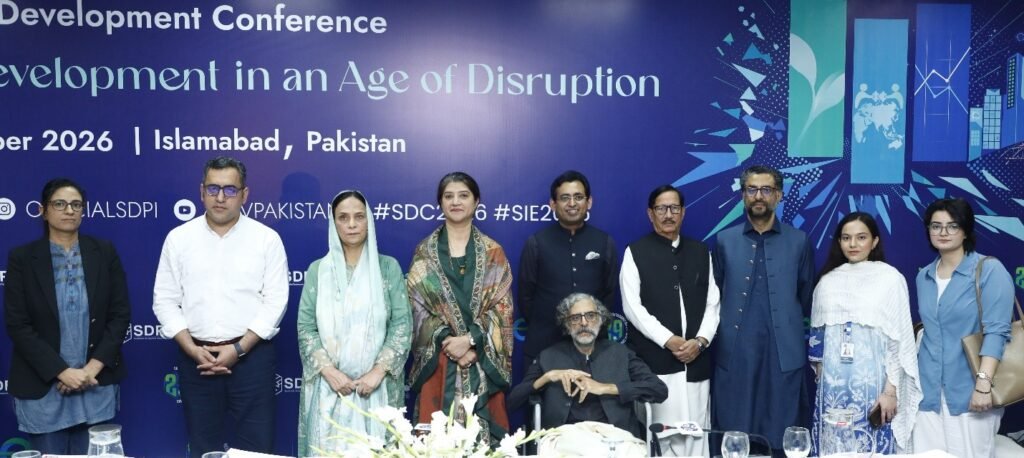
Islamabad: Experts and lawmakers said Pakistan’s energy transition should rest on adaptive social protection, legal and social security cover for informal workers, recognition of women’s unpaid care work, and the inclusion of trade unions and communities in planning. The views came at a policy roundtable on labour rights and the care economy, held at SDPI’s 29th Sustainable Development Conference in Islamabad with FES.
Dr Syeda Shahida Rehmani, Secretary of the Women’s Parliamentary Caucus, said women are hit hardest by climate change despite being central to community resilience. She called for investment in childcare, social protection, clean energy and public services, and for women’s representation in climate and energy planning, saying there is no just transition without gender justice. She said Pakistan’s problem is weak implementation, not missing laws. She noted that the NIRC sits only in Islamabad, forcing union representatives into costly repeated trips, that child labour laws go unenforced, that many workers lack EOBI registration, and that contract hiring lets employers bypass minimum wage rules.
Iftikhar Ahmed of WageIndicator said most of the workforce is informal and outside labour protections, which must be extended to all workers. He said rooftop solar installers face heat and unsafe conditions, and coal mining lacks effective safety regulation.
SDPI’s Dr Fareeha Armughan proposed adaptive social protection, which pairs safety nets with climate adaptation, as the central tool, using existing systems such as the National Socio-Economic Registry. She urged better coordination across social protection, climate, labour and energy policy.
Badar Alam of PRIED warned that closures of mines and plants could push workers into informality. He urged retraining, income support and decent green jobs, and said micro-grids and virtual power plants could reduce dependence on costly grid power.