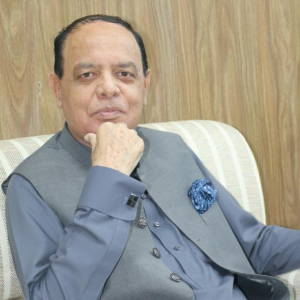
Muhammad Asif
Leadership plays a fundamental role in the intellectual, moral, political, and social development of any nation. History bears witness to the fact that capable, visionary, and morally upright leadership enables nations to overcome challenges and achieve progress and greatness. Conversely, leadership driven by personal interests, lust for power, and moral weaknesses leads nations towards decline and instability. Through his philosophical thought and poetry, Allama Dr. Muhammad Iqbal presented a comprehensive concept of leadership based on Khudi (selfhood), character, knowledge, action, self-confidence, wisdom, and service to humanity. According to Iqbal, a true leader is not merely someone who acquires political power but one who guides the nation through personal character and practical actions, inspires self-confidence, and connects people with a higher purpose in life.
The fundamental sources of Iqbal’s concept of leadership are the Holy Quran, Sunnah, and Islamic teachings. He does not consider leadership merely a political or administrative position; rather, he regards it as a great moral and collective responsibility. According to him, a leader must rise above personal interests and work for national welfare, collective well-being, and human development. The purpose of genuine leadership is not to establish personal superiority over people but to awaken their abilities and provide them with a clear sense of direction.
The concept of Khudi occupies a central position in Iqbal’s philosophy of leadership. Khudi refers to self-awareness, self-respect, self-confidence, strength of will, and recognition of one’s own abilities. Iqbal believes that a person who is unaware of his own self cannot effectively guide others. A true leader must be free from fear, mental slavery, and an inferiority complex. He must possess the courage to face difficult circumstances and make decisions according to established principles. Iqbal expresses the importance of Khudi in this famous poetry:
خودی کو کر بلند اتنا کہ ہر تقدیر سے پہلے
خدا بندے سے خود پوچھے، بتا تیری رضا کیا ہے
Elevate your selfhood to such heights that before every decree of destiny,
God Himself may ask you: Tell Me, what is your will?
These verses convey the message of self-confidence, high aspirations, and continuous struggle. In the context of leadership, they mean that a leader must recognize his abilities and strengthen his intellectual and moral character to guide the nation effectively.
According to Iqbal, the second important foundation of genuine leadership is strong character and moral integrity. A leader’s personality is judged more by actions than by words. If a leader demonstrates inconsistency between words and deeds, engages in corruption, or breaks promises, he eventually loses public trust. Iqbal advocates leadership based on truthfulness, honesty, integrity, justice, courage, and sacrifice. The life of the Holy Prophet Muhammad ﷺ represents the perfect model of leadership for Iqbal. Through his exemplary character, wisdom, justice, and compassion, the Holy Prophet ﷺ transformed a divided society into a united, organized, and dignified Muslim community.
Knowledge, wisdom, and vision also hold fundamental importance in Iqbal’s concept of leadership. He believes that a leader cannot guide a nation merely through emotional speeches and slogans. Instead, a leader must possess a deep understanding of circumstances, historical awareness, and the ability to anticipate future developments. An enlightened leader should understand national issues, economic needs, educational requirements, and global changes. Knowledge provides an understanding of reality, while wisdom teaches its proper application. Iqbal encourages the younger generation to pursue education, research, and creative thinking so that they can prepare themselves for future leadership.
In Iqbal’s philosophy, a true leader does not surrender to circumstances but possesses the ability to transform them. Rather than fearing difficulties, he uses them as opportunities to demonstrate his capabilities. The symbol of the Shaheen (eagle) in Iqbal’s philosophy represents ambition, freedom, self-confidence, and high aspirations. He wants young people to develop these qualities so that they may avoid laziness, inactivity, and dependence on others and instead rely on their own efforts and determination. A genuine leader not only inspires the nation with ambitious dreams but also struggles practically to turn those dreams into reality.
Another significant aspect of Iqbal’s concept of leadership is service to the nation and collective responsibility. He does not consider leadership a means of achieving personal fame, wealth, or power; rather, he views it as an instrument of national service. A leader must understand the problems of the poor, labourers, farmers, disadvantaged communities, and young people. He should strive to establish a society based on justice, equality, and human dignity. According to Iqbal, the true measure of human greatness is character and righteousness, not wealth, family background, race, or social position.
Iqbal also examined the concept of democracy from a critical perspective. He does not favour a form of democracy limited to numerical majority, capitalist interests, and struggles for political power. In his view, genuine democracy must be founded on moral consciousness, human equality, justice, and collective consultation. He advocates leadership that genuinely represents the people, addresses their problems, and considers political authority a national trust rather than a personal privilege. Iqbal’s concept of leadership is compatible with Islamic spiritual democracy, in which both rulers and citizens remain accountable to morality, law, and collective responsibility.
The significance of Iqbal’s concept of leadership has increased considerably in the contemporary world. Today, nations face challenges such as political instability, economic inequality, corruption, moral crises, and educational backwardness. Pakistan also needs leadership that prioritizes national interests over personal and political considerations, strengthens institutions, ensures the rule of law, and promotes education and research. Iqbal’s message makes it clear that national development cannot be achieved through material resources alone; it requires capable, visionary, and morally upright leadership.
Iqbal considers young people the greatest asset of the future and an important source of national transformation. He wants them to recognize their abilities, acquire higher education, embrace research and creativity, and contribute actively to national development. It is essential to develop self-confidence, discipline, tolerance, honesty, and a spirit of public service among young people. Educational institutions should not merely distribute degrees; they should develop individuals capable of assuming future intellectual, political, social, and administrative leadership.
In conclusion, Iqbal’s concept of leadership represents a comprehensive intellectual and moral system founded on Khudi, character, knowledge, vision, courage, justice, and service to humanity. According to Iqbal, a true leader is one who first reforms himself and then plays a positive role in the development of society and the nation. He considers political power a trust rather than a privilege, citizens responsible members of society, and national resources collective assets. Today, adopting Iqbal’s concept of leadership in practical life is essential for transforming Pakistan into a prosperous, developed, and dignified state. If we succeed in producing morally upright, self-respecting, knowledgeable, and sincere leaders, the dream of national progress and sovereignty can become a reality.
May Allah Almighty enable us to understand Iqbal’s teachings, seek guidance from his thoughts, and adopt the highest moral values in our individual and collective lives. Ameen.
( sirasif786@gmail.com )