

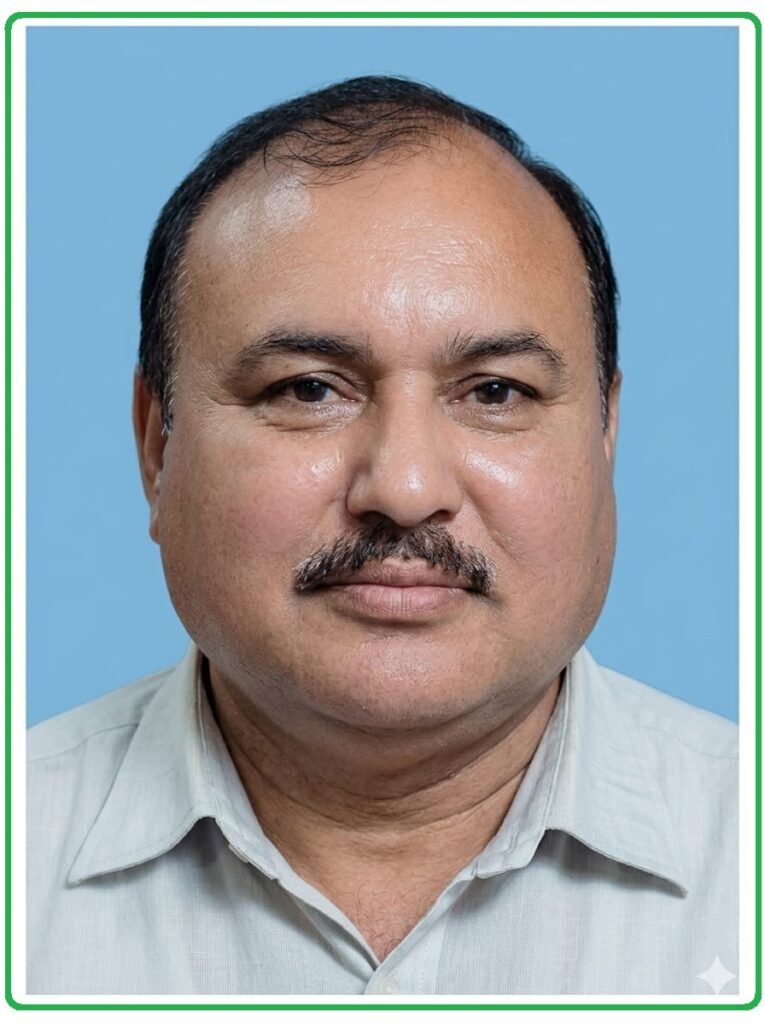
Dr. Syed Azhar Hussain
An analysis of a regional crisis, its human consequences, and the way forwardPoverty is one of the most persistent challenges facing South Asia. Despite economic growth, technological advancement, and expanding urban centres, millions of people across Pakistan, India, Bangladesh, Nepal, Sri Lanka, Afghanistan, and Bhutan continue to struggle for adequate food, quality education, healthcare, secure employment, and decent housing.The real menace of poverty lies not merely in a shortage of money but in the denial of human dignity and opportunity. When families cannot afford nutritious food, children leave school to support household incomes, and workers remain trapped in insecure employment, poverty becomes a cycle that passes from one generation to the next.South Asia’s central challenge, therefore, is not simply to generate wealth, but to ensure that economic progress translates into better living conditions for ordinary people.Why does poverty persist? Economic growth without adequate employmentSouth Asia has achieved considerable economic growth, yet employment opportunities have not kept pace with the needs of its expanding workforce. According to the World Bank’s April 2026 regional update, only 59% of working-age people in South Asia are employed, while the formal sector accounts for approximately 10% of the workforce.This creates a troubling contradiction: economies may expand while millions of workers remain trapped in low-paid, insecure jobs. Economic growth cannot eliminate poverty unless it generates productive employment and fair wages. Unequal access to educationEducation should provide a pathway out of poverty, but poor families often struggle to afford school supplies, transport, digital access, and higher education. Children from disadvantaged households may leave school early and enter low-paid work, repeating the economic hardships of their parents.The solution is not merely to increase school enrolment. South Asian governments must improve the quality of public education, strengthen technical and vocational training, and connect educational qualifications with employment opportunities. Inflation and the rising cost of livingFood, housing, transport, electricity, and healthcare consume a substantial share of poor households’ incomes. When prices rise faster than wages, families are forced to reduce essential spending, borrow money, or sell their assets.For a wealthy household, inflation may mean fewer luxuries. For a poor family, it can mean less nutritious food, interrupted education, or untreated illness. Poverty therefore becomes more severe when essential services are unaffordable. Population pressure and gender inequalityA large working-age population can become an economic advantage, but only when countries provide adequate jobs, education, healthcare, and opportunities for enterprise.Women also face barriers to employment, including unpaid care responsibilities, unsafe transport, discrimination, and limited access to productive assets. The World Bank identifies low female labour-force participation as a major constraint on employment in South Asia.Expanding women’s access to education, finance, property, and decent employment is consequently an economic necessity as well as a matter of social justice. Climate change and rural povertyFarmers, agricultural labourers, and informal workers are especially vulnerable to floods, droughts, unpredictable rainfall, and extreme heat. These shocks can destroy crops, damage homes, reduce earnings, and push already vulnerable families deeper into poverty.The World Bank reported in July 2026 that extreme heat was costing South Asia the equivalent of nearly 31 million full-time jobs annually, with serious implications for productivity and economic growth.Climate resilience must therefore become part of poverty reduction through water management, resilient agriculture, early-warning systems, and protection for outdoor workers. The way forward may be adopted àsSouth Asia needs a development strategy that puts people, rather than economic growth figures alone, at its centre.* Generate productive employment: Support small businesses, labour-intensive industries, agriculture, and entrepreneurship.* Improve public education: Invest in teachers, school facilities, technical skills, and affordable higher education.* Strengthen social protection: Provide targeted assistance to vulnerable households and improve access to healthcare and nutrition.* Expand women’s economic participation: Remove barriers to employment, enterprise, and financial independence.* Reform public spending: Direct resources towards human development, essential services, and infrastructure that benefits disadvantaged communities.* Build climate resilience: Protect livelihoods through sustainable farming, water conservation, disaster preparedness, and heat-resistant infrastructure.* Improve regional cooperation: Promote trade, knowledge exchange, climate adaptation, and economic collaboration among South Asian countries. Conclusion: Poverty is a failure of opportunityThe menace of poverty in South Asia cannot be overcome through economic growth alone. It requires a sustained commitment to ensuring that growth creates secure livelihoods, public institutions deliver essential services, and disadvantaged citizens have genuine opportunities to improve their lives.The region’s greatest resource is not merely its land, markets, or industrial potential; it is the talent and energy of its people. When a child is denied education because of poverty, a farmer loses a livelihood to climate disaster, or a qualified young person cannot find decent work, society loses productive potential.South Asia will make lasting progress against poverty when economic development is measured not only by the wealth a country produces, but also by the dignity, security, and opportunities it provides to its people. (drazhar118@yaho.com).